
Turning complexity into clarity
A new platform promises to revolutionise the valuation, management and market for natural capital, says Dr Hosein Khajeh-Hosseiny, Founder & Chairman, Trinity Natural Capital Group.
17 November 2025
Two worlds now define the global balance sheet. In the first, the financialised economy, asset values have expanded rapidly, with global wealth approaching $600 trillion. This world enjoys high valuations yet is vulnerable to asset-price swings, inequality and cross-border liabilities. In the second, the real economy of natural capital (soils, water, biodiversity), assets remain largely outside capital markets, chronically under-invested and under-valued, despite being the foundation of productive growth and resilience.
Agriculture sits at the frontier of the real economy, converting soil, water and biodiversity into food, income and security. Farming has long been an exercise in managing uncertainty, but today’s scale and speed of change and feedback loops have made clarity a scarce asset.
This is a new era. Real science and rigorous analytics, not box‑ticking, are the ticket to the field. Anything less risks your farm’s reputation, your partners’ trust and the value you’ve worked so hard to build. Where evidence is robust, that same clarity can even support the minting (the creation of new digital currency e.g. bitcoin) of trusted, digital coins.
This clarity now results in credibility. In a market that rewards proof, relying on unchecked, first-generation natural capital platforms creates outsized risk for every stakeholder in the chain.
Around the world, a new kind of leadership is emerging in farming: leaders who don’t try to control the unpredictable but navigate it. They turn uncertainty and complexity into clarity.
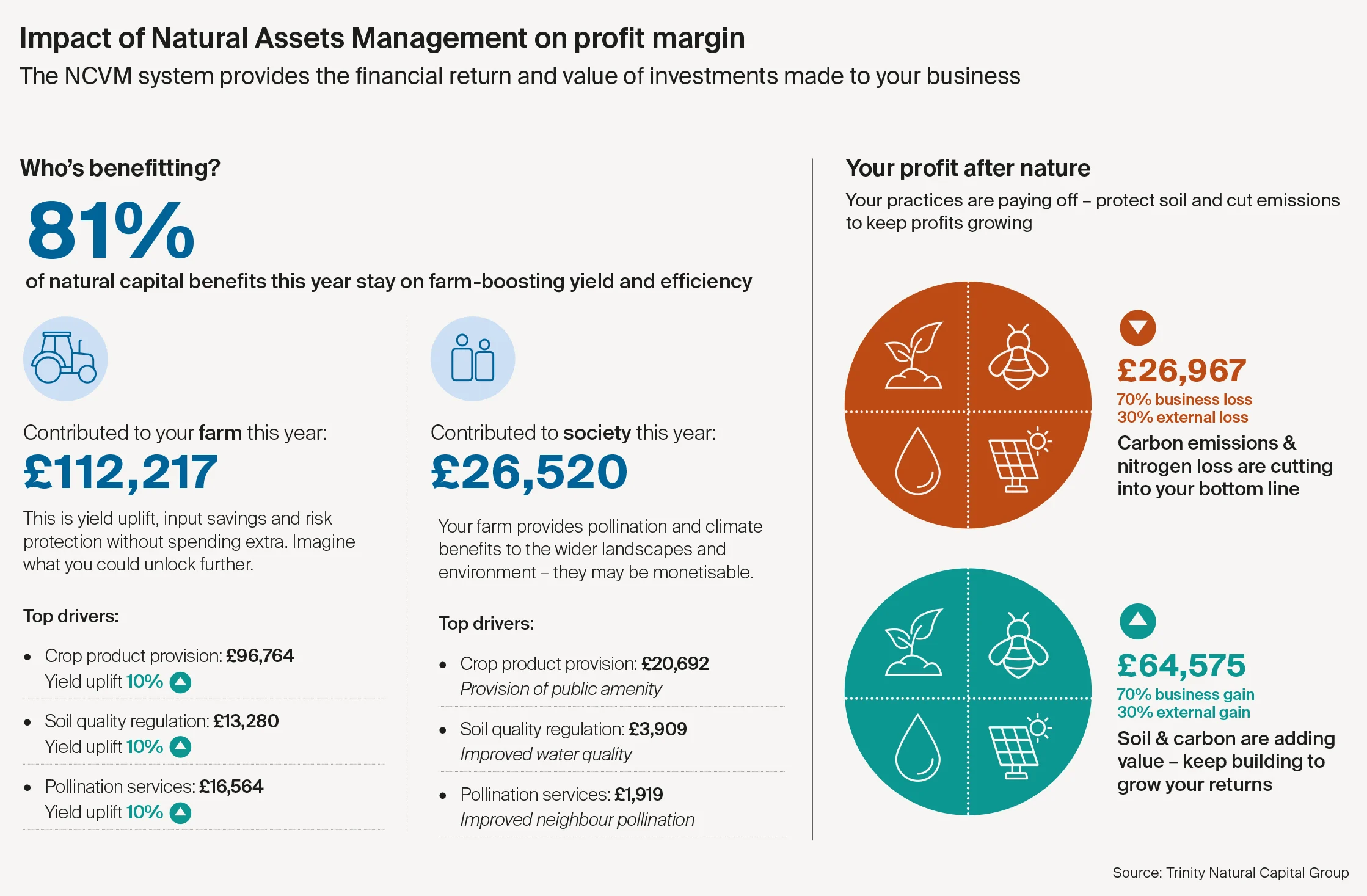
At the heart of this shift is a quiet revolution, Trinity Natural Capital Valuation and Management (NCVM), a way of seeing the farm not just as land, but as a living portfolio of strength, resilience, financial value and capital growth.
Nature based coins
NCVM does more than measure resilience; it underwrites market-grade assets. When farm‑level outcomes are quantified to ISO‑aligned standards, verified and registered on a tamper-evident ledger, they can be minted as coins, a nature-based cryptocurrency that can be tracked, traded, or retired with confidence.
Using Trinity natural capital registry records, NCVM projects on a blockchain for traceability and immutability, raising integrity and reducing transaction risk for both farmers and buyers. Spain’s ‘Cool Farming’, a founding member of the Trinity Natural Capital Pro Council, has already illustrated the minting of nature based coins on Trinity’s platform.
In short, credible measurement and analytics lead to minting currency. That’s another way your stewardship becomes wealth.
Rethinking resilience
We need to rethink how resilience is built by creating a new paradigm where instead of trying to predict and control events, we prepare and adapt. And where, instead of merely surviving shocks, we regenerate stronger.
In times of uncertainty, preparation beats prediction. Resilient farms design systems that can pivot. They diversify rotations, maintain flexible equipment use, and keep multiple marketing paths open. The goal is not to forecast perfectly, but to stay ready for any season.
In complex systems, control is an illusion, but clarity is achievable. You cannot control the market or the weather, but you can understand your own system deeply. Leaders succeed by understanding what matters most and what is changing fastest.
Making the invisible visible
NCVM helps by quantifying soil health, water retention and biodiversity value so you can see which assets truly underpin resilience, and where hidden risks sit.
Clearly track and monitor the performance and health of your soil, biodiversity, water protection, nitrogen‑use efficiency and carbon storage, to understand why some fields thrive while others tire.
More than a report, NCVM is a strategic instrument for navigation that gives you three essential powers: visibility, comparability and credibility.
With these, you can move from reactive firefighting to proactive steering, navigating complexity with confidence.
Translating understanding into action, NCVM guides everyday calls such as which field to prioritise this week, which practice really pays on this soil, and which investment builds both yield and resilience.
By integrating agronomic, ecological and financial data, NCVM turns invisible patterns into visible intelligence, replacing guesswork with grounded confidence.
True resilience isn’t about bouncing back, it’s about bouncing forward. Healthy soils recover quicker after drought, diverse rotations steady margins after price swings, and biodiversity buffers risk.
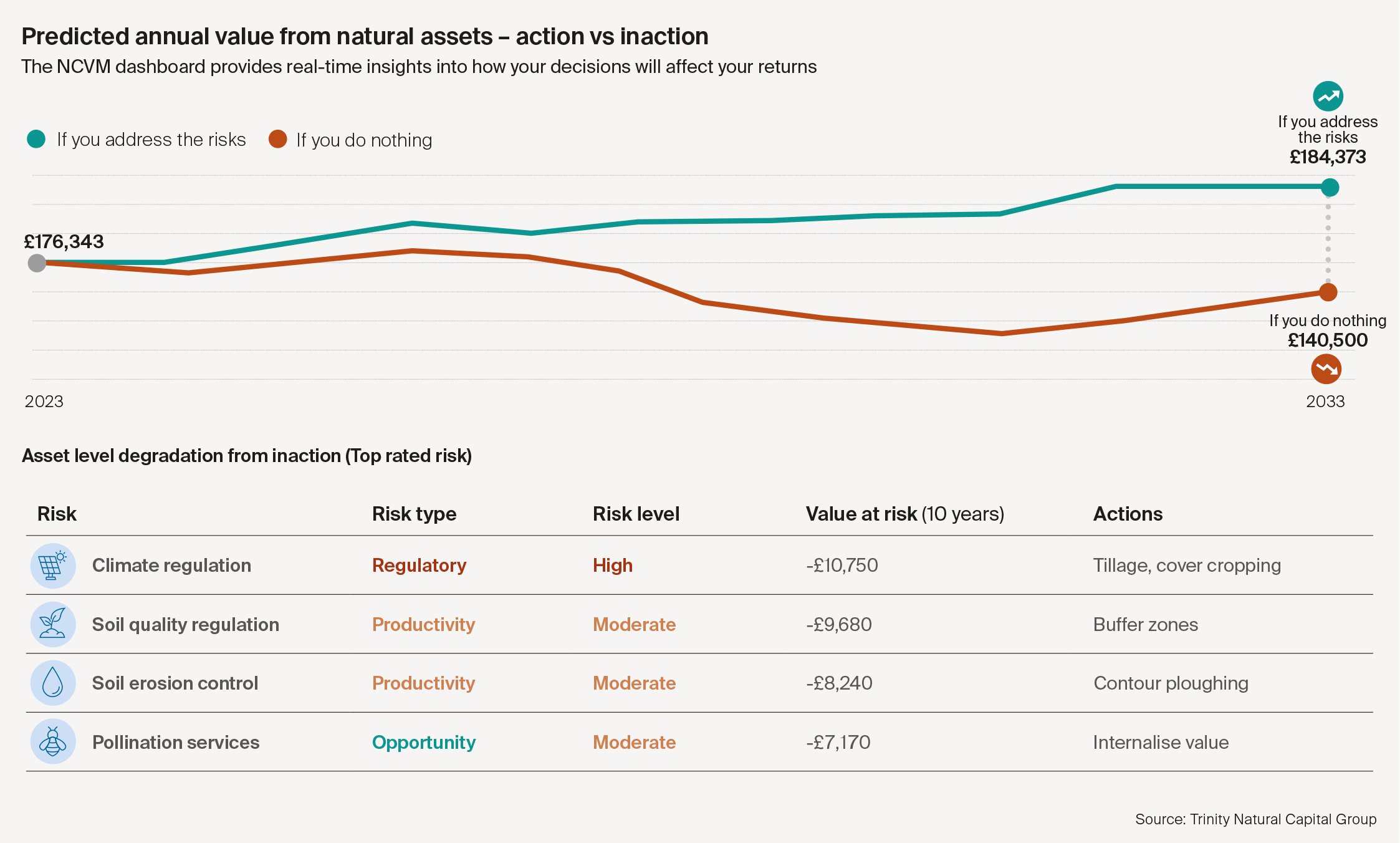
NCVM measures this regenerative power in financial terms; the value of healthier soils, the protective worth of biodiversity and the “insurance” of clean water, showing that stewardship and profitability can rise together. Regeneration is resilience and profitability in motion.
Think systems, not silos
A farm is a complex living network. Every decision ripples outward, one practice in a field can affect soil carbon, biodiversity, water, markets and profits, and then inwardly through feedback. Leaders map these interconnections.
That’s why NCVM doesn’t simplify the system; it helps you see it and identify leverage points where small changes create outsized results, showing you how decisions ripple across ecological and financial outcomes.
Data should inform judgment, not replace it. Your experience remains the most powerful sensor. Combined with NCVM’s evidence base, intuition becomes sharper and faster.
In stable conditions, focus on high efficiency wins; in turbulence, adaptability wins. Flexibility is the new high efficiency. The farms that endure are ones that systematically strengthen their natural capital and reduce hidden risks, thereby adapting with confidence to changing conditions.
Shared intelligence
Farming has never been a solo act, but now it’s a networked intelligence. Agronomists, ecologists, buyers, lenders, land managers and technologists are all part of the same ecosystem. They each hold part of the picture.
NCVM creates a trusted common language of translating biological realities into financial metrics and decision dashboards that farmer, adviser and investor can trust and share.
This is not merely a market preference; it’s a phase change. ISO, BSI, IPCC tier 2/3 aligned-standards, block chain registration, scientific transparency and analytical excellence are now the price of admission.
The first generation of light-touch, pseudo-scientific schemes that helped some ‘tick a box’ now represent outsized liability for growers, processors, brands and financiers. A minority of mercenary offerings persist, but they are increasingly screened out by buyers and lenders who require decision-grade, verifiable evidence.
Shaping your future
The world will stay unpredictable. The challenge is not to predict the future but to shape it: read signals earlier, invest smarter and show the value of stewardship in language the market recognises. When nature, knowledge and credibility move together, prosperity follows.
This alignment of ecology with economics – and analytics with judgment – makes NCVM agriculture’s compass: a guide through volatility and uncertainty, a bridge between stewardship and prosperity, and a symbol of leadership in the age of intelligence.
By quantifying what truly matters, NCVM delivers the resilience dividend, the extra stability and value that come from nurturing natural capital. It’s not a theory; it’s numbers that tell a story of strength.
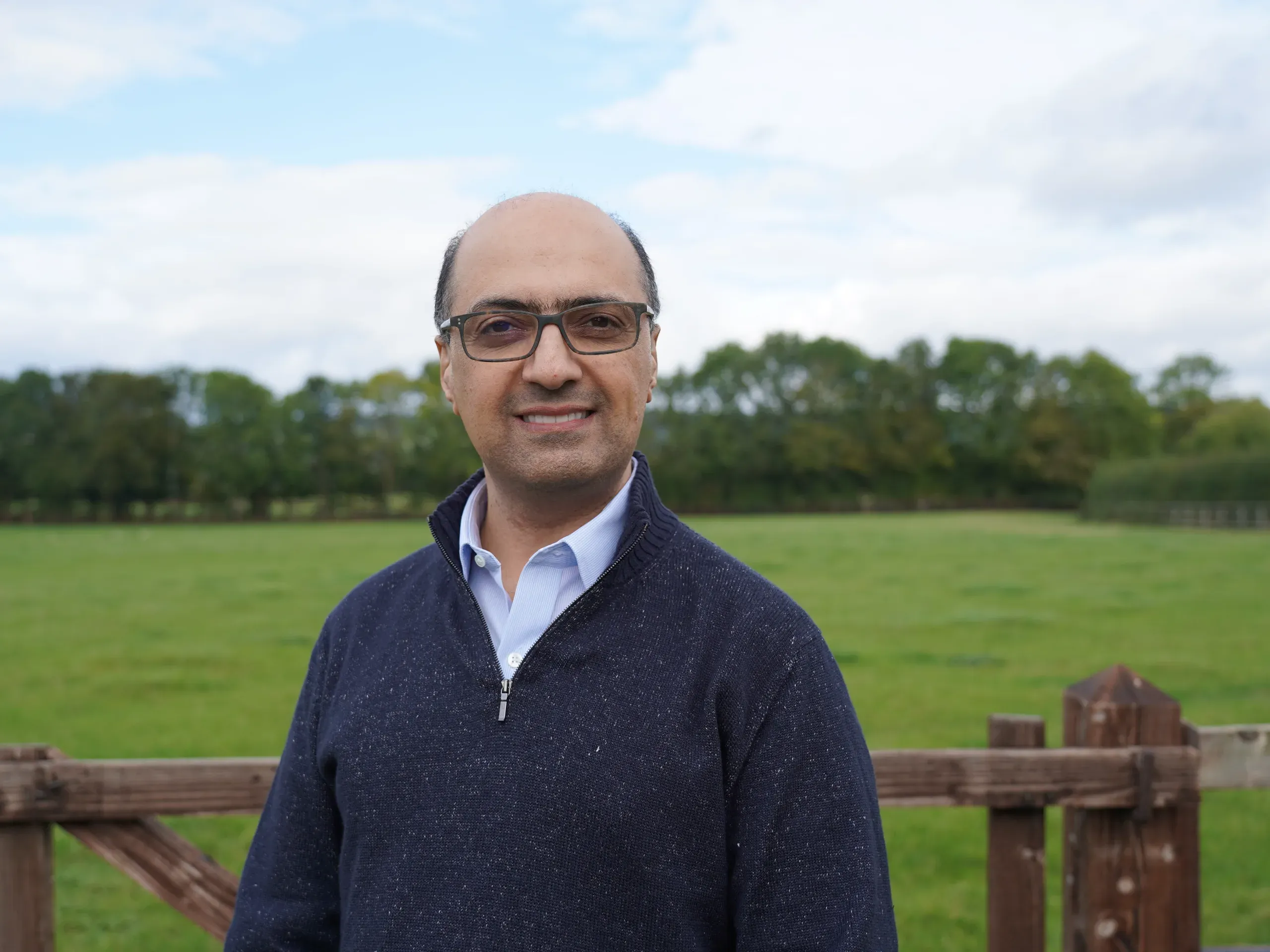
Dr Hosein Khajeh-Hosseiny holds a number of Public Service Trusteeships, including:
-
Royal Agricultural Society of England (RASE)
-
National Oceanography Centre (NOC) & Chairman of NOC Innovations
-
Royal Society of Arts, Manufactures and Commerce
-
The Productivity Group
-
Royal Albert Hall Trust
-
The Brookings Institution (Washington DC, USA)
Find out more about Trinity Natural Capital Valuation & Management (NCVM).
Read more
Explore more content from The Rural Report
Rural
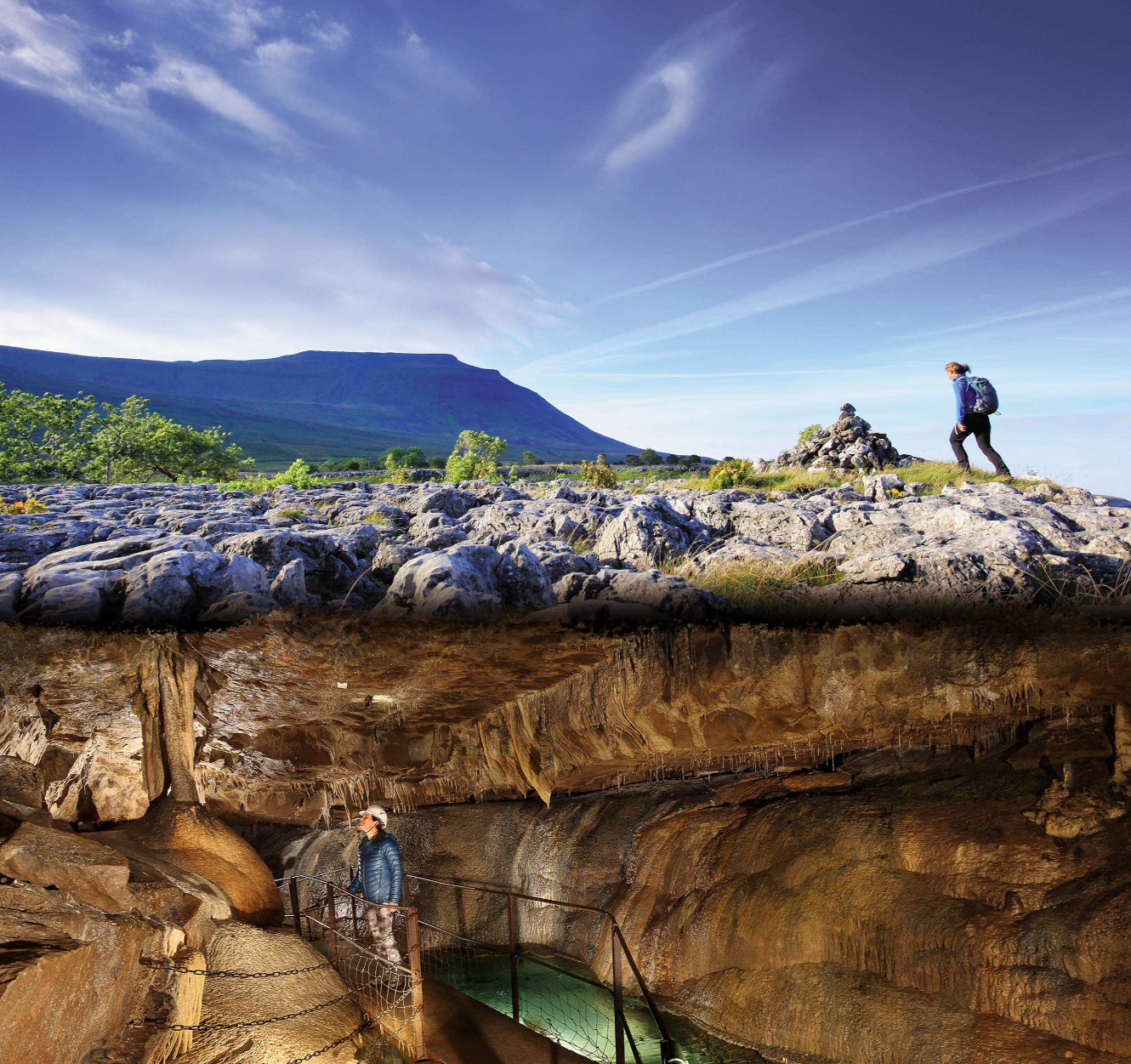
From sawmill to estate enterprise: purposeful diversification at Ingleborough
A listed sawmill, woodland nature trail and show cave have been brought together as one visitor enterprise in the Yorkshire Dales.
30 September 2026
Rural
Diversification with intent: how rural estates are evolving for the future
Rural estates are defined by continuity: of land, of stewardship, and of purpose. Today, that relationship is under pressure.
08 September 2026
Rural
The Rural Update: Delivering win-win food and climate policies
Your weekly dose of news, views and insight from Knight Frank on the world of farming, food and landownership.
18 August 2026
Rural
BNG changes from 6 August 2026: What do they mean for developers and habitat banks?
After more than two years of mandatory Biodiversity Net Gain (BNG), new regulations came into force on 6 August 2026, altering how developers approach compliance and how habitat bank operators position themselves in the market.
12 August 2026
Rural
The Rural Update: The food chain must help build climate resilience
Your weekly dose of news, views and insight from Knight Frank on the world of farming, food and landownership.
10 August 2026
Rural
When continuity becomes a risk: the rural estate resilience challenge
Rural estates are defined by continuity: of land, of stewardship, and of purpose. Today, that relationship is under pressure.
04 August 2026


Rural
Site selection
The harvest in 2024 tested the strategic decision to be a single estate wine producer.
16 June 2026
Rural
Chapter and verse: Tackling our next big problems
After a business workshop at the Wine GB Conference at Plumpton in April, I address some of our sector’s biggest needs.
15 June 2026
Rural
Wine business models
One of the most interesting parts of my job as a vineyard agent is getting to know the businesses and the people behind them, within wine.
12 June 2026
Rural
How to make farming profitable again
Minette Batters talks to James Farrell, Head of Knight Frank’s Rural Consultancy team, about her recently published review into farming profitability.
30 January 2026
Rural
A year that forced rural businesses to act
The past year has not been defined by a single shock for rural Britain, but by the steady accumulation of pressure.
23 December 2025
Rural
Communicating beyond the norm
The leader of one of the UK’s most innovative natural capital firms explains why storytelling and branding are so important for creating resilient rural businesses.
17 November 2025
Rural
Demystifying data
A bespoke approach to data analytics delivers dividends for rural estates, but what does ‘data’ actually mean and how do you apply it?
17 November 2025
Rural
Financing the future
There’s more to refinancing debt than just finding the best interest rate.
17 November 2025
Rural
Great estates
The managers of two diverse and forward-thinking landed estates share their recipes for resilience.
17 November 2025
Rural
Management matters
Andrew Blenkiron, the Managing Director of Elveden, one of England’s largest commercial farming estates, shares his plans for a successful future.
17 November 2025
Rural
Planning, development & renewables
Experts from across our teams share their insights on four themes critical to the UK’s rural infrastructure and residential development sectors.
17 November 2025
Rural
Profitable partnerships and trusting talent
How the Knatchbull family are leading the way in setting up innovative joint ventures on their historic Kent estate.
17 November 2025
Rural
Rewilding London
Private investors are being offered a unique opportunity to get involved with one of the world’s most ambitious urban-fringe nature-restoration projects, right on the edge of London.
17 November 2025

Rural
Rooted in history
The Tillingham Estate, linked to St Paul’s Cathedral and one of the longest single owned pieces of land in English history, is exploring a new chapter. Our team is lucky enough to be supporting the estate on the next stage of its journey.
17 November 2025
