

Unlocking growth through data
Introducing Knight Frank's demographics report.
16 June 2026
In today’s competitive market, producing great wine is only part of the success story of a wine business.
The other part is achieving sales at near parity with production in a way that does not erode margin.
Having strong direct-to-consumer (DTC) sales, as part of the total sales channel matrix, is a vital part of the strategy in achieving this. When customers buy directly, whether at the cellar door or online it not only delivers the best gross margin, but also builds stronger, more personal relationships with the brand, increasing customer lifetime value.
This was how the demographic mapping platform was created; we knew wine producers wanted to bring better quantities and quality of footfall through the cellar door, to build growth in the sale of wine by hand, direct to the consumer. We realised that we could offer our mapping capabilities, harnessing data from trusted sources like TripAdvisor, Experian, the Department for Transport, Royal Mail, English Heritage, and the National Trust, we could create a detailed picture of who a wine producer’s ideal customers are, where they live, how they spend their time and money, and how best to reach them.
This research has been distilled into our report, allowing wine producers to be highly targeted in who they approach, to focus their resources on the best opportunities. One of the earliest users of the demographic tool was MDCV, one of the UK’s largest wine producers, who wanted to unlock new growth opportunities in direct-to-consumer sales and tourism.
If you would like to learn more about how our demographic toolkit can support your business, we’d be delighted to talk with you.
Watch the launch video
We’re confident in the quality of what we produce, but insight like this helps ensure that effort reaches the right audience. It’s brought a new level of focus to our planning and given the team a clearer sense of where the greatest opportunities lie.
Gary Smith
CEO of MDCV
We are delighted with how the report has been received, and thought, for this article, we would showcase a sample report that we have produced for a fictional vineyard in Tilston, in Cheshire.
We chose Cheshire because it has an interesting demographic landscape but is well outside vineyard country, so the information is completely irrelevant to wine producers in the Southeast.
The demographic mapping report delivers three benefits to clients.
The first market wine producers tend to target is their local audience. Specifically, affluent households who are more likely to buy wine than the average household. Working closely with our analytics team, we have been able to leverage API links with a number of different data sources to create the profile of an ideal target consumer: They are someone who meets the following criteria:
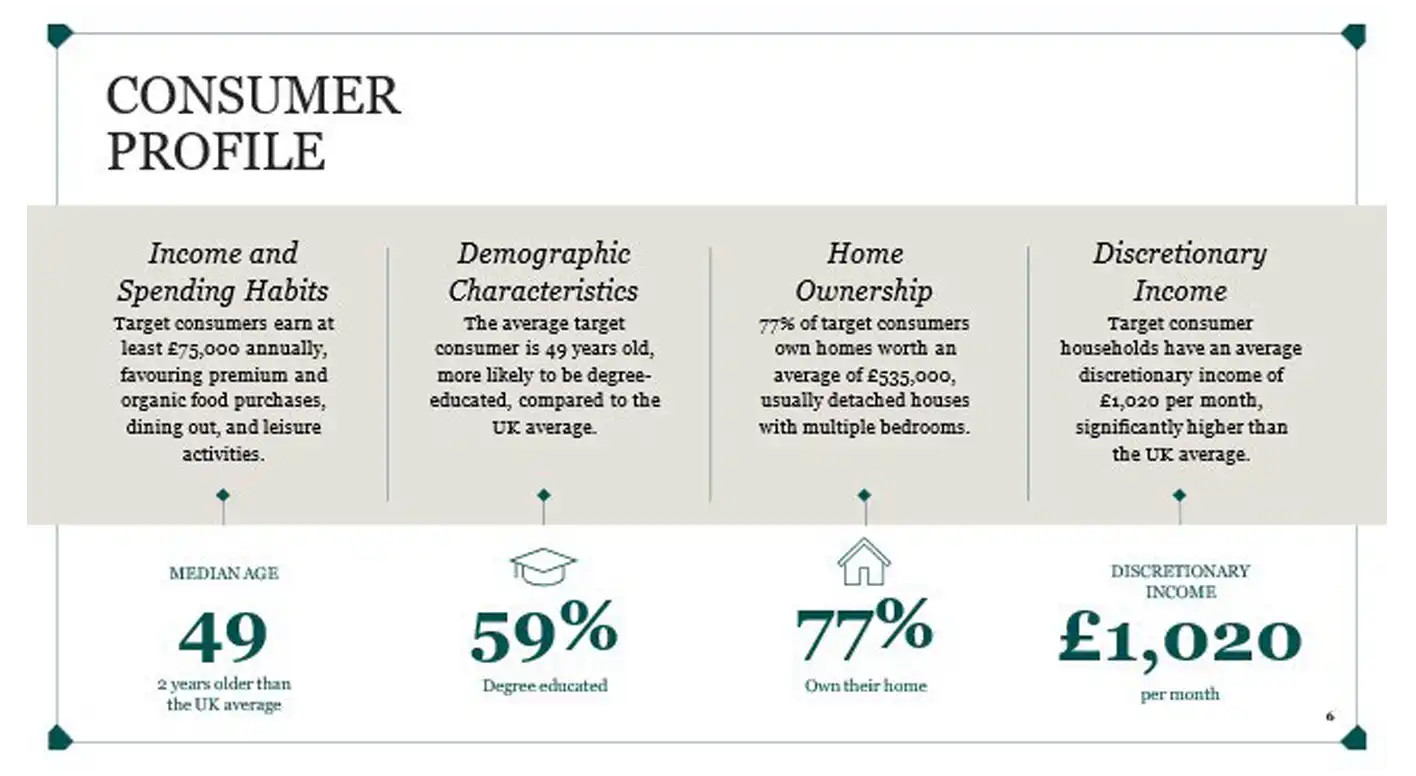
Consumer profile data example.
These consumers are grouped into five lifestyle profiles, including:
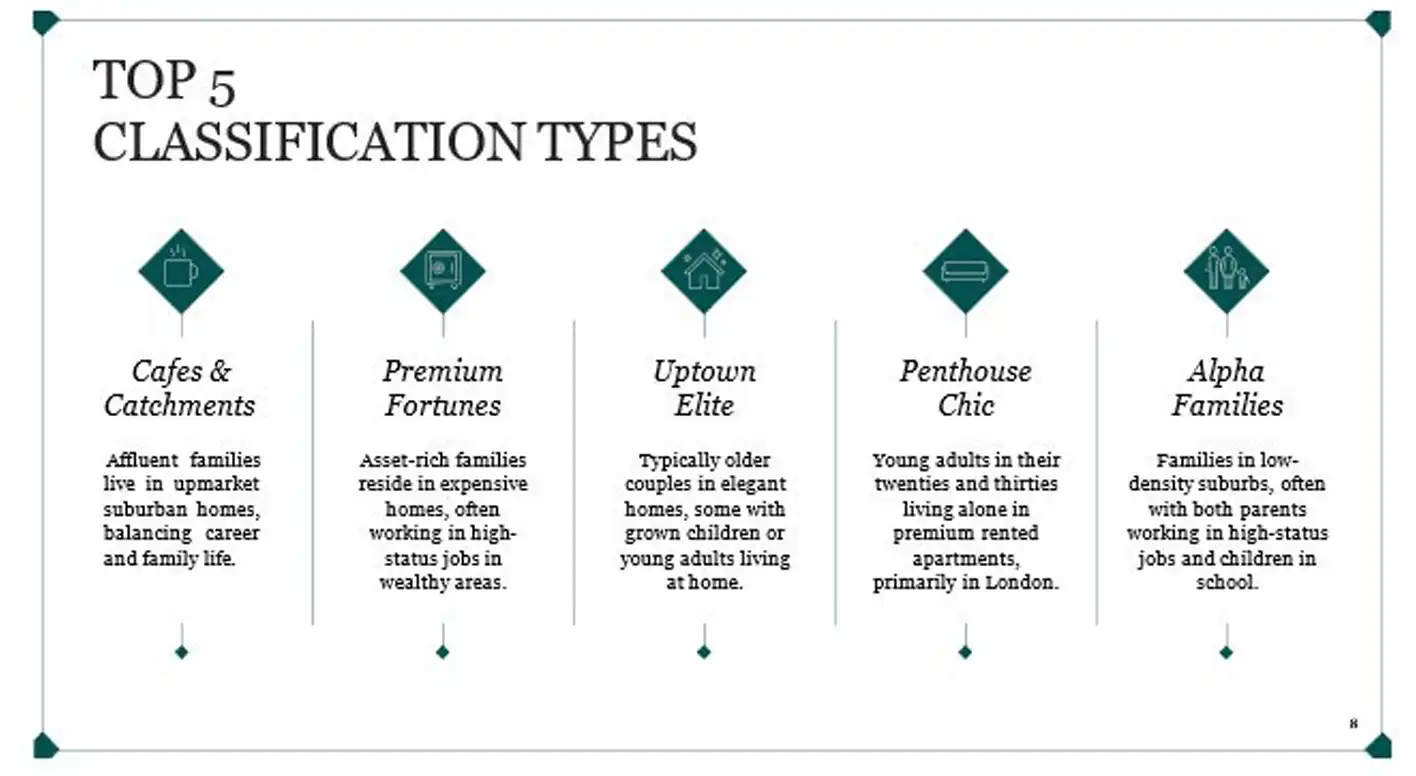
Top five classifcation type data.
Once we have profiled the target wine consumer, the report shows where clusters of target consumer households are, using heat maps based on both mean household income and density of target households per 10 sq km. These maps overlay 15, 30, and 60 minute drive times from the vineyard, so producers can focus their marketing efforts according to proximity, levels of discretionary income or audience size.
Using Tripadvisor data, it also identifies high-end restaurants and hotels overlaying these target areas so that wine producers can target restaurants and hotels frequented by target households who may come across their brand from the wine list, and then plan a visit to the vineyard.
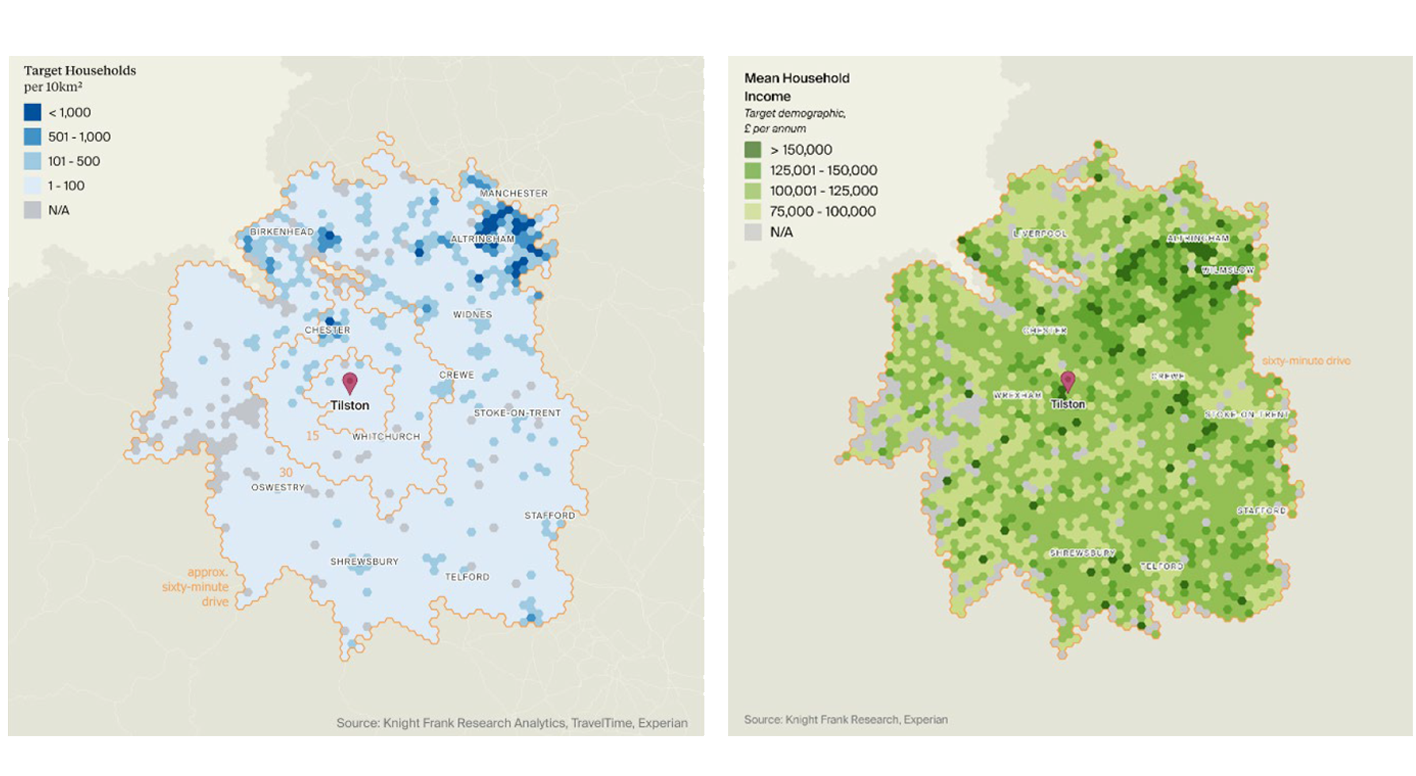
Target households and mean household income data examples.
Our clients were clear in their emphasis to us that weekend tourists generated a key part of their cellar door revenue.
We recognised that a lot of the effort to plan a weekend trip lay with the tourist, which was a barrier to entry for some. Equally, wine producers were often wary of taking on that responsibility because of the time involved in finding good quality restaurants and hotels.
Leveraging our API links with Tripadvisor we have tailored the report to help vineyards tap into the local tourism economy. By mapping 4*-5* Tripadvisor-rated restaurants, hotels, and attractions within a 60-minute drive time, it makes it easy for wine producers to help tourists make a weekend of a visit to the vineyard.
This not only encourages more people to visit but also increases how long they stay and how much they spend. The report even includes data on English Heritage and National Trust sites, which are popular with the same demographic and can be used to build themed experiences or joint promotions.
The third benefit is increasing visibility of the vineyard’s location by placing tourism signs on roads with high volumes of road traffic. The report includes detailed traffic data and road usage patterns provided by an API link with the Department for Transport so readers can establish the busiest roads between clusters of target households and the vineyard’s location. The report also includes information on local train stations and passenger numbers, offering further opportunities for signage and advertising to local travellers.
By understanding how people travel in and around the area, producers can make smarter decisions about where to invest in signage and how to guide potential customers to their door.
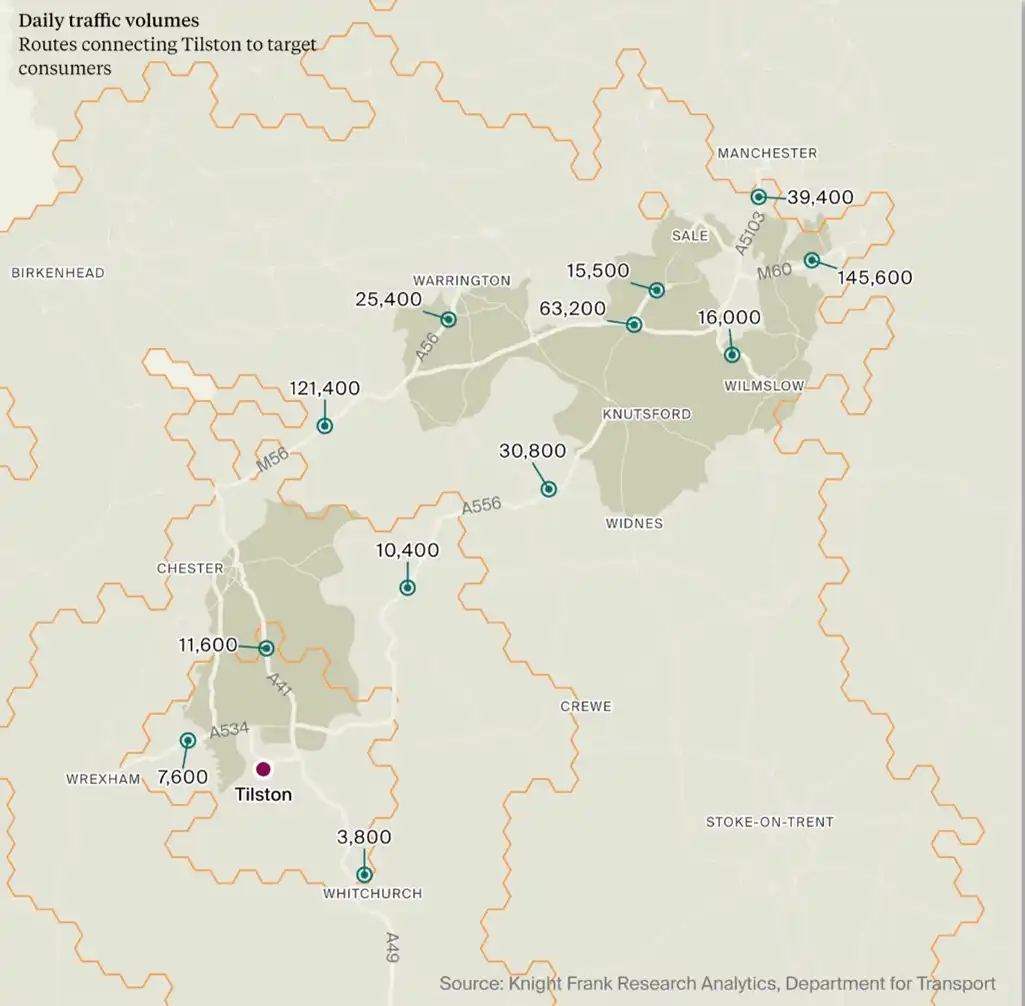
Example of traffic volume and consumer data.
We thought our core market was very local, but actually, we’re in reach of a much larger, more valuable audience than we expected. That’s changed how we think about everything from event planning to signage, and how we build our long-term hospitality offer.
Gary Smith
CEO of MDCV
