

Wine business models
12 June 2026
One of the most interesting parts of my job as a vineyard agent is getting to know the businesses and the people behind them, within wine.
It’s easy, at events like the Wine GB trade tasting to see the hundreds of different bottles lined up and assume that all the producers are in the same type of business, playing the same game.
What I have learnt is that there are many different permutations of how to run a wine business, and the strategies, income generating capability and investment demands of each business model are distinctly different from one another.
I recently wrote a piece for the Wine GB new entrant’s guide on the different business models within wine. As many of my readers are either existing producers or not in the industry at all, being professionals or potential investors, there is a good chance you might not come across it. So, I have decided to take a leaf out of my wife’s book and upcycle the article for my newsletter.
The big question, of course, is which model is right for you? The answer to that, annoyingly, is that it depends. It depends on how much capital you have access to, whether you hold relationships that you can leverage in markets that would inform your business model and what you are personally passionate about. If you need a bit more of a steer on which model might be right, then I have set out below a summary of six different models I have come across in my career, how they differ from one another and what the benefits and drawbacks of each model are.
1. Single Wine Estate Model
Single wine estates only produce wine made from grapes grown at their own vineyard. Typically, they make premium sparkling wine in their own winery, celebrating the unique characteristics of their terroir. They often focus sales into high-end restaurants and hotels or export channels. Some will sell into premium grocers, like Waitrose or Selfridges or multiple retailers, like Majestic. However, this decision is carefully judged so as not to make the wine appear too accessible, which may undermine its premium nature. Domaine Evremond, Hambledon and Rathfinny are all examples of single wine estates.
The advantages of the single wine estate model are:
- It gives the wine a very strong story of provenance, which is powerful from a sales and marketing perspective.
- The premium nature of the wines from single wine estates allows them to charge a higher price relative to other producers.
- If the brand becomes well regarded, the opportunity for capital growth in the underlying assets is substantial.
- They are popular with wine tourists, who want to buy the wine from the ‘cellar door’ at a full retail price.
- They have significant tangible assets on the balance sheet, meaning it is easy to offer banks security in return for borrowing facilities.
The disadvantages of the single wine estate model are:
- The upfront capital involved in planting the vineyards, and constructing the winery and hospitality facilities is very significant.
- Premium hotels and restaurants often have very large wine lists, meaning there will be a lot of alternative wines for diners to choose from, meaning sales of that estate’s wine might be slow, and thus repeat orders from the hotels infrequent.
- If you create a premium wine brand and are mainly selling to hotels and restaurants your business is more vulnerable to economic downturns, when people tend to cut back on eating out, compared to businesses who sell into the off-trade (supermarkets).
- If there are localised weather events, like hail or frost, at the single wine estate, it can have a very significant impact on the harvest.
2. Contract Wine Making Model
Contract wine makers provide wine making services to vineyard owners and negociants who do not own their own wineries. They will press the grapes, blend and bottle the wine. They may also provide disgorging, finishing and storage services. Many contract wine makers also make wine under their own label and are making use of the spare tank and human resource capacity to make wine for others. Examples of wine producers offering contract wine making services include Hattingley Valley, Three Choirs Vineyards, and Ridgeview. Others simply make wine for third parties, such as Defined Wines.
Advantages of contract wine making model:
- There are many more vineyards in the UK than wineries, so there is a high demand for wine making services.
- The cashflow curve of contract wine making is nice and flat, meaning the money comes in regularly in pre-agreed amounts, as it is a B2B arrangement.
- The secondary sell of wine storage is very profitable, as wine is often stored for a very long time with very little associated labour costs.
Disadvantages of the contract wine making model:
- The gross margin for making wine for others is materially lower than the gross margin of your own wine sold under your own brand.
- There are many hobby vineyard owners in the UK who are making and accumulating wine using contract wine makers at a far greater pace than they are selling it at, and will soon have to make the inevitable decision to either sell their vineyards or grub them up, at which point the demand for contract wine making will reduce at the hobby scale.
- There is a low barrier to entry for existing wine producers to branch into contract wine making, meaning the supply of contract wine making services may quickly increase.
3. Négociant Model
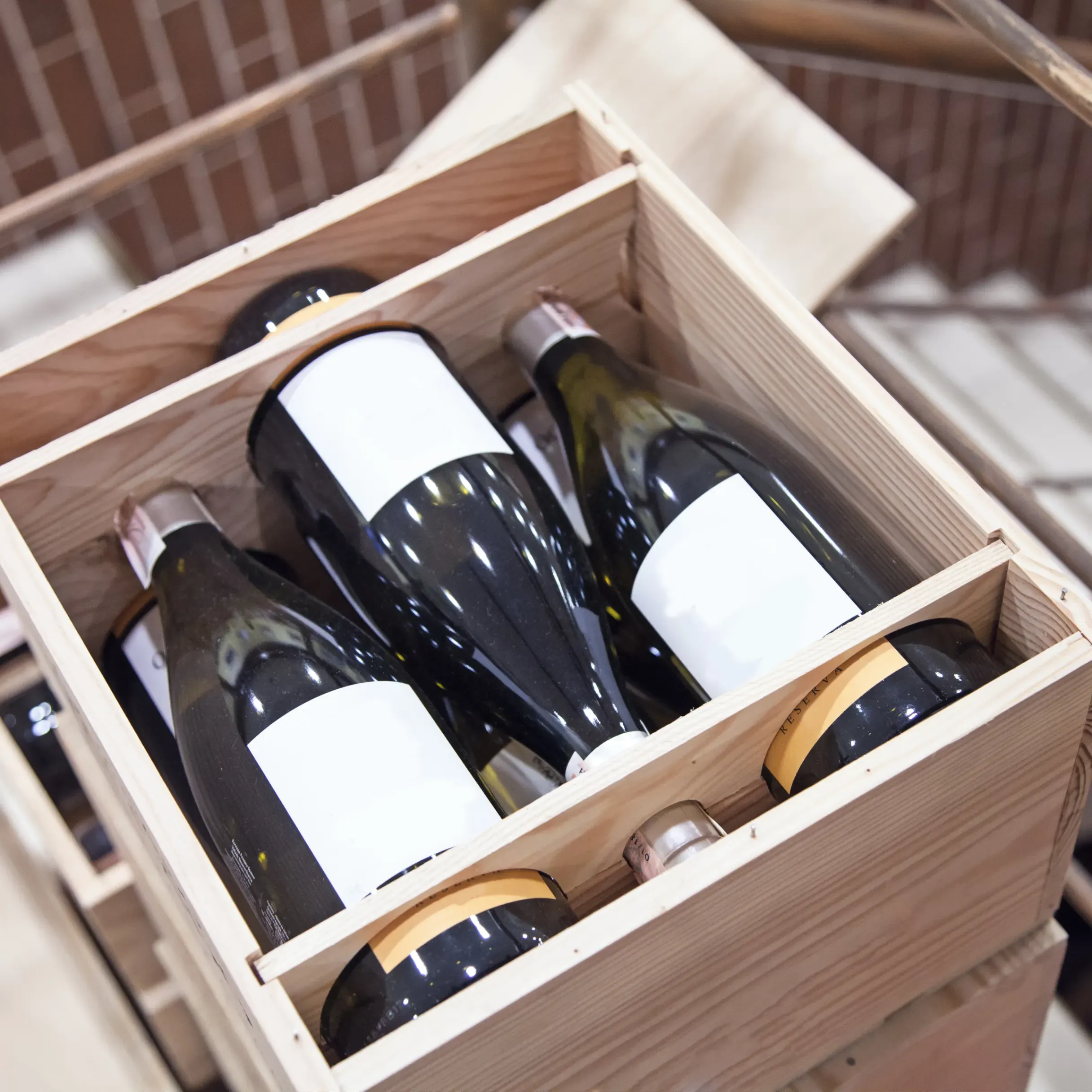
Négociants do not own any of their own vineyards. Rather, they buy grapes, juice, or finished wine from various growers, then blend, age, bottle, and sell it under their own label. Negociants don’t even have to own a winery, as contract winemakers can make the wine on their behalf. Folc are a good example of an English negociant wine maker.
The advantages of the negociant model are:
- There is far less upfront capital involved, as they do not need to plant vineyards or build wineries.
- They can source fruit from different sites. This gives them flexibility to make unique blends, enjoy the diversity of regional access insulating them from poor region-specific harvests.
- They have lower operating costs, as they are not funding primary production, and can be more focused on allocating OPEX to marketing and sales.
- In a period where grapes are in over-supply, negociants can take advantage of low fruit prices.
The disadvantages of the negociant model are:
- There are fewer tangible assets on the balance sheet, which can make it harder to access debt as banks like to secure their lending against land or property.
- The cost of buying grapes from a third-party grower is higher than the cost of growing grapes yourself.
- The cost of having wine made by a third party is higher than the cost of making wine yourself.
4. Charmat Wine
People started making sparkling wine using the prosecco method (called the Charmat Method, in the UK) in around 2018, but it is now commonplace in the UK. Charmat wine gets is bubbles from the secondary fermentation, which happens in large, pressurized stainless steel tanks instead of inside individual bottles which is the traditional method of making sparkling wine. The charmat method is a quicker and more affordable way to produce sparkling wine. It is characteristically aromatic and vibrantly fruity, rather than the richer, toastier profile of traditional method sparkling wine. Silver Reign, Fitz and Flint Vineyard are examples of producers of charmat wine.
Advantage of Charmat wine:
- Charmat wine is ready for sale within a matter of months after harvest, compared to the wait of many years for traditional method sparkling wine to age.
- The short ageing process of charmat wine means working capital is tied up for far less time, and you do not need such large storage capacity, so your initial CAPEX is also less.
- You can sell charmat wine profitably below £20 per bottle, which it is not possible to do with traditional method sparkling wine. This makes it accessible to more price sensitive buyers.
Disadvantages of charmat wine:
- The margins of charmat wine are comparatively lower than margins of premium wine, so it needs to be sold in high volumes.
- To achieve economies of scale in a high-volume business you need considerable infrastructure, which is expensive to establish.
- Charmat wine cannot be called ‘English’ under the standards set by the PDO for England.
- Charmat wine is regarded as the Porche Boxter of the sparkling wine industry, so producers opting for this route need a thick skin.
5. Grape Producers
Grape producers take responsibility for the establishment of the vineyards, and the production and delivery of the grapes to the winery, whereupon their responsibility comes to an end, and they are paid according to the volume and quality of their grapes. Grape producers often have pre-agreed sale contracts with wine producers, which ties both parties into selling and buying from one another for a set period that is typically between 10 – 15 years. The price will be set at the outset, with price reviews at set stages, and price bonuses and penalties for variation in quality, based on the level of sugar and acid in the grapes.
Others sell into the spot market, meaning they are free to sell to any wine producer they want, for whatever price they can get in the market, year by year. Grape producers tend to have diversified into grape production from top fruit production. Examples of grape producers include Gaskains and JL Baxter and Son.

Advantages of grape production:
- Top fruit producers tend to already have much of the machinery, skills, knowledge, and labour on site needed to diversify into grape production.
- Grape sale contracts give growers certainty on price and buyer.
Disadvantages of grape production:
- Growing grapes is a marginal business, that is highly skilled. New entrants into grape production, with no previous fruit growing experience, could easily find themselves struggling to produce fruit at the quantity and quality needed to achieve profitability, if they miss a critical spray or have inadequate frost protection.
- There is an overproduction of grapes and wine in the UK in the market at the moment, relative to wine sales, so now would not be a good moment to establish a grape production business, unless you were an existing grower planting to meet proven demand from buyers.
6. Cellar Door with a Show Vineyard
Some wine producers buy in grapes from third party grape producers but plant a show vineyard in front of a restaurant or terrace, to give the feeling of arriving at a wine tourism destination. These businesses are very popular with wine tourists as they offer drinking and dining experiences overlooking the vines. The success of these businesses is determined more by their connectivity to affluent areas by road or rail, than the suitability of their location for growing vines. Good examples include Balfour Winery, near Marden train station which is less than 1 hr from London Bridge, and Camel Valley vineyard in Cornwall, just off the A30, the main road between Exeter and Penzance.
Advantages of a cellar door with a show vineyard:
- These businesses sell a significant proportion of their wine direct to the consumer, relative to other sales channels.
- They can generate significant amounts of revenue for a like for like volume of wine sold, compared to other business models, as sales of wine by the glass command a significantly higher price than sales of wine by the bottle via a distributor.
- Many cellar-door wine businesses have leveraged the amenity of their businesses to create membership programs offering member discounts on wine and invite-only member events.
Disadvantages of a cellar door with a vineyard:
- These businesses have very high labour and utility costs, to staff and run the bars and restaurants.
- If businesses have contracted to buy grapes from third parties, they are obligated to honour those contracts even if they find they are selling less wine than they are making from the grapes they buy in.
- If they are not a convenient taxi ride or train ride away from customers, they need a strategy to overcome the drink-drive problem.
