

How AI is shaping the future of real estate
As artificial intelligence becomes a strategic force within real estate, what opportunities and challenges does it create?

As artificial intelligence becomes a strategic force within real estate, what opportunities and challenges does it create?

AI is reshaping real estate, moving from an abstract concept to become a critical part of business infrastructure and in the process, influencing investment decisions, building performance and operational efficiency right across the sector. Lily Nguyen from Knight Frank’s Commercial Insight team and Max Beard, Innovation Architect, outline the role it is set to play, transforming building operations and the workplace experience, and highlight the opportunities and challenges ahead.
Lily Nguyen (LN): Smart buildings generate extensive amounts of data on how they operate: occupancy levels at various times of the day and week, how energy is used, temperature controls, lift usage and how different spaces are used throughout the day for example. Where AI comes in is in helping to analyse that data far more quickly than would be possible manually, identifying patterns and opportunities to improve the building’s performance based on the utilisation it records.
This can help improve energy efficiency and lower operating costs while also, equally importantly, improving comfort for tenants. AI is also enabling a shift in the management of buildings by being proactive rather than reactive. While building managers typically respond when a problem occurs, AI can analyse trends across building systems to identify potential issues before they become problems, helping building managers plan maintenance more effectively and improve operational resilience.
Max Beard (MB): There has never been a greater opportunity to optimise how buildings are managed. The volume of data generated by AI across energy management, access control, temperature control and more is extraordinary, enabling far deeper analysis of operational trends. If used correctly, and that is an important caveat, the vast amounts of information AI can process will help uncover opportunities that people using traditional tools and methods would be unlikely to identify as quickly.
AI will make the workplace experience more comfortable and efficient. Smart buildings systems can automatically adjust temperature, lighting and ventilation based on occupancy and external conditions, improving comfort while reducing energy use. Whether a meeting room has one person or ten, conditions can be optimised in real time. The result is a workplace that better supports people while operating more sustainably all through leveraging technology.
MB: The industry is increasingly integrating AI into building management systems to create truly digital buildings. This involves embedding sensors and IoT devices throughout properties to monitor everything from energy use and air quality to occupancy and security. Data collected is then analysed in real time, allowing for proactive maintenance, improved operational efficiency and a more personalised experience for occupants. Developers and operators are also using AI to optimise building design, ensuring spaces are adaptable and future-proofed for new technologies as they emerge.

LN: By automating routine-based tasks such as sourcing information, drafting text and analysing data, AI frees up employees to focus on decision-making, innovation and creativity. The productivity gains AI provides allow employees to spend more time applying their expertise and judgement in areas where they add the greatest value. The use of AI may also shift the role of the office towards collaboration, relationship-building and idea generation, and this change in how occupiers use their buildings is something that workplace designers must take into consideration.

MB: Between 2010 and 2020, global property markets were defined by commodity businesses like Facebook, Amazon and Apple who shaped how space was used. Now we’ve seen a structural shift to focus more on the infrastructure behind artificial intelligence, companies including Nvidia, Anthropic and SpaceX, many of whom are interdependent and often share AI infrastructure.
As a result, the role of real estate assets is changing. Buildings are no longer just occupied by a single tenant but sit within a wider system, deriving their value from how well they ‘plug’ into power, data and supply chains rather than just from location and rent. There are three things these businesses need, namely real estate, power and microchips, three things that have never been in greater demand. Real estate is no longer just a backdrop to technology but a core part of it. Oxford Economics report that the number of data centres has increased fourfold since 2000, with capacity expected to more than double by 2030. I’ve written about this at greater length here.
LN: In simple terms, AI needs computing power and much of that computing power sits in a data centre. As AI adoption grows, we’re seeing strong demand for data centres and the infrastructure that supports them. Strong digital connectivity is equally important because AI tools rely on the fast movement of data between users and computing infrastructure. And as AI models become larger and more capable and adoption expands across different industries, we are also seeing a greater focus on power networks and grid capacity to support this growing demand.
LN: As outlined, AI is making buildings smarter and is also creating investment opportunities across data centres, power infrastructure and digital connectivity. The associated challenges include ensuring that both organisations and buildings are ready to support AI at scale. To embed AI effectively across a business, you need the right data, skills, resources and investment, and that all takes time to develop.
There are challenges around preparing buildings too. If occupiers are increasingly embedding AI into their workflows, reliable power and strong digital connectivity becomes essential. AI might feel intangible, but it relies on very physical, tangible things: that should be a main takeaway for us all.
MB: The opportunities for businesses include increasing margins through improved productivity by, at the simplest level, leaving administrative tasks to AI so that staff can concentrate on where they command value. It’s very clear for us at Knight Frank that technology is unlocking new service lines. Change management is always hard however. I see three main challenges for our industry.
First, we need to see the digitalisation of buildings. It sounds ridiculous in 2026, but we still see massive skyscrapers which are managed from a lever-arch file. Secondly, we must get people to use the tools and understand the benefits. People can be stuck in their ways and leaning into the AI champions in a business will be vital to bring everyone along on the journey.
And thirdly, we must make the tools so good and streamlined that people remember to use them day in and day out. I’m hopeful on this. Recently, teams have been in our European offices training staff around Copilot and what we found, to our surprise, was that older staff with 20 years or more experience of delegating tasks were often far better at setting expectations for AI tools. It proved to us that if you treat the tool as though it’s a person, and effectively and efficiently outline what you want, you’ll get far better results.
How emerging technologies are transforming the global real estate landscape

Inspiration
As capital becomes more selective and specialised, we identify the newly emerging sectors shaping the future of commercial real estate investment
18 September 2026

Inspiration
How changing patterns of wealth mobility are reshaping demand for prime properties and branded residences
18 September 2026

Inspiration
Knight Frank experts explore how retailers, investors and communities are redefining the role of the modern high street
17 September 2026

Inspiration
As artificial intelligence becomes a strategic force within real estate, what opportunities and challenges does it create?
25 August 2026
Inspiration
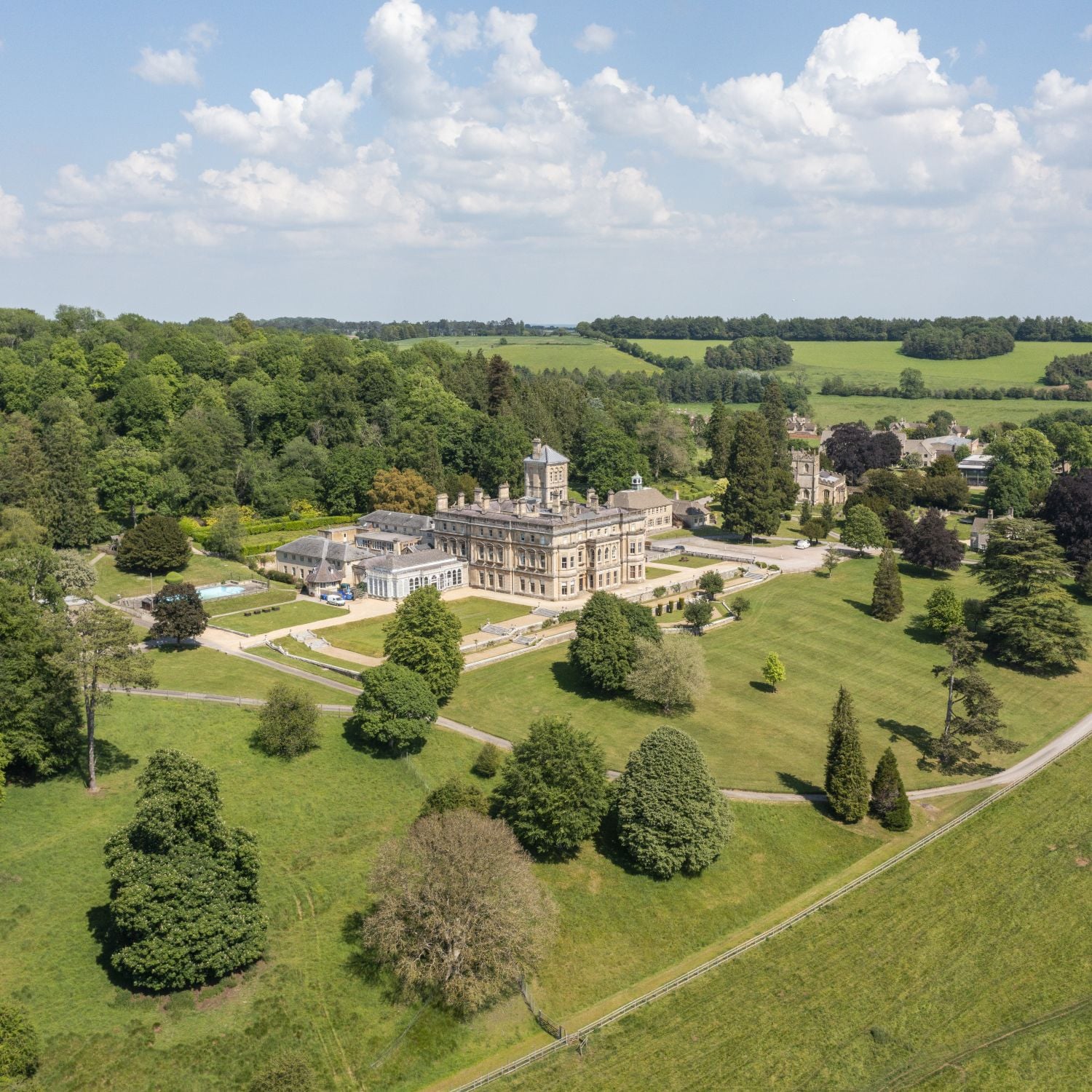
Rendcomb Park, a significant private estate set in 230 acres of prime English countryside with an on-going charitable legacy, is ready for the next chapter in its impressive history
12 August 2026

Inspiration
How modern high-tech solutions take the stress out of managing your home remotely
06 August 2026

Inspiration
How a Shakespearean film and Knight Frank Italy led one couple to their dream Tuscan estate
06 August 2026

Inspiration
Artist Elizabeth Orchard finds inspiration in the beauty of Italy and her Florentine home and garden
06 August 2026

Inspiration
Consumers are becoming ever more selective and informed. What does this mean for the collectibles and luxury assets markets?
24 July 2026

Inspiration
Elite players and ambitious clubs are taking a strategic approach to real estate, using property to build long-term value on and off the field
17 July 2026

Inspiration
With greater choice and established vineyards coming to market, England's wine sector is entering a new phase of maturity
16 July 2026

Inspiration
The founder of design studio Elicyon explains why authenticity, wellbeing and craftsmanship are replacing trend-led interiors in today's most desirable homes
07 July 2026

Inspiration
Knight Frank experts share early insight into how the Renters’ Rights Act is shaping rents, supply and landlord decision-making across the lettings market
18 June 2026

Inspiration
For today’s increasingly youthful affluent audience, a search for unique experiences and a drive for wellness and longevity mean luxury priorities have shifted
17 June 2026

Inspiration
Alexander Hall, Head of Knight Frank’s new International Vineyard Services division, looks at the forces reshaping the global wine production map – and creating exciting opportunities for forward-looking winemakers and investors
12 June 2026

Inspiration
From first impressions to final offers, the right interior can transform how quickly, and successfully, a home finds its next occupant.
03 June 2026

Inspiration
Flexible rentals, premium rates and global demand are making summer an increasingly attractive opportunity for homeowners in the short lets market
21 May 2026

Inspiration
Olympian James Guy MBE joins Schools Triathlon founders Jim Sewell and Tessa Murray to reflect on the power of teamwork, confidence and impact through sport
30 April 2026

Inspiration
As new government legislation comes into force, what are the current market trends landlords should know to achieve a successful tenancy
28 April 2026

Inspiration
Head Gardener Harry Baldwin shares how history, sustainability and modern horticulture shape the estate, and gives his top tips for the green-fingered
20 April 2026

Inspiration
Peter Huf shares his vision for sustainable architecture that balances innovation, efficiency and a deep connection to nature
20 April 2026

Inspiration
Discover the story of the British family behind the award-winning Domaine Begude - now on the market for the first time in decades
08 April 2026

Inspiration
Knight Frank’s new Head of Residential Client Advisory shares his expert advice for residential property investors and buy-to-let landlords – and his outlook for the year ahead
26 March 2026

Inspiration
With speed, certainty and transparency at its core, Venteu is redefining how premium homes reach the right buyers worldwide
13 March 2026
Sorry!
An unexpected error has occurred.
Please try again later.
