
The Rural Update: Policymakers must act on warming climate
Your weekly dose of news, views and insight from Knight Frank on the world of farming, food and landownership.
03 August 2026

Viewpoint
As many of the articles in this week’s Rural Update reveal, the UK’s changing climate is having a profound impact on agriculture and land use, bringing both opportunities and challenges that policymakers must respond to. Hotter summers and drier winters mean conventional crops will become more dependent on irrigation, but the required reservoir infrastructure across the country has been woefully neglected. At the same time, those growing crops like grapes that enjoy the warmer temperatures would benefit from targeted grant support, enabling them to better compete with their EU counterparts. Although farmers may question the messenger, calls from major supermarkets urging our new Prime Minister to boost food security and improve diets in the face of structural challenges such as climate change should not go unheeded.
Sign up to receive this newsletter and other Knight Frank research directly to your inbox
Commodity markets
Harvest update
The AHDB’s first review of harvest 2026, which was the earliest for at least 20 years, reveals a mixed picture. With 54% of the UK’s wheat already in the barn by 27 July, yields were averaging 6.8t/ha, a significant drop on the 10-year average of 7.9t/ha. However, the picture has varied widely across the country with lighter soils hit hardest by the prolonged dry period. Oilseed rape crops have fared better, averaging 3.9t/ha against a 10-year average of 3.3t/ha.
Oil price rollercoaster
We’ve been here before, but oil prices, which had been rising again for the past few weeks, tumbled sharply in early Monday morning trading as Donald Trump posted on social media over the weekend that he was pulling back from a threatened escalation in strikes against Iran. At the time of writing, West Texas Intermediate futures were trading at just under US$80/barrel, down almost 6%, while Brent crude futures had fallen to around US$83.5/barrel, a slide of 5.0%.
The headlines
Capital grants stampede
The bulk of this year’s standalone Capital Grants scheme funding has already been allocated, even though the window for applications only opened last Thursday (30 July).
On Saturday, Defra confirmed that 75% of the £225 million available for 80 different capital items, which include measures to improve air or water quality and encourage more tree planting and hedgerow creation, had been claimed.
If applications continue at the current rate, the scheme may well be closed by the time you read this. If you have missed out and need help with alternative grant options, please contact Mark Topliff.
Land value tax ruled out
New Prime Minister Andy Burnham has ruled out replacing Council Tax and Stamp Duty with a controversial Land Value Tax in the next Budget.
There had been speculation that Burnham, who has long criticised the current regime of property taxes as being regionally unfair, would follow the recommendations of the Fairer Share thinktank and introduce an annual tax of 0.48% on property values, with the rate doubled for overseas or second-home owners.
The conjecture had understandably dented demand as buyers had wondered how long stamp duty would continue to exist. “It had definitely been a topic of conversation, and we expect more buyers to come forward now that it has been ruled out,” said James Cleland, Head of Country Sales at Knight Frank.
For more property market insight read Tom Bill’s latest research note.
News in brief
PM Food letter warning
Some of the UK’s largest food retailers are among over 100 organisations that have signed a letter to Andy Burnham urging him to prioritise a “Good Food Bill” that would include setting legally binding targets to reduce childhood obesity, increase the consumption of fruit and vegetables, boost the proportion of food grown in Britain and reduce household food insecurity. The letter says: “Each new shock lands on a food system with less capacity to absorb it. British production of fruit and vegetables has fallen 16% since 2015, and we now import 78% of our supply. The next food shock is not a question of if, but when.”
Tourist tax rebuffed
Meanwhile, The CLA has joined a coalition of hospitality and tourism organisations urging John Healey, the new Chancellor, to abandon plans for an overnight visitor levy on those staying in hotels and other accommodation. Oxford Economics says such a policy could cost 33,000 jobs and £2.2 billion in lost GDP. CLA President Gavin Lane said: “Rather than introducing new costs for visitors and businesses, policymakers should focus on creating the conditions for this vital sector to thrive.”
Drought declared
As the UK endures its fourth heatwave of the year, the Environment Agency (EA) has declared an official drought covering a large swathe of central, eastern, and southern England, accounting for around half of the country. July experienced just 7% of its long-term average rainfall. Only Yorkshire and the North East remain in what the EA describes as “normal” status.
Record renewables
Last year was another record breaker for green energy production in the UK, with renewable sources accounting for 53.5% of gross final electricity consumption, according to the government’s latest figures. A jump in installed capacity and sunshine hours saw solar output rise 34% from 15.0 TWh to 20.1 TWh. Offshore wind, however, was still by some way the biggest contributor, providing 52 TWh of power. In total, renewable sources generated 153 TWh of electricity compared with 144.5 TWh in 2024, although taking into account transport and heating they supplied just 16.8% of the UK’s overall energy needs.
Borrowing costs on hold
The Bank of England maintained its base rate at 3.75% for the fifth consecutive time at its July rate-setting meeting last Thursday. However, three of the nine-member rate-setting committee voted to increase the rate by 0.25 percentage points to 4%, compared with two in June. Commentators are split as to whether rates will rise later in the year. Much will depend on events in the Middle East. For the latest rural lending deals, please contact Bradley Smith of Knight Frank Finance.
Vineyard support urged
WineGB, which represents around 70% of the UK’s vineyards by area, is calling for a package of measures to support the country’s growing wine industry. The wish list includes legislation to ensure English wine can only be made using grapes grown here, better grant funding to help vineyards compete with their EU counterparts and a removal of duty on cellar-door wine sales. For expert viticultural and winery advice please contact Ed Mansel Lewis.
Property of the week
Dorset mixed land block
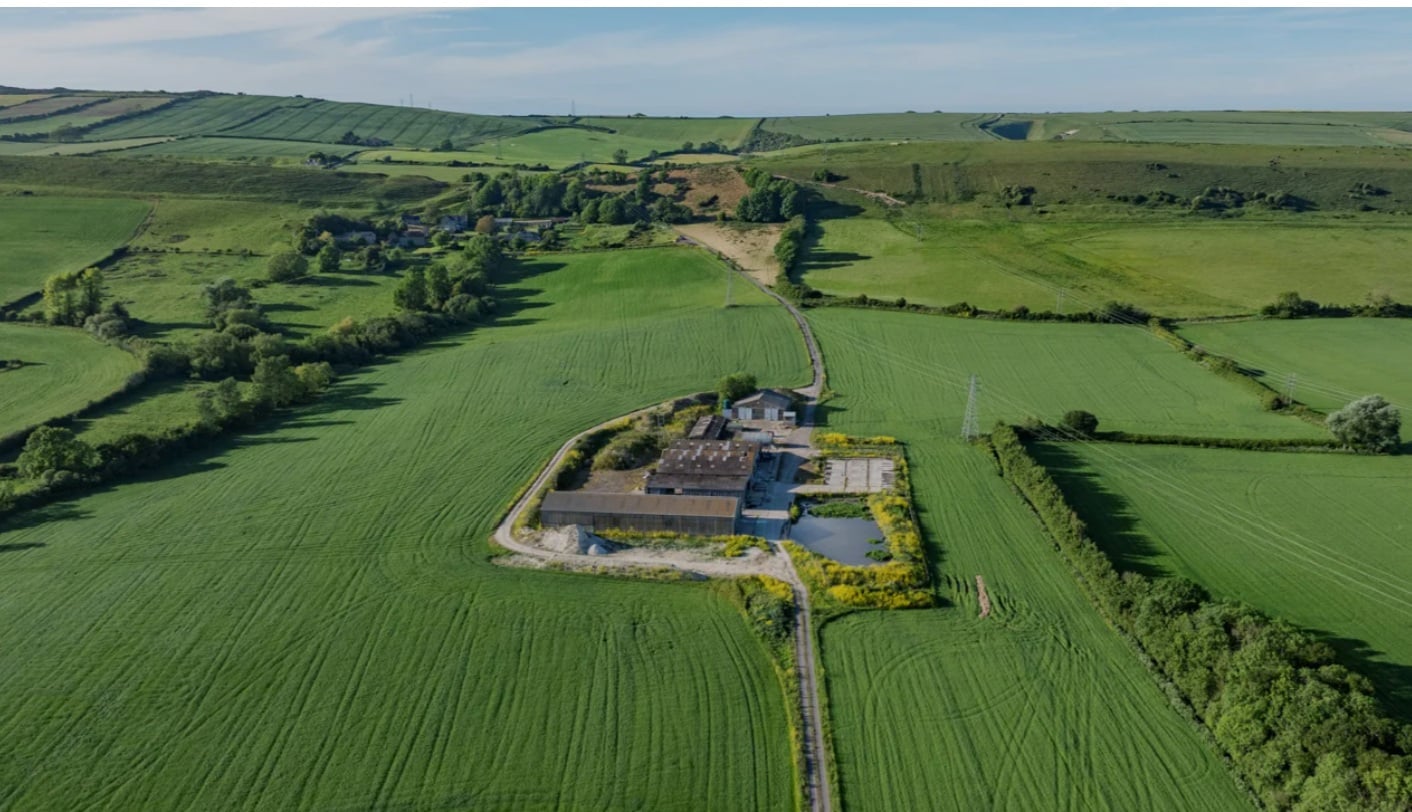
Corton Farm at Friar Waddon, near Weymouth, is a 167-acre block of rolling arable and pastureland that comes with an extensive range of buildings suitable for a mixed farming enterprise. There is also a nine-acre block of woodland and a derelict farmhouse that could offer development potential with the appropriate consents. The guide price is £1.95 million. Please contact Will Matthews for further information.
Property markets Q2 2026
Farmland
The farmland market remains in a state of inertia, according to the Q2 2026 edition of the Knight Frank Farmland Index, which tracks the value of bare land in England and Wales. Average values fell by just 1.5% over the quarter to just under £8,500/acre. But “because sales volumes are so low at the moment, it is impossible to say what an acre of land is worth”, points out Will Matthews, Head of Farm & Estate Sales. “The right block of land in the north Cotswolds could still make £20,000/acre, but in other areas you might be chuffed if you get £10,000/acre.” Download the full report for more farmland insight and data.
Country houses
The average price of rural properties fell 5% in the year to June, according to the Knight Frank Prime Country House Index, which tracks the value of homes worth over £750,000. The drop was slightly narrower than the decline of 5.5% recorded in March. The number of exchanges in the first six months of this year was 10% lower than in 2025, while the number of new prospective buyers registering was down by 14%.
