
The Rural Update: New PM must back rural Britain
Your weekly dose of news, views and insight from Knight Frank on the world of farming, food and landownership.
20 July 2026

Viewpoint
Andy Burnham talks a lot about the north/south divide. But as a timely new report The Future of Rural England, published last week, makes clear, he must not lose sight of the growing rural/urban divide. The rural economy is a sleeping giant that he needs to work with and nurture to unlock and catalyse the growth that the country needs, not to mention delivering solutions to some of the biggest challenges facing society today, such as climate change and diet-related health issues.
However, the report also notes that those living in rural areas are far more reliant on small and medium-sized (SME) businesses than urban residents. Our seventh Prime Minister in just 10 years can’t dodge the fact that SMEs have borne the brunt of his predecessor’s tax changes, including the introduction of the family farm tax. Undoing some of that damage would go a long way to closing the gap between town and countryside.
Sign up to receive this newsletter and other Knight Frank research directly to your inbox
Commodity markets
 Milk shortage
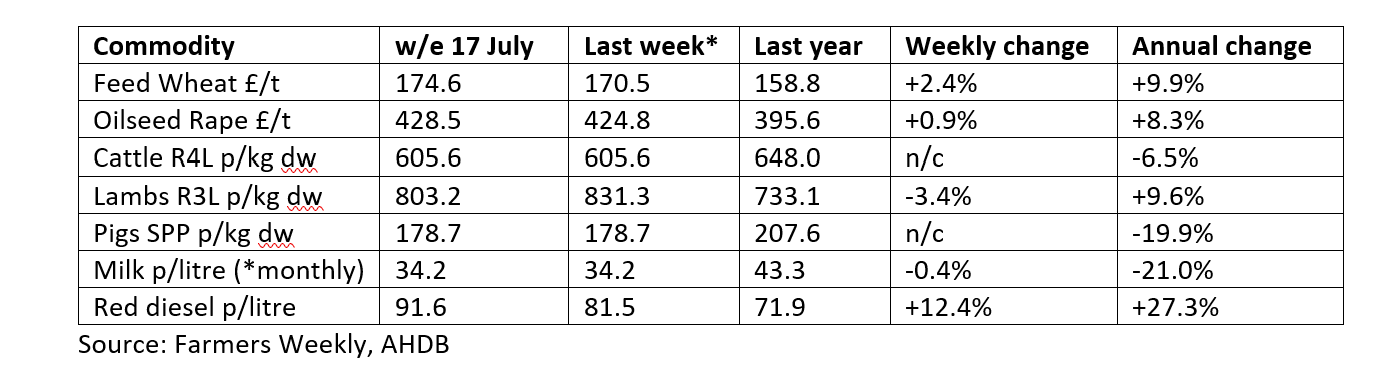
The third heatwave in quick succession is putting upward pressure on milk prices in the UK and across Europe. Having gone from a situation of oversupply earlier in the year, processors are now concerned about supplies as milk production slumps due to the impact of heat stress on dairy cows. According to the AHDB, 18.5 million litres have been lost across Britain because of the hot weather. Spot prices have risen by 10-15p/litre and longer-term contracts could follow suit.
Wheat war premium
Ukrainian drone attacks on ships in the Sea of Azov, which is the route used for around 25% of Russia’s grain exports, and Russian strikes on Ukraine’s Black Sea ports have pushed up wheat prices as traders worry about significant disruption to global supplies. European markets have surged to a 17-month high, according to trader Frontier.
Fertiliser threats
The fertiliser market, which had started to stabilise following the ceasefire deal between the US and Iran, has been thrown into turmoil again after the resumption of hostilities in the Gulf region. Buying activity had picked up as some farmers took advantage of lower prices, but some suppliers have once again withdrawn from the market. A surge in demand from French farmers due to a government support scheme could also limit availability here.
English pig help nixed
Despite pig prices falling by almost 20% over the past 12 months, the government has ruled out any special support for the sector. Food security minister Stephen Morgan said the current difficulties reflect wider market conditions rather than the exceptional disruption needed to trigger emergency aid. The National Pig Association estimates at least 10,000 pigs a week will be lacking a buyer when current contracts start to expire in the autumn.
The headline
England’s rural future
Defra has just published a report setting out how it will address the challenges facing rural communities in England.
Based on findings from the government’s Rural Taskforce, set up in April 2025, The Future of Rural England notes that rural areas contribute over £259 billion annually to the economy, yet productivity lags urban areas.
The report identifies six areas that it says are making it difficult to close the gap: infrastructure and housing, skills and education, health and wellbeing, safety and community resilience, rural crime and connectivity.
Proposals to help tackle the issue include ensuring all government departments systematically assess rural impacts in policy and investment decisions and that rural priorities are reflected in Local Growth Plans and Spatial Development Strategies.
BNG updates confirmed
The government has confirmed that a number of changes to the Biodiversity Net Gain (BNG) regime, which forces developers to create additional habitat in addition to any destroyed by their schemes, will come into effect on Thursday 6 August 2026.
Perhaps the biggest shift is an exemption for any schemes below 0.2 hectares, which means that the smallest developments will not be required to do mandatory BNG, unless onsite priority habitat is negatively impacted.
There is some confusion, however, as to whether hedgerows will count as priority habitat. If so, the removal of just five metres of hedgerow to create a site access could trigger the need for BNG.
A new temporary development exemption for land that will be reinstated within a period of five years or less has also been introduced. However, self-build projects will no longer be exempted.
In addition, a modification to the biodiversity gain hierarchy for minor development means that small non-exempt sites can choose to go straight to offsite BNG options, rather than having to assess the option of creating units within the development.
News in brief
The Eagle lands. Again
Angela Eagle has been appointed to lead Defra after Andy Burnham’s late-night reshuffle yesterday (20 July). Dame Angela, previously Farming Minster until being shifted to a Home Office role by Keir Starmer just five weeks ago, takes over from Emma Reynolds who jumps to the Treasury. She is the tenth Defra Secretary in 10 years. In other rurally relevant moves, Ed Miliband leaves his controversial role as Energy and Net Zero minister, while Angela Rayner is back in charge of Housing, Communities and Local Government, which includes oversight of planning policy.
Farmer collaboration fund
A new £30 million fund to help farmers work together and share their expertise to reduce costs and build more resilient businesses was unveiled at the Great Yorkshire Show last week by Defra Secretary Emma Reynolds. The Farmer Collaboration Fund will open on 1 September, with more details published next month. A new £1.5 million Farmer Welfare Grant will open for applications on 6 August.
Capital grants open soon
Meanwhile, applications for the latest round of the government’s Capital Grant scheme, which provides £225 million of funding for six themes - boundaries, trees and orchards; improved water quality; improved air quality; improved natural flood management; assessments and improvements – are set to open on 30 July. Please contact Mark Topliff for advice on making a claim.
Dartmoor pony move
Following a public outcry Defra has announced that Dartmoor’s iconic semi-wild ponies will be removed from stocking-rate calculations in new Environmental Management agreements, so that farmers do not face a choice between keeping ponies and maintaining sheep or cattle. A new dedicated pony supplement will also be introduced into farming schemes to remove any financial incentive to reduce pony populations.
Swiss free-trade deal
Import tariffs on a range of UK farm products have been slashed following the agreement of a free-trade deal with Switzerland, one of the world’s most protected agricultural markets. Lamb will benefit from zero tariffs while the rate on beef steaks and English sparkling wine has been reduced by 35% and 34%, respectively. The dairy sector should also benefit with tariffs cut by up to 50% on products such as milk powder.
UPF heart warning
Up to 40% of heart disease deaths could be down to excessive consumption of ultra-processed foods (UPFs), according to a new Canadian study from researchers at the Center for Public Health Research at Montreal University. Switching to healthier diets and cutting UPF intake by half could prevent almost 46,000 new cases of cardiovascular disease annually, the researchers reckon. In the UK, UPFs are now estimated to make up over half of the average diet.
Weather outlook
The past 10 years have seen 9% more days suitable for crop growth than 1991–2020 and 24% more than 1961–1990, according to the Met Office’s latest State of the UK Climate report, published last week. However, excessive heat and volatile rainfall may cancel out the benefits. The report confirms that 2025 was the warmest year since its temperature series began in 1884. Average temperatures have risen by 0.25 degrees every decade since the 1980s.
Property of the week
Historical East Sussex launch
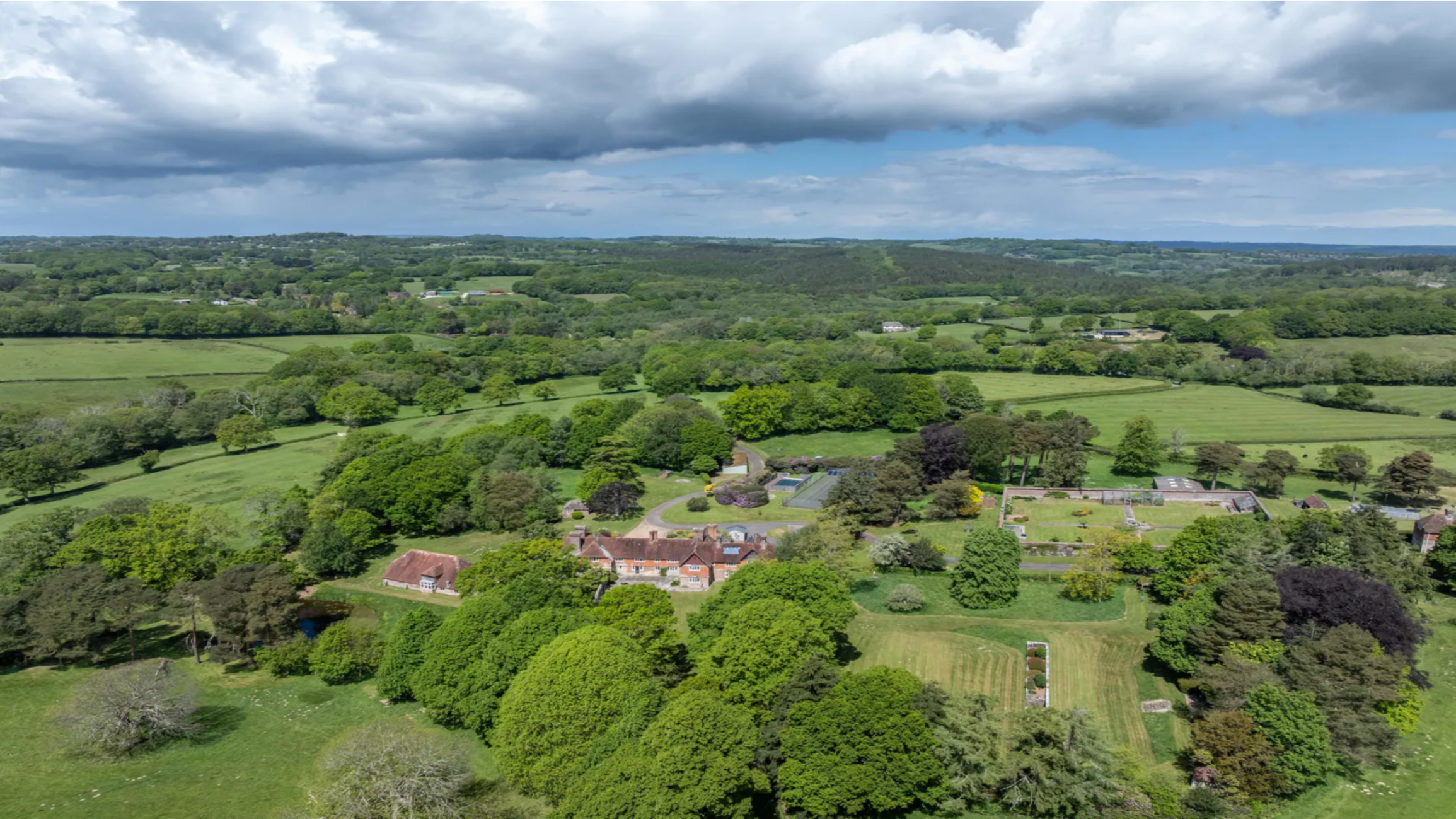
The Oldcastle Estate near Dallington, parts of which date back to the 1100s, has just arrived on the market. At the heart of the 336-acre property is a 10-bed Grade-II listed house set in landscaped gardens. There are four further houses, including a four-bed farmhouse with its own far-reaching views, and the rolling farmland is mainly pasture with areas of woodland. The estate has a guide price of £7.035 million and has been split into three main lots. Please contact Will Matthews for more information.
Property markets Q2 2026
Farmland
The farmland market remains in a state of inertia, according to the Q2 2026 edition of the Knight Frank Farmland Index, which tracks the value of bare land in England and Wales. Average values fell by just 1.5% over the quarter to just under £8,500/acre. But “because sales volumes are so low at the moment, it is impossible to say what an acre of land is worth”, points out Will Matthews, Head of Farm & Estate Sales. “The right block of land in the north Cotswolds could still make £20,000/ acre, but in other areas you might be chuffed if you get £10,000/acre.” Download the full report for more farmland insight and data.
Country houses
The average price of rural properties fell 5% in the year to June, according to the Knight Frank Prime Country House Index, which tracks the value of homes worth over £750,000. The drop was slightly narrower than the decline of 5.5% recorded in March. The number of exchanges in the first six months of this year was 10% lower than in 2025, while the number of new prospective buyers registering was down by 14%.
