
The Rural Update: Grab agri-funding help while it lasts
Your weekly dose of news, views and insight from Knight Frank on the world of farming, food and landownership.
01 June 2026

Viewpoint
You snooze, you lose. That seems to be the message from Defra this year as it launches its £225 million 2026 Capital Grants scheme. The ministry has made clear how quickly the funding was allocated in 2025 and says it expects demand to be just as strong this year.
Given the economic issues facing the farming sector, including a drop in milk and beef prices, plus a sharp rise in material costs, a successful application for help refurbishing a farm track or reconcreting a yard, for example, could make a huge difference to businesses looking to invest in the future.
With the government seemingly unwilling to commit to long-term funding pledges, grabbing any help while it is available would be sensible.
Sign up to receive this newsletter and other Knight Frank research directly to your inbox
Commodity markets
Mixed meat fortunes
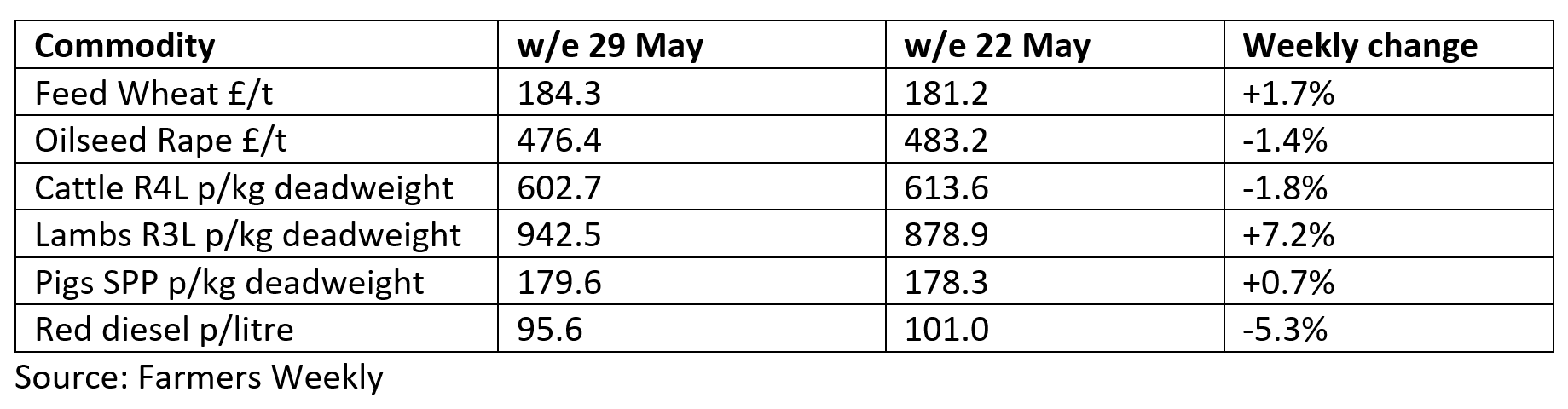
Lamb prices have hit a two-year high. Domestic demand for the Muslim Eid festival and a strong market for new-season exports, coupled with limited supplies, are supporting values, which are over 25% up on the year. Beef prices, however, are down 13% over the same period, with restaurant trade dipping, and producers say they are struggling to remain profitable as costs rise.
Oil price warning
Crude oil prices dropped sharply last week as Iran and the US appeared to be edging closer to a peace deal, but oil executives have warned that prices could bounce back sharply over the summer as strategic stockpiles, such as the US Strategic Petroleum Reserve, start to run low. Exxon’s Neil Chapman predicted that Brent crude could hit US$160/barrel.
Wheat pressures
After a brief period of bullish sentiment, grain traders are once again becoming more pessimistic on the outlook for wheat prices. A bumper Ukrainian crop, predicted self-sufficiency for this season in Iraq, a temporary suspension of some EU fertiliser import duties and a reduction in export tariffs by Argentina’s government are all weighing on the market, says Frontier.
Dairy doldrums
Milk prices continue to fall, but the market could start to recover over the coming months. According to Defra figures, the average farm-gate price of milk across the UK dropped by 2.2% in April to just under 34p/litre. Farmers are now getting 22% less than they did a year ago. However, average commodity values at the last Global Dairy Trade auction on 19 May rose by 0.6%, reports the AHDB.
The headline
Capital grant guidance
Defra has just issued guidance for those considering an application to this year’s Capital Grants scheme, which opens in July.
A total of £225 million is up for grabs, and the cash will be dispensed on a first-come, first-served basis, although Defra has said it will provide updates on when the funding looks set to run out.
The standalone grants, which are designed to complement ongoing schemes, such as the Sustainable Farming Incentive, cover 80 options that are split into six themes:
- boundaries, trees and orchards
- improved water quality
- improved air quality
- improved natural flood management
- assessments
- improvements
Up to £25,000 is available for air quality, natural flood management and water quality grants, while applicants for boundaries, trees and orchards grants can claim up to £35,000.
Agroforestry items and the woodland condition assessment will not be available through Capital Grants this year. They will instead be available later this year through the Higher Tier Capital Grants offer.
Please contact Mark Topliff to discuss which grants might be best for your business and for help with the application process.
News in brief
Uplands evidence call
The House of Commons Environment, Food and Rural Affairs Committee has launched a call for evidence to inform a report on how farming and rural communities in the English uplands can be better supported by government policy. A recent report for Defra by Hilary Cottam, discussed in a previous edition of this update, noted that farmers in the uplands felt “under siege” from environmental groups.
Shoot licensing demand
The RSPB has reiterated its demand that game shooting in England should be licensed. The call comes on the back of a report on the persecution of raptors published by the charity last week. Patterns of Persecution reports that 921 confirmed illegal deaths of birds of prey were recorded across the UK between 2015 and 2024. Of these, 48% were shooting-related.
Fertiliser tax under review
It has been reported that the government may be having second thoughts about the controversial Carbon Border Adjustment Mechanism that was due to be levied on fertiliser imports from the beginning of next year. Policymakers are apparently worried that some fields would be left bare due to spiralling input costs following the war with Iran.
Water resource strategy help
Groups of farmers and rural estates can now apply for a local water resource options screening study. For successful applicants, the screening studies will look at potential local water resource options to improve the group’s water resource resilience based on hydrology, cost, yield and suitability for required water use. A location-specific report will provide guidance on next steps for implementation and potential barriers to progression.
National forest commitment
The government has just announced £7.5 million of funding over the next five years to support the creation of England’s third national forest. The forest, which will be located somewhere in the Midlands or the North of England, is set to be up to 600 square miles in size and will have a focus on improving health outcomes for local communities.
Eco restaurant rating axed
Restaurant guide Michelin has scrapped its Green Star sustainability award. The accolade, which launched in 2020 and had been claimed by 37 UK restaurants, was given to businesses based on their environmental footprint, waste management policies, communication of eco initiatives with clients and provenance of ingredients. It will be replaced by a more general ‘Mindful Voices’ initiative.
Sign up for vineyard insights
Inspired by the IWC results? If you manage your own vines or are interested in the English wine sector, the regular subscriber-only newsletter written by Ed Mansel Lewis, Head of our specialist Viticulture team, could be of interest. Commenting on his latest article, Ed says: “As the industry matures, we are seeing an increasing range of business models in English wine. Some are navigating the challenges of our times better than others, although each has its benefits and drawbacks.” Sign up to find out more.
Next Gen Dales discussion
Our Northern Rural team is helping to host a CLA Next Generation event at the stunning Ingleborough Estate in the Yorkshire Dales this Friday (5 June). The day will help equip those managing a diversified rural business or planning for the next generation. Attendees will also hear how the Farrer family has strengthened Ingleborough’s financial resilience, from a café renovation to land-use planning, offering an honest insight into the estate’s development so far. Sign up for the event.
Property of the week
Herefordshire haven
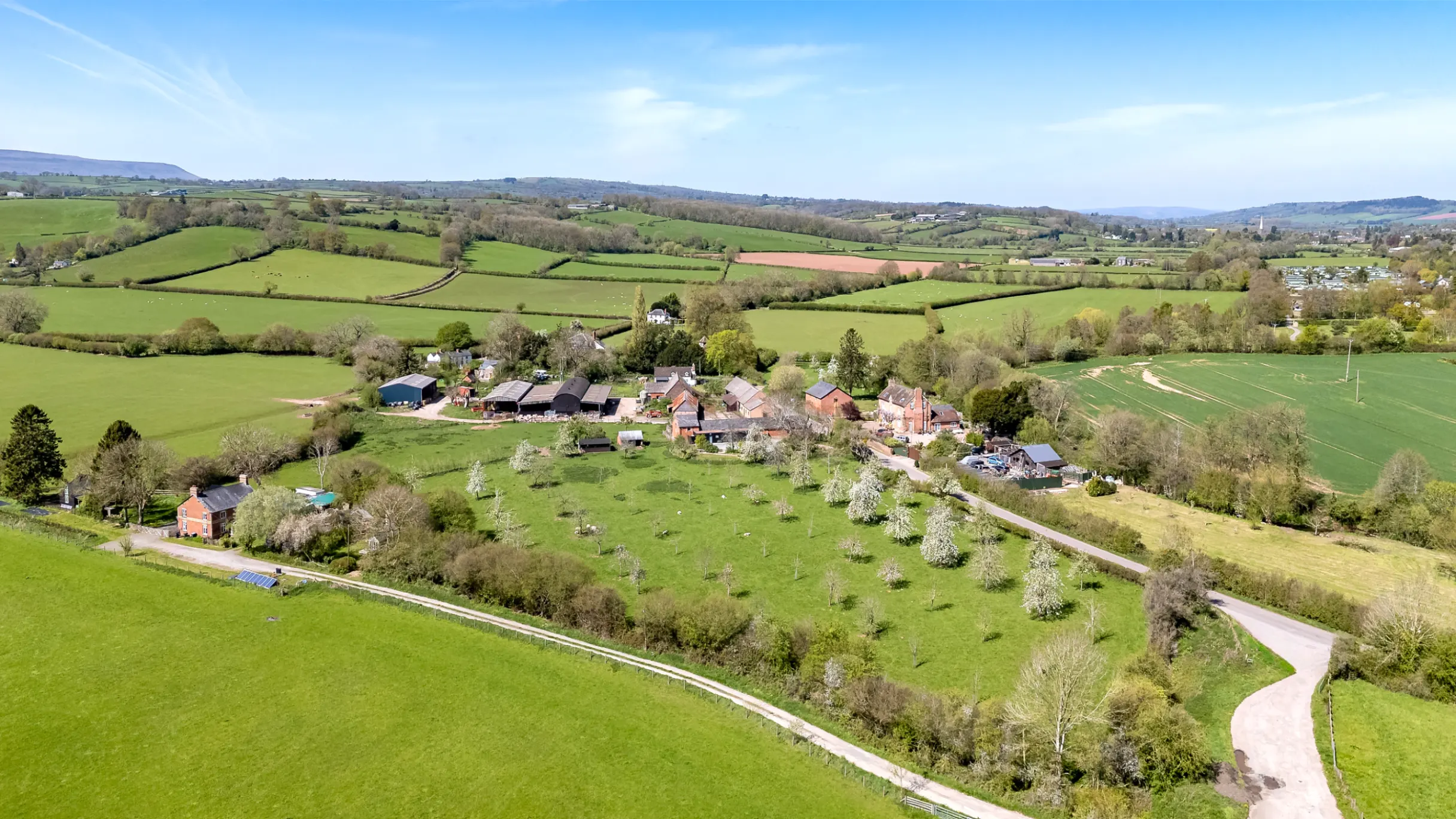
Knight Frank’s West Midlands specialist Kevin Boulton is selling Turnastone Court Farm, near Vowchurch, on behalf of the Countryside Regeneration Trust. Most of the 238-acre, wildlife-rich livestock farm with water meadows running to the River Dore hasn’t been ploughed for 400 years. There is a Grade II listed cottage, listed traditional barns and a range of more modern buildings. The property is for sale by informal tender in three lots with a guide price of £2.7 million. Tenders are due by midday on 1 July. Please contact Kevin for more information.
Discover more of the farms and estates on the market with Knight Frank
Property markets Q1 2026
Development land – Green fields flat
The average value of urban brownfield and prime central London development land fell by 2.5% in the first quarter of the year, according to the Knight Frank Residential Development Land Index. Download the full report for more data and insight.
Farmland – market treads water
The average value of farmland remained relatively unchanged in the first three months of the year, according to the Knight Frank Farmland Index. Despite a perception by vendors that now is not a good time to sell, demand remains firm from a range of buyers. If you are thinking of selling, please contact Will Matthews.
Country houses – values stabilising
The average price of houses in the countryside fell 5.5% in the 12 months to the end of the first quarter of 2026, which was a modest improvement on the 5.7% decline recorded in December, despite the uncertainty caused by the Middle East crisis, according to the Knight Frank Country House Index.
