
The Rural Update: Nature finance needs to deliver for farmers
Your weekly dose of news, views and insight from Knight Frank on the world of farming, food and land ownership.
16 November 2026

Viewpoint
Delegates at last week’s Nature Finance UK conference, sponsored by Knight Frank, were all looking for answers from the plethora of speakers and panellists on offer as to why private funding for nature restoration is yet to build significant momentum. Defra minister Jenny Riddell-Carpenter said the government was playing its part with the recent publication of its Growing Places: Mobilising private finance for local nature recovery strategy document as well as its response to a consultation on voluntary carbon and nature markets. However, a lack of mandatory compliance schemes, a market overflowing with a confusing multitude of small, fragmented projects and a focus on corporate reporting of nature risks rather than action were all posited as reasons why investors were holding back. But the most important unknown remains how much of any cash that is eventually released will find its way back to farmers.
Sign up to receive this newsletter and other Knight Frank research directly to your inbox
In this week's update
- Oilseed values slide
- More funding for farming
- Farmland values steady
- BNG outlook prediction
- New bird flu restrictions
- Global diet land-use call
- Mixed solar fortunes
- Changes at Defra
- SME Brexit export hit
- River chemicals cut
- Red Tractor consultations
- Property of the week
- Property markets Q3 2026
Oilseed values slide
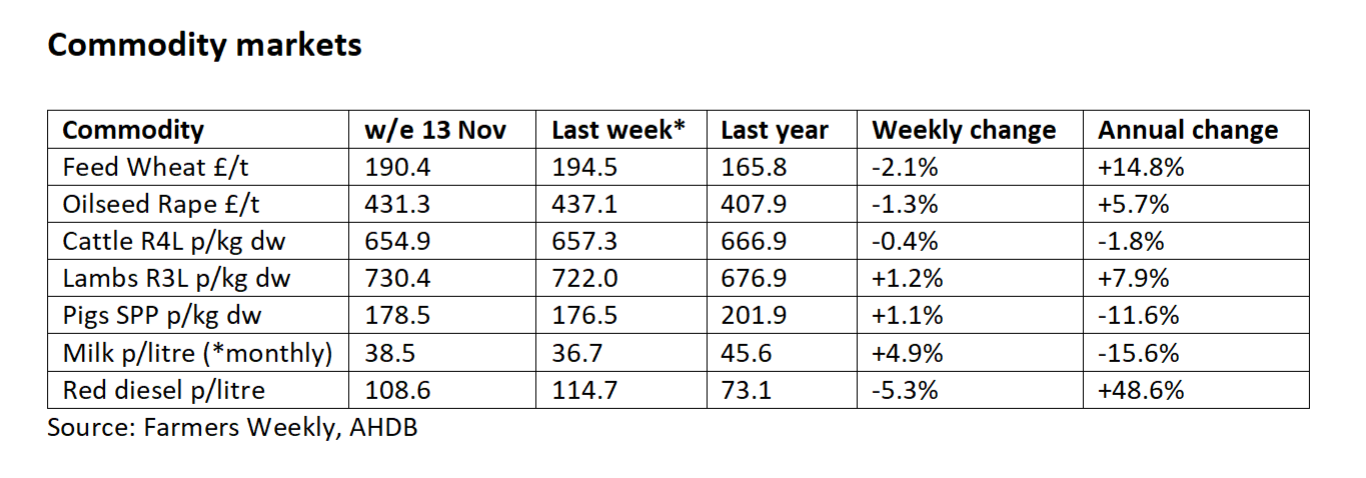
Oilseed rape values have fallen in concert with crude oil values. The International Energy Agency reported last week that global oil supply exceeded demand for the first time since the beginning of the conflict with Iran. It projected a surplus of approximately 2 million barrels per day this quarter as shipments through the Strait of Hormuz gradually recover. A potentially record Australian rapeseed crop and hopes of further peace talks between Russia and Ukraine are also putting pressure on oilseed prices.
The headline
More funding for farming
The government must use almost £1 billion of cash from expiring agri-environmental schemes to avoid another Sustainable Farming Incentive (SFI) debacle in 2027, says the NFU.
Around 48,000 farmers could be eligible to make an SFI claim next year, reckons the farming union, including those with existing agreements coming to an end and those who were unsuccessful in securing a 2026 agreement.
Thousands of farmers were left disappointed when funding for this year’s iteration of SFI ran out within six hours of the online application process going live.
Other NFU asks include opening next year’s round of SFI earlier so agreements can begin from 1 April, addressing the inability to include common land in SFI schemes, and publishing a plan for environmental schemes over the rest of this parliament so farming businesses can plan ahead.
The extent of the agricultural funding gap was laid bare in a thought-provoking maiden speech to the House of Lords by new Liberal Democrat peer Julia Aglionby.
Baroness Aglionby, long a champion of the English uplands, noted that payments to farmers have roughly halved from 0.3% to 0.15% of UK public expenditure over the past decade.
Taking into account inflation, she said the amount paid to farmers and land managers had reduced by 60%.
“Given how important food, nature and climate are to our national security, it would seem returning the proportion of public expenditure spent on the 70% of England that is farmed at 0.3% is not an unreasonable request,” Aglionby told the Lords.
“That 0.3% would be £3.7 billion per annum, transformational for environmental land management schemes, protected landscapes and our national resilience.”
News in brief
Farmland values steady
The fall in the average value of farmland across England and Wales slowed to just 0.6% in the third quarter of 2026, according to the latest instalment of the Knight Frank Farmland Index. On an annual basis, prices have dropped by 3% to £8,442/acre. The amount of land launched publicly has dipped by 17%, helping to offset limited demand.
BNG outlook prediction
Speaking at last week’s Nature Finance UK conference, James Shepherd, a Partner in Knight Frank’s Rural Consultancy team, said the falling value of Biodiversity Net Gain (BNG) units was not a sign of market failure. “This is a young market discovering its value,” he told the audience. Referring to the recent report from the government’s Office for Investment, which identified natural capital as a strategic, albeit currently fragmented, asset class, James said extending BNG to Nationally Significant Infrastructure Projects (NSIPs) would lead to higher and more sophisticated levels of demand.
New bird flu restrictions
A mandatory poultry housing order across England was declared on Friday (13 November) following a rise in the number of bird flu cases in kept and wild birds. It applies to all flocks of over 50 birds, but broader mandatory enhanced biosecurity measures, which apply to all keepers regardless of size, have also been declared. Meanwhile, US farming unions are claiming that far more workers are suffering from bird flu symptoms than official figures suggest.
Global diet land-use call
New research published in The Lancet Planetary Health journal claims that adopting the Planetary Health Diet, which is focused on plant-based foods with only modest consumption of meat, fish and dairy, would release 58–78 million hectares of agricultural land across the EU and UK for nature conservation. The researchers claim the shift is needed to improve health outcomes and hit climate-change and biodiversity targets.
Mixed solar fortunes
Campaigners in Lincolnshire have lost their battle to stop the country’s largest approved solar park from going ahead. The High Court rejected a judicial review of the government’s decision to approve the 3,163-acre Springwell Solar Farm, between Lincoln and Sleaford. However, the government has just refused consent for the proposed 3,500-acre Botley West development in Oxfordshire. The developers have six weeks to appeal the decision.
Changes at Defra
Defra is being reorganised into a new internal structure that Paul Kissack, the Permanent Secretary responsible for the ministry, claims will make it easier for civil servants to “achieve the outcomes that ministers and the public rightly expect of us”. From early 2027, Defra’s “environmental, economic and resilience ambitions” will be “fully integrated” into three large groups: Water and Marine; Farming, Land and Nature; and Food, Biosecurity and Trade.
SME Brexit export hit
With serendipitous timing, the government has published the results of a new survey on the impact of Brexit on small and medium-sized food and drinks businesses. As Prime Minister Andy Burnham pushes for closer EU integration, the survey of 600 firms across Great Britain found that 55% of those exporting to the EU reported lower profitability following the introduction of new trading requirements in January 2021.
River chemicals cut
Keen anglers or those with a river running through their farm or estate may be relieved to know that the levels of PFOS and PFOA, two so-called ‘forever chemicals’ used in a wide range of industrial processes, have fallen significantly over the past 10 years in England’s rivers and fish. PFOS concentrations in freshwater fish declined by almost 50%.
Red Tractor consultations
The Red Tractor farm assurance scheme has launched its final round of consultations on future standards and farm assessments. Anyone with an interest in the combinable crops, sugar beet, fresh produce, poultry and pig sectors has until 22 December to share their views. Join the consultation.
Property of the week
Suffolk commercial estate
Knight Frank’s East Anglian specialist Georgie Veale is selling 74-acre Folly Farm at Tattingstone, near Ipswich, that offers commercial property and residential options. A separate yard with its own access from the A137 has over 24,000 sq ft of buildings with the potential to build a further 30,000 sq ft. In addition to the main six-bedroom house, there is permission to demolish a four-bed bungalow and create a new dwelling with beautiful views, set in 10 acres of land. The farm is available in three lots with a combined £3 million guide price. Please get in touch with Georgie for more information.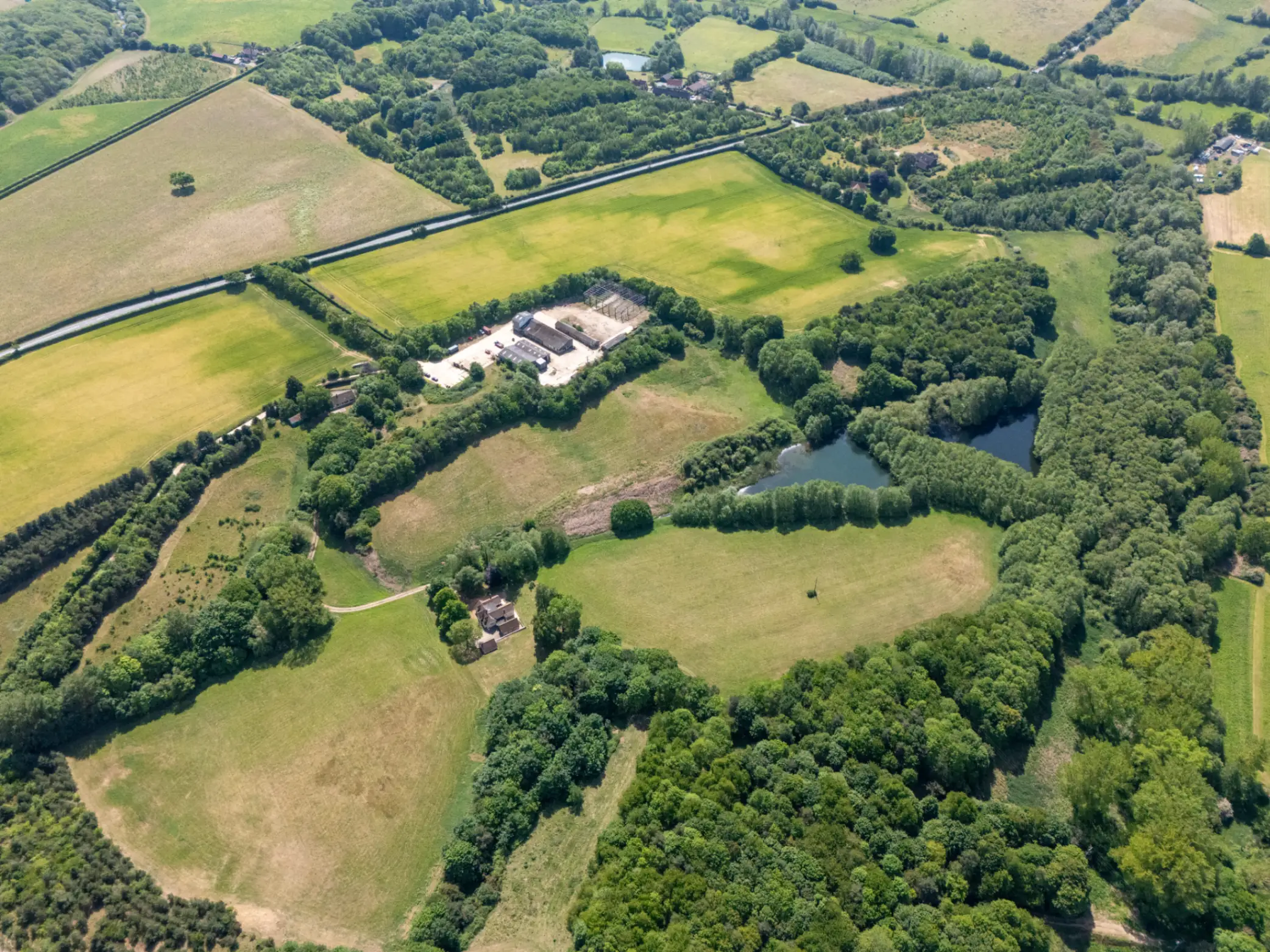
Discover more of the farms and estates on the market with Knight Frank.
Property markets Q3 2026
Country houses
The average value of residential property in rural areas continues to decline, according to the Knight Frank Prime Country House Index. Tom Bill, Head of UK Residential Research, said: “The impact of rising mortgage rates and political uncertainty is being felt in the country market.” Average prices fell 1.4% in Q3 2026 and 4.2% in the year to September. Property exchanges were 2% lower in the third quarter compared with last year, while the number of offers made was 10% lower. Read more of Tom’s insight.
Residential development land
Residential development land values edged lower in the third quarter of 2026, according to the Knight Frank Residential Land Index, as rising mortgage rates weighed on sales, while elevated build costs and continued uncertainty over scheme viability put further pressure on housebuilders. However, the pace of decline has slowed, suggesting the UK land market may be approaching its nadir, according to researcher Oliver Knight. Greenfield land values fell 3% annually, and brownfield values declined 5%.
