

The Rural Update: The future of food is changing
Your weekly dose of news, views and insight from Knight Frank on the world of farming, food and landownership.
09 November 2026

Viewpoint
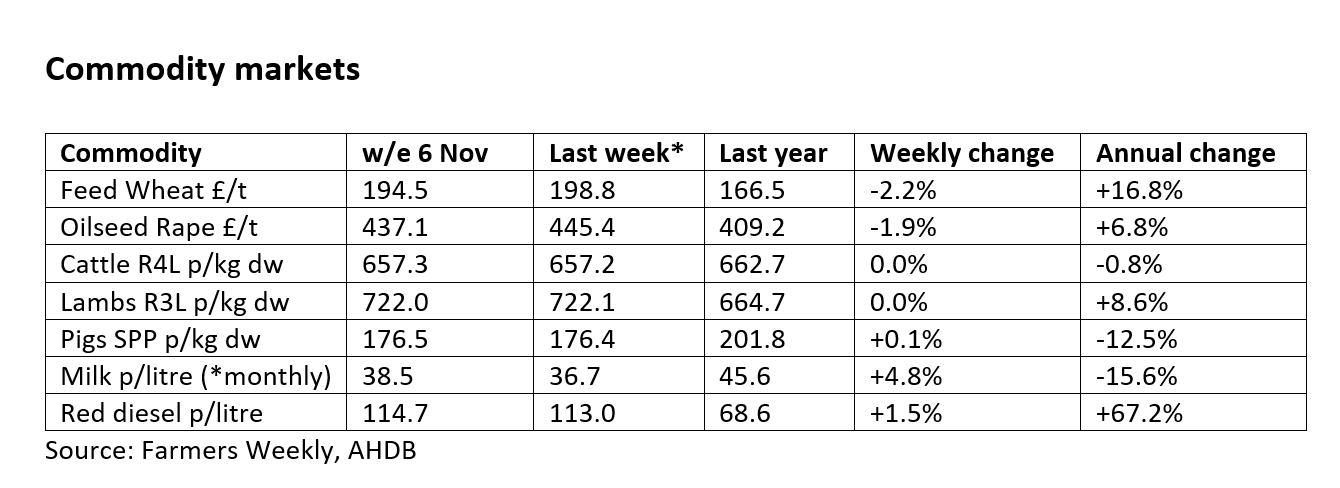
It’s entirely natural that coping with the day-to-day challenges of agriculture, such as increasingly erratic weather conditions, volatile commodity prices and bewildering government policy, will be the focus of many farms and landed estates. There are certainly enough of them to keep anybody busy.
But it also makes sense to take a longer-term view when trying to map out a future strategy for any rural business. Looking at the articles in this week’s Rural Update, for example, it’s clear that the draft sanitary and phytosanitary agreement that has just been struck with the EU could have profound implications for farming businesses – some potentially helpful, others more worrying. And livestock farmers will want to track the progress of the cultured meat industry: today pet food, but who knows what lies over the horizon.
It pays to be prepared for the changes that are coming and, where necessary, be ready to engage robustly with policymakers to ensure those changes don’t further disadvantage the UK’s food producers.
Sign up to receive this newsletter and other Knight Frank research directly to your inbox.
In this week's update
- Mid-term oil relief
- EU border food deal
- TB strategy launch
- New stewardship options
- Supply chain adjudicator call
- Land Registry consultation
- BoE base-rate hike
- Waste crime crackdown
- Energy Independence Bill
- Res dev decline slows
- Smoky bacon for the chop
- Cultured meat for pets
- Last chance to win Wiston wine
- Property of the week
- Property markets Q3 2026
Mid-term oil relief?
Oil prices saw one of their steepest seven-day losses in recent times last week, with Brent crude falling 15% to $99 per barrel on expectations of diplomatic progress between Iran and the US and a smaller window of opportunity for a weakened Trump administration to continue hostilities in the Middle East. Prices continued to fall yesterday (9 November) as the President played down the likelihood of new strikes on Iran. However, the market will remain volatile as Trump continues to weigh up his post-midterm election options.
The headline
EU border food deal
The UK and EU have reportedly agreed a draft sanitary and phytosanitary (SPS) deal that is due to be finalised at a summit in Brussels on Friday 20 November.
Defra estimates that removing border checks and aligning regulations on food and agricultural products could eventually create over £5 billion of annual economic benefits to the UK.
Some of the measures in the agreement will cut costs for exporters, such as removing the requirement for export health certificates, reportedly costing £200, and phytosanitary certificates costing £25.
They could also pave the way for the resumption of valuable Scottish seed potato exports as well as sales of fresh sausages and burgers to the EU.
However, there are widespread concerns regarding the full impact on farming businesses of closer alignment with the EU. One study, for example, estimates possible restrictions on the use of certain chemicals could wipe over £800 million off farming profitability each year.
Gavin Lane, President of the CLA, said: “Anything that makes it easier for British farmers to trade with Europe is welcome. But removing red tape at the border is little consolation if it means more restrictions on the farm.
“Under this deal, British farmers could find themselves bound by EU rules on everything from pesticides to animal health, even if they never export a single product. And they would have little say over how those rules are made.”
TB strategy launch
A new Bovine TB strategy for England, produced in partnership with industry stakeholders, was published by the government last week.
Culling badgers to help limit the spread of the disease has been one of the most divisive issues facing the countryside in recent decades, and Bovine TB remains one of the biggest problems facing the country’s beef and dairy farmers.
The new strategy, which aims to see England officially recognised as free of Bovine TB by 2038, focuses on increased vaccination of both cattle and badgers, more effective use of testing and earlier detection of infection, clear and accessible herd risk information to support safer trading decisions, stronger management of cattle with a higher likelihood of infection, and improved biosecurity and on-farm decision-making.
Although the current government has committed to ending the badger cull by the end of this Parliament, lethal badger control ‘for the purpose of preventing the spread of disease’ is still permitted under licence.
However, licensing rules are set to get stricter, and culling will only be permitted under exceptional circumstances and where it is clearly justified.
News in brief
New stewardship options
Defra has just added two more options to its list of single-focus Countryside Stewardship Higher-Tier agreements that may appeal to some landed estates and farms. The new options are traditional orchards and wet grassland for wintering waders and wildfowl. A single-focus agreement is a simplified agreement focused on delivering a priority environmental action. Please contact Mark Topliff for advice on environmental schemes.
Supply chain adjudicator call
The Agricultural Supply Chain Adjudicator is calling for more food producers to raise issues with him regarding unfair supply contracts. In his second annual report, Richard Thompson said his office had successfully taken up the case of a number of dairy farmers experiencing contract issues with their buyers.
Land Registry consultation
The Ministry of Housing, Communities and Local Government and Defra have launched a Land Registry consultation that could have implications for rural landowners. The proposals include publishing a new dataset of the owners of significant landholdings, giving all users cost-free access to information relating to commercially owned and significant landholdings and encouraging registration by potentially linking government land use payments to registration of the land. The consultation runs until 22 December.
BoE base-rate hike
The Bank of England’s Monetary Policy Committee (MPC) voted by a majority of 8–1 to increase its base lending rate - the first hike in over three years - by 0.25 percentage points, to 4% last week. The dissenting member wanted a larger increase of 0.5 percentage points. However, the bank said monetary policy was not on a “pre-set path”. “Recent declines in oil prices have helped to calm financial markets and have provided some cautious optimism that inflationary pressures could begin to ease if energy prices continue to soften,” notes Bradley Smith of Knight Frank Finance.
Waste crime crackdown
The announcement last week of the government’s new Waste Crime Crackdown Group will count for little unless more cash is available to resource the monitoring and prosecuting of illegal dumping, says the Countryside Alliance. Sarah Lee, Director of Policy and Campaigns, said: "The formation of this group is welcome, but the real test is whether it leads to more effective enforcement. We do not necessarily need more powers. We need to make sure the powers already available are being used effectively, that the agencies responsible have the resources to act and that criminals are brought to justice.”
Energy Independence Bill
The government’s Energy Independence Bill started its journey through Parliament last week. The wide-ranging bill will have implications for landlords – it paves the way for the introduction of a minimum EPC rating of C for rental homes by 2030 – and renewable energy companies. New schemes over a certain size will need to offer local communities ownership stakes of up to 20%. However, according to press reports, the government is planning to row back on its plans to ban gas boilers in all new homes from next year. Read more thoughts on the legislation from Knight Frank’s energy expert Flora Harley.
Res dev decline slows
Residential development land values edged lower in the third quarter of 2026, according to the Knight Frank Residential Land Index, as rising mortgage rates weighed on sales, while elevated build costs and continued uncertainty over scheme viability put further pressure on housebuilders. However, the pace of decline has slowed, suggesting the UK land market may be approaching its nadir, according to researcher Oliver Knight. Greenfield land values fell 3% annually, and brownfield values declined 5%.
Smoky bacon for the chop?
Farming Minister Angela Eagle has denied speculation that closer alignment with EU regulations, as discussed earlier, will lead to a ban on smoky bacon flavour crisps, which apparently contain no real bacon. Following pressure from farming groups, the EU is taking an increasingly hard line on plant-based products sold using meat-based descriptions.
Cultured meat for pets
Meanwhile, Meatly, a cultured meat startup, has just announced it has secured venture-capital funding to build a 20,000-litre bioreactor facility in London, which will enable it to scale up production of cultured chicken meat for pet food. Ivy Farm Technologies has also just secured regulatory approval from Defra and the Animal and Plant Health Agency to supply its Oxford-produced cultivated wagyu beef to UK pet food manufacturers.
Last chance to win Wiston wine
A case of English sparkling wine from the Wiston Estate is up for grabs. To have a chance of winning this fabulous prize, entrants just need to take the 2026 Knight Frank Estate Staff Salaries Survey by 12 November. The survey tracks the salaries of those employed by landed estates and farming businesses, as well as the issues currently being faced by rural employers, including higher taxes and more legislation. Take the survey.
Property of the week
Suffolk commercial estate
Knight Frank’s East Anglian specialist Georgie Veale is selling 74-acre Folly Farm at Tattingstone, near Ipswich, that offers commercial property and residential options. A separate yard with its own access from the A137 has over 24,000 sq ft of buildings with the potential to build a further 30,000 sq ft. In addition to the main six-bedroom house, there is permission to demolish a four-bed bungalow and create a new dwelling with beautiful views, set in 10 acres of land. The farm is available in three lots with a combined £3 million guide price. Please get in touch with Georgie for more information.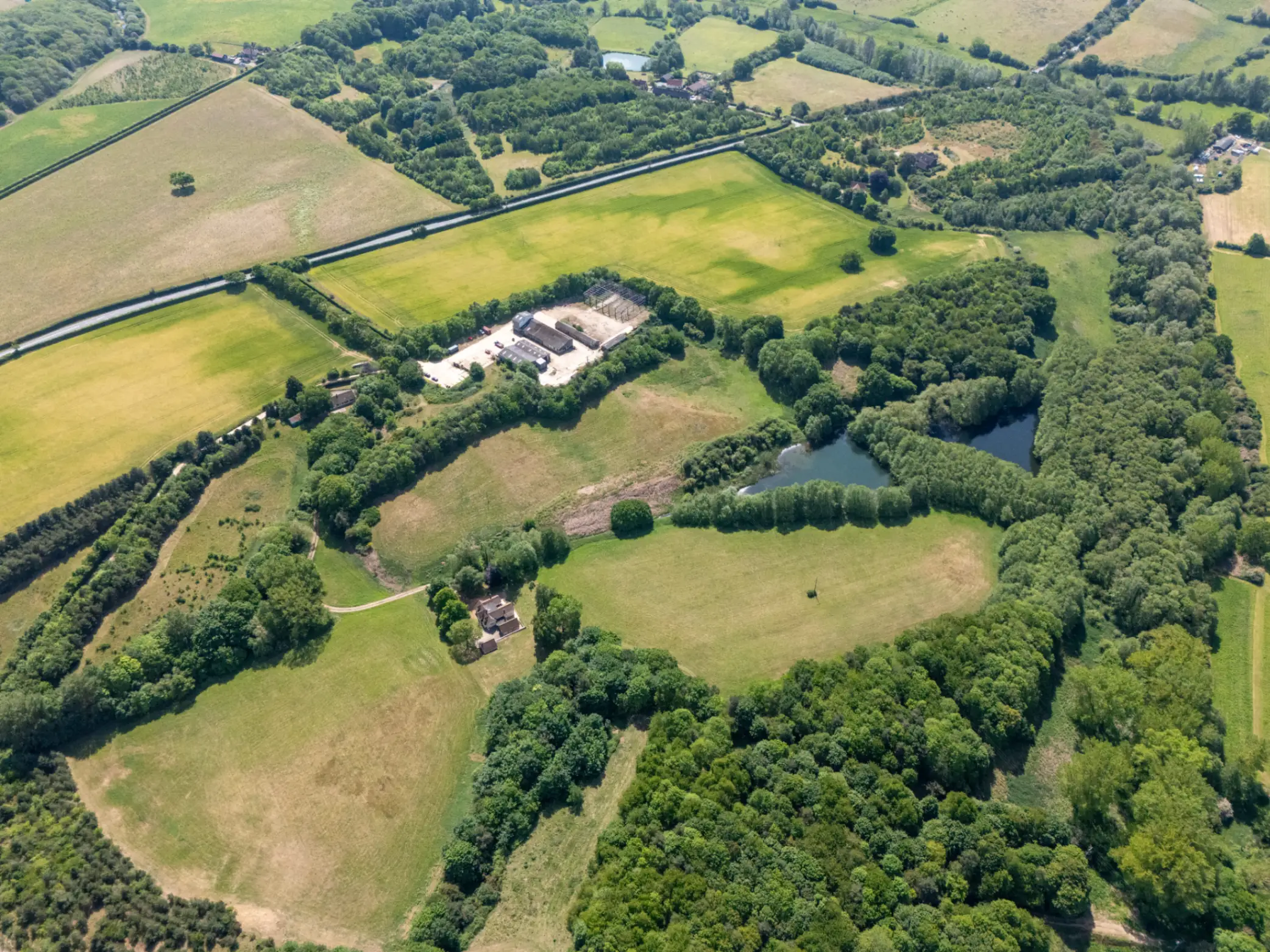
Discover more of the farms and estates on the market with Knight Frank.
Property markets Q3 2026
Country houses
The average value of residential property in rural areas continues to decline, according to the Knight Frank Prime Country House Index. Tom Bill, Head of UK Residential Research, said: “The impact of rising mortgage rates and political uncertainty is being felt in the country market.” Average prices fell 1.4% in Q3 2026 and 4.2% in the year to September. Property exchanges were 2% lower in the third quarter compared with last year, while the number of offers made was 10% lower. Read more of Tom’s insight.
