

The Rural Update: Rural reset remains an illusion
Your weekly dose of news, views and insight from Knight Frank on the world of farming, food and landownership.
03 November 2026
Viewpoint
Sometimes what remains unsaid tells the biggest story. Last week’s Autumn Budget was no exception. The sensible wish lists of measures to boost rural resilience drawn up by farming and landowning organisations were largely ignored, while help for other industries, such as schemes to cut costs for energy-intensive businesses, was not extended to agriculture. And when some residential leases were exempted from Stamp Duty liabilities, why did nobody think to extend the measure to agricultural rents? The biggest immediate disappointment was, of course, John Healey’s failure to reverse Rachel Reeves’s Inheritance Tax raid. But when a Chancellor delivering his first Budget talks so stridently at the despatch box about wanting to “invest in the potential of every town and city” but ignores the rural economy, the longer-term message is even bleaker. The official title of the Budget was Breathing Space for Today, Fresh Hope for the Future. For rural businesses, it delivered little of either.
Sign up to receive this newsletter and other Knight Frank research directly to your inbox
In this week's update
- Milk price rise
- Budget round-up
- BNG changes
- Norfolk EDP challenge
- Mobilising nature finance
- Tenancy succession case
- Lynx release blocked
- Win Wiston wine
- Property of the week
- Property markets Q3 2026
Commodity markets
Milk price rise
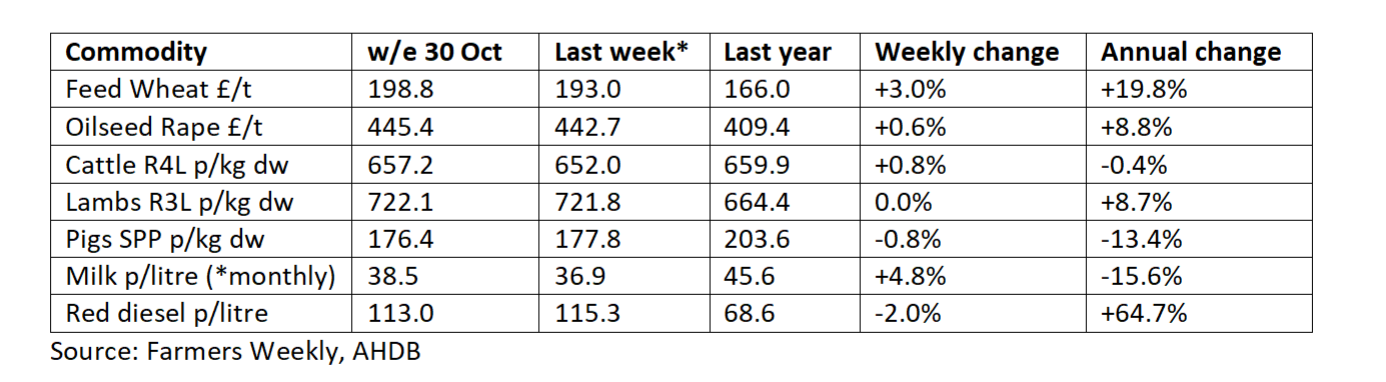
Farmgate milk prices continue to claw their way higher, with average values rising over 4% to 38.45p/litre in September, according to the latest figures from Defra. Payments are, however, still almost 16% down on 2025. Milk volumes in September 2026 were 1.2 billion litres, a monthly fall of 1.9% and an annual drop of 2%.
The headline
Budget round-up
As discussed above, last week’s Autumn Budget contained no meaningful measures focused on farming, but there were a number of announcements relevant to rural businesses. Some of the key points are covered below. For more details, please contact Mark Topliff.
- Thankfully, there was no hike to the main rate of capital gains tax, but the lifetime limit for Business Asset Disposal Relief falls from £1 million to £500,000 for qualifying disposals from 6 April 2027.
- The rate of income tax payable on returns from rental property, including farmland, was increased by an additional two percentage points above the rises already proposed for individuals and partnerships.
- The rate for additional rate taxpayers will now be 49% from 6 April 2027.
- Import tariffs on certain fertiliser products (along with a raft of food products) have been lifted, but the introduction of the Carbon Border Adjustment Mechanism (CBAM) on 1 January will largely negate any impact this might have had.
- The temporary 3.7p/litre reduction in red-diesel duty and the 5p/litre reduction in main fuel duty due to expire at the end of the year have been extended to 1 July 2027.
- From April 2027, the threshold for 100% Small Business Rate Relief for eligible retail, hospitality and leisure premises in England rises from £12,000 to £18,000. This may benefit some rural diversifications.
News in brief
BNG changes
Biodiversity Net Gain (BNG) became a requirement for Nationally Significant Infrastructure Projects earlier this week (2 November). However, as part of last week’s Autumn Budget (paragraph 6.119), it was also announced that Brownfield development sites below 1.5 hectares will be exempt from BNG. The move could erode demand for farmer-delivered BNG units.
Mobilising nature finance
Meanwhile, the government has released a new report on how it plans to encourage more private investment to combat biodiversity loss across England. Growing Places: Mobilising private finance for local nature recovery presents a three-tier approach: growing private sector demand for nature and making sure that it connects to place, building market confidence and building local investment pipelines.
Norfolk EDP challenge
However, the Office for Environmental Protection (OEP) has criticised Natural England’s first Environmental Delivery Plan (EDP), which aims to unlock the delivery of 16,000 new homes in Norfolk. EDPs allow developers to pay a flat rate per home to Natural England to mitigate nutrient pollution on their behalf, instead of independently sourcing nutrient mitigation credits. But the OEP raised numerous issues regarding the Norfolk EDP, including the additionality of its proposed conservation measures.
Tenancy succession case
In a rare appeal to the Upper Tribunal, a Cotswold landlord has won their argument that the son of a deceased tenant farmer is not eligible to succeed to his father’s Agricultural Holdings Act tenancy because the majority of his income was derived from a contracting business rather than the farm. A First-Tier Tribunal had originally ruled that the contracting income should count towards the ‘livelihood test’ for succession because the contracting business was based on the farm in question.
Lynx release blocked
In a technical ruling, the High Court has blocked another attempt by the Lynx UK Trust to allow the release of lynx back into the wild in the north of England. Reintroducing the cat, which became extinct across Britain 800 years ago, is opposed by Northumberland County Council but, according to a poll, supported by over 70% of the region’s residents.
Win Wiston wine
A case of English sparkling wine from the Wiston Estate is up for grabs. To have a chance of winning this fabulous prize, entrants just need to take the 2026 Knight Frank Estate Staff Salaries Survey. The survey tracks the salaries of those employed by landed estates and farming businesses, as well as the issues currently being faced by rural employers, including higher taxes and more legislation. Take the survey.
Property of the week
Rothbury completes
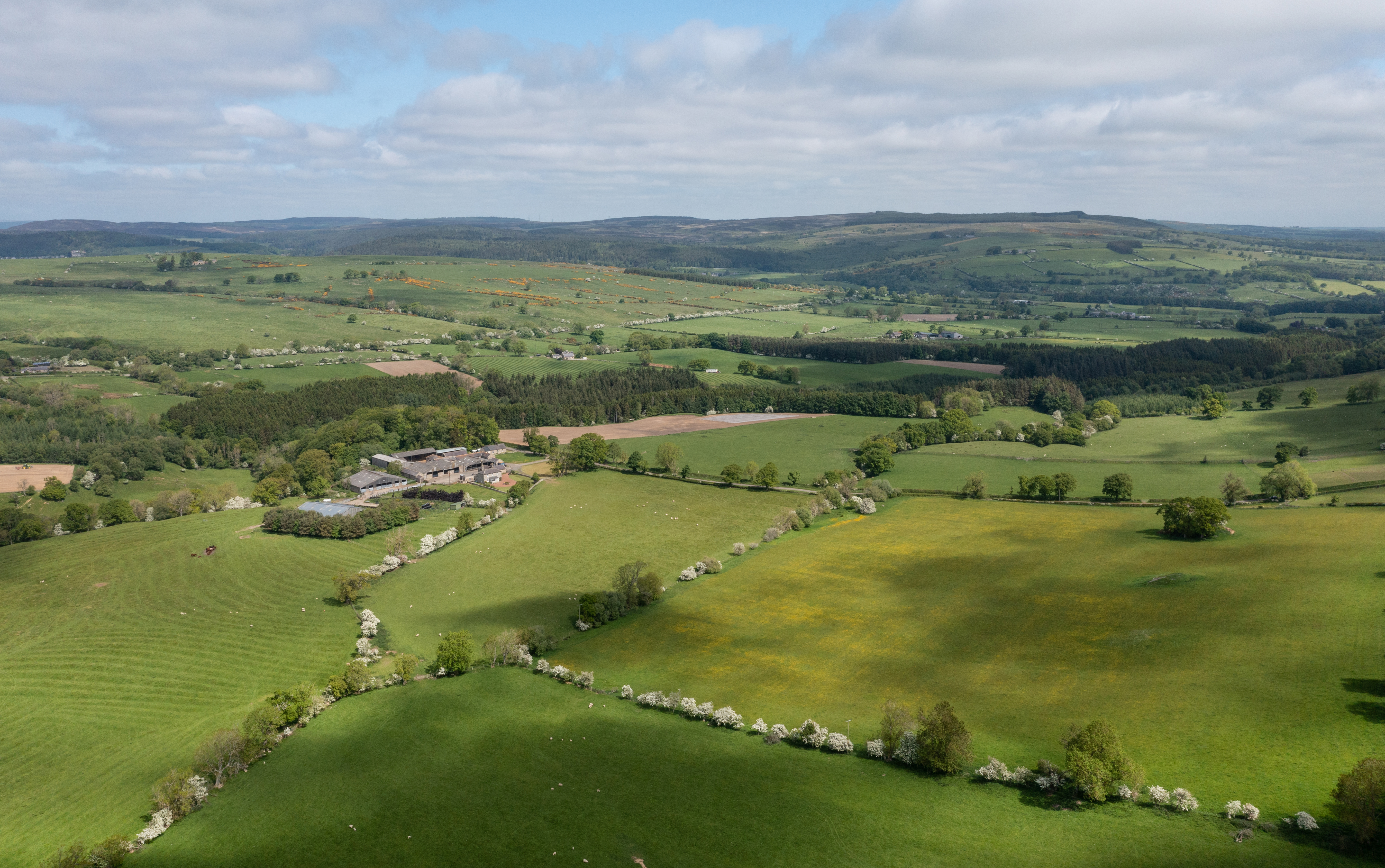
Although this week’s property is no longer for sale, it certainly warrants a mention. Last week, two years after the deal was first agreed, the Royal Society of Wildlife Trusts and the Northumberland Wildlife Trust completed the acquisition of The Rothbury Estate in Northumberland. The 9,486-acre estate, which was brought to market by Knight Frank on behalf of Lord Max Percy, was one of the most significant landholdings to come to market in recent years. The estate encompasses extensive areas of grassland, moorland and woodland, together with a portfolio of farms and cottages. Claire Whitfield, who handled the sale, said: "We are delighted to see the successful completion of the Rothbury Estate sale.
From the outset, it was important to identify a purchaser that not only recognised the estate's exceptional environmental significance but also shared a long-term vision for its future stewardship. The level of interest generated throughout the campaign demonstrated the growing demand for large-scale natural capital and conservation-focused estates, but the Wildlife Trusts stood out for their commitment to safeguarding and enhancing this remarkable landscape for generations to come.” The guide price for the estate was £35 million. Please get in touch with Claire for more information.
Discover more of the farms and estates on the market with Knight Frank
Property markets Q3 2026
Country houses
The average value of residential property in rural areas continues to decline, according to the Knight Frank Prime Country House Index. Tom Bill, Head of UK Residential Research, said: “The impact of rising mortgage rates and political uncertainty is being felt in the country market.” Average prices fell 1.4% in Q3 2026 and 4.2% in the year to September. Property exchanges were 2% lower in the third quarter compared with last year, while the number of offers made was 10% lower. Read more of Tom’s insight.
