
The Rural Update: Agricultural infrastructure crucial
Your weekly dose of news, views and insight from Knight Frank on the world of farming, food and landownership.
19 October 2026
Viewpoint
Understandably, much of the focus on boosting agricultural resilience across the UK is on supporting farming businesses. However, even the most profitable producers rely on a sustainable infrastructure of processing capacity along the food chain. When it comes to the livestock sector, that infrastructure, in the form of local abattoirs, is on the verge of collapse – only 200 remain. For businesses looking to sell direct to the public or tap into high-value diversified niche markets, that matters. It also matters for the nation’s food security. Study after study has shown that food resilience starts at the local level and relying on a small number of high-volume processors creates dangerous choke points in the food chain. Prime Minister Andy Burnham should heed the call made this week by a wide coalition of organisations to take action to avoid further decline in our abattoir sector.
Sign up to receive this newsletter and other Knight Frank research directly to your inbox
In this week's update
- Pig losses mount
- Scottish meat export record
- Organic farming boost
- Abattoir crisis call
- UK ag nutrition supply
- Severe drought declared
- Tree replanting funds
- SFI error exemptions
- Extending Awaab’s law
- Bird population trends
- Win Wiston wine
- Property of the week
- Property markets Q3 2026
Commodity markets
Pig losses mount
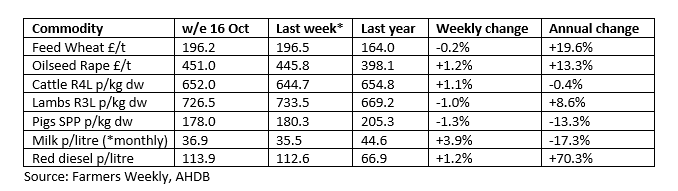
Pork prices remain under pressure, with average deadweight pig prices falling 1.3% to 178p/kg last week, according to the AHDB. This takes the annual decline to over 13%. However, some producers whose contracts are not connected to their costs of production report receiving much lower prices. Quality Meat Scotland (QMS) estimates that producers will lose £36 on average per pig in the third quarter of 2026. Rising feed costs are responsible for a big chunk of the loss.
Scottish meat export record
However, not all the news is quite so gloomy. QMS reports that Scottish meat exports hit a record high in the 12 months to July 2026. Revenue was up 10% to £190 million while volumes rose by 25%. Beef sales grew by 3% to £104 million, while lamb sales jumped 22% to £75 million. The EU accounted for 99% of exports by value.
The headline
Organic farming boost
Defra has just launched its Organic Action Plan (OAP) in a bid to help English farmers grab a greater share of a market it says is worth £3.9 billion a year, and rising.
The aim of the OAP is to increase the share of agricultural land farmed organically from the current figure of around 3.4% towards 10% by 2036.
Despite an increase in organic sales, England’s total organic area (both fully converted and area under conversion) has only increased by 1.5% compared to 2024 and has been between 289,000 and 324,000 hectares (2.7% and 3.5% of utilised agricultural area) since 2012.
The OAP also sets out ways to improve supply chains, getting more organic products more swiftly on supermarket shelves and in restaurants, as well as opening up new markets in the UK and abroad.
The plan focuses on three areas: supporting existing and new organic producers and processors; bringing domestic supply more in line with demand; and building demand for English organic products through greater consumer awareness and public sector procurement.
Environment Secretary Dame Angela Eagle said: “People are buying more organic food, and we want English farmers to be in a strong position to respond to that demand. By strengthening the market at home, we can help more English farmers benefit from the demand on our shelves.”
However, while welcoming Defra’s aspirations, Sustainable Food Trust CEO Patrick Holden said: “The OAP is long overdue, but setting target figures without providing the financial mechanisms to reach them is a hollow exercise.”
The trust is calling on Defra to immediately reopen SFI applications or introduce an interim organic conversion support scheme.
News in brief
Abattoir crisis call
A new coalition, including all 10 National Parks in England, the National Trust, the NFU and Compassion in World Farming, has just sent an open letter to Andy Burnham, signed by over 150 high-profile individuals, businesses and organisations, warning that the closure of most of the UK’s abattoirs poses an existential threat to the future of the livestock sector. Since the 1970s, abattoir numbers have slumped from around 2,000 to just 200.
UK ag nutrition supply
As part of the debate around food security, the statisticians at Defra have just released an intriguing new dataset quantifying how much of the nation’s nutritional requirements are supplied by home-grown food. According to the research, agricultural production provided the equivalent of 101% of the population’s estimated dietary energy requirements last year. When it comes to protein, the figure jumps to 193%, with 108% generated by the livestock sector.
Severe drought declared
In a clear bid to persuade the heavens to open, the government has just declared a severe drought in parts of Cornwall, Devon, Dorset, Somerset, East Sussex and West Sussex. It says the South East and South West have experienced the driest April to September period in over a century, impacting reservoir levels in those areas. Water companies have been instructed to conduct daily monitoring of reservoir and river levels and tougher water quality monitoring.
Tree replanting funds
Farms and estates that planted trees under the 2025/2026 England Woodland Creation offer may be eligible for a one-off payment to replace trees that were killed during the drought. To be eligible, tree failure rates must have been at least 25% due to the hot and dry weather. Applicants must pay to replace the first 15% of tree losses, and the government’s contribution will depend on demand and calculated once all applications have been received.
SFI error exemptions
The Rural Payments Agency (RPA) has widened the number of unsuccessful Sustainable Farming Incentive (SFI) applicants who may be able to progress their applications. Given the short Window 2 application period – funding ran out within six hours – ministers have decided to extend the ‘technical issue’ exception group to include farmers who submitted applications affected by a valid technical issue before the window closed on 22 September, and reported that valid technical issue by 11:59 pm on 29 September 2026.
Extending Awaab’s Law
Estates with let residential portfolios and their advisers might want to contribute to a new consultation on extending Awaab’s Law to the private rented sector. Since October 2025, under the law, social landlords have been required to address emergency repairs and damp and mould hazards that present a significant risk of harm to tenants within fixed timescales. The government says it wants to apply Awaab’s Law to privately rented homes in a way that is “fair, proportionate and effective for both tenants and landlords”.
Bird population trends
Farmland bird populations are continuing to decline, according to Defra’s latest Wild bird populations in the UK and England statistics released last week. Numbers have dropped by 63% since 1970, with a 12% slide over the past five years. Of the 19 species tracked, 37% have shown a strong decline over the short term, 11% a strong increase and 42% little change.
Win Wiston wine
A case of English sparkling wine from the Wiston Estate is up for grabs. To have a chance of winning this fabulous prize, entrants just need to take the 2026 Knight Frank Estate Staff Salaries Survey. The survey tracks the salaries of those employed by landed estates and farming businesses, as well as the issues currently being faced by rural employers, including higher taxes and more legislation. Take the survey.
Property of the week
To the Manor born
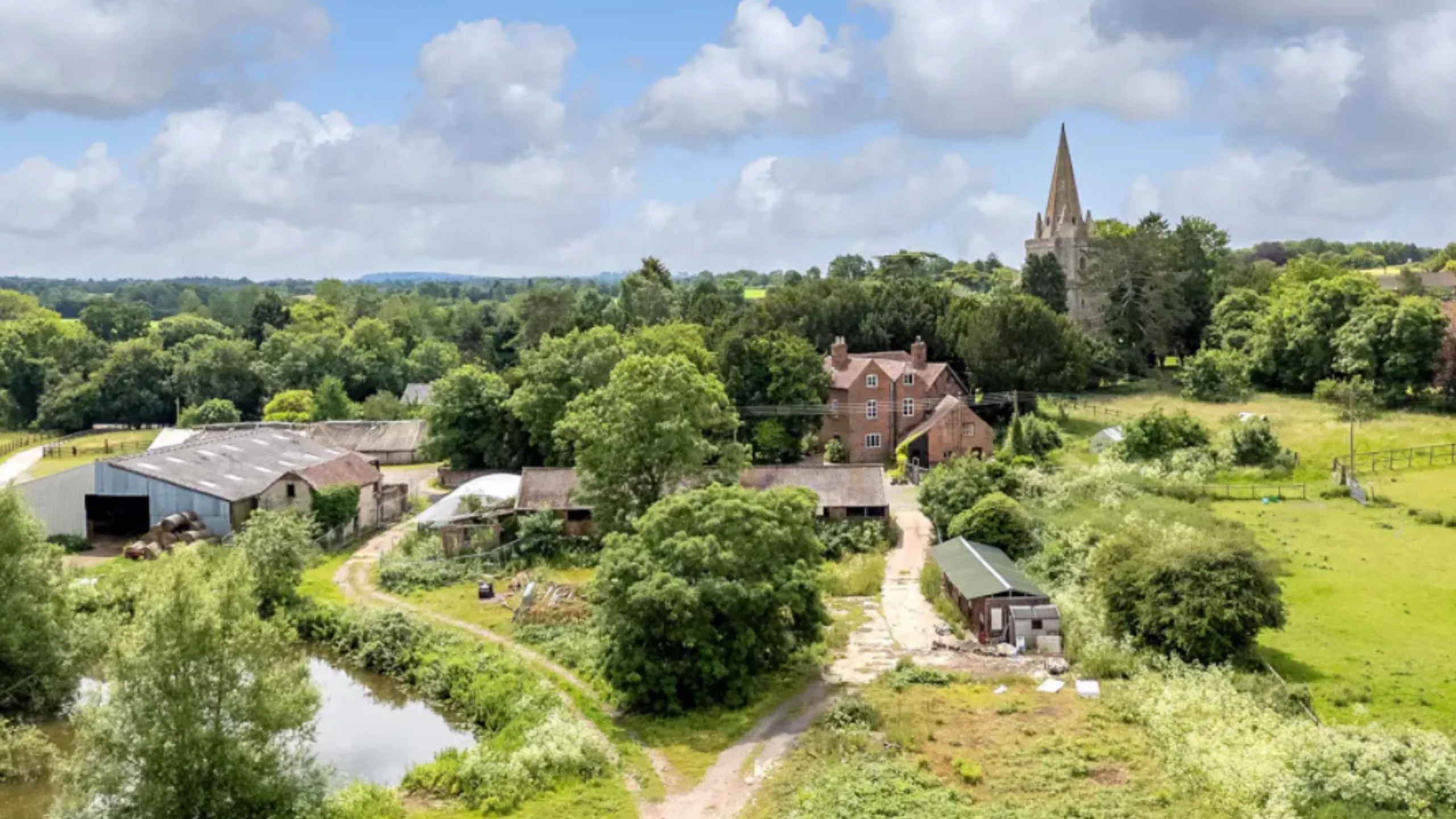
A picturesque Worcestershire opportunity has just arrived to spice up an autumn farmland market that has seen relatively few farms offered for sale so far. Manor Farm at Longdon, near Tewkesbury, situated between the River Severn and the Malvern Hills, features a six-bed Grade II listed farmhouse that has a wealth of period features and is ripe for modernisation to create a stunning family home. The 312-acre mixed farm also features a range of traditional and modern buildings, and numerous stables and a manège that offer further opportunities. Manor Farm has a guide price of £3 million for the whole or is available in three lots. Please contact Katharine Beswick for more information.
Discover more of the farms and estates on the market with Knight Frank
Property markets Q3 2026
Country houses
The average value of residential property in rural areas continues to decline, according to the Knight Frank Prime Country House Index. Tom Bill, Head of UK Residential Research, said: “The impact of rising mortgage rates and political uncertainty is being felt in the country market.” Average prices fell 1.4% in Q3 2026 and 4.2% in the year to September. Property exchanges were 2% lower in the third quarter compared with last year, while the number of offers made was 10% lower. Read more of Tom’s insight.
