
The Rural Update: Make farming a strategic economic sector
Your weekly dose of news, views and insight from Knight Frank on the world of farming, food and landownership.
24 August 2026

Viewpoint
Take the ferry from Hook of Holland to Harwich and you’ll be sharing the journey with numerous trucks carrying Dutch tomatoes and other vegetables to the UK. Horticultural production has long been considered a strategic economic sector by policymakers in the Netherlands but has suffered from decades of neglect by successive UK governments, according to a new report by the Food Foundation. It seems baffling that a huge chunk of our fruit and vegetable imports come from countries with similar climates to the UK.
Arable farmers will also have noticed that while UK harvest estimates continue to plummet to record lows, grain and oilseed prices are edging up only marginally. Rather than relying heavily on commodity crops whose price is set by world markets, policymakers and the farming industry should be doing more to investigate the alternatives.
For example, as the Food Foundation report notes, the UK produces 800,000 tonnes of beans and pulses, mainly for animal feed, but imports 500,000 tonnes for higher-value human consumption. New thinking is badly needed at a time of such geopolitical and climatic uncertainty.
Sign up to receive this newsletter and other Knight Frank research directly to your inbox
Commodity markets
Harvest forecast drop
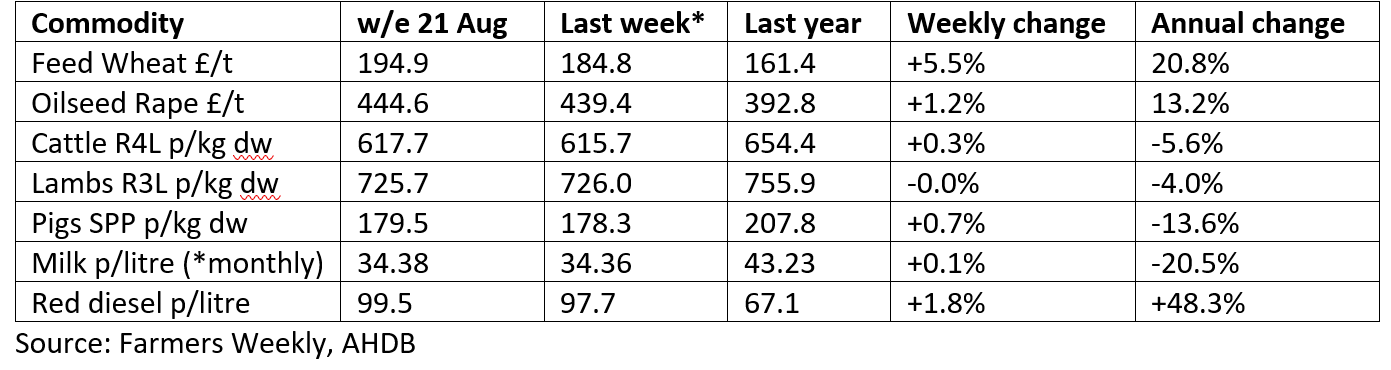
This year’s harvest has been downgraded by a further million tonnes, according to the latest figures from the AHDB. Production of key arable crops is forecast to fall to just 18.5 million tonnes, the smallest harvest on record. The slump could wipe up to £550 million off farm incomes compared to pre-drought predictions.
2027 OSR crop risk
Meanwhile, concerns are already being raised about next year’s oilseed rape crop (OSR). Traditionally, the window for drilling OSR runs through August to early September, but many fields are currently too hard to cultivate effectively and lack enough moisture for successful germination.
Milk price hike
Dairy processor Freshways has announced the biggest autumn milk price increase so far. The business will up its October payments to farmers by 6p/litre to 38p/litre. Processors are concerned about getting enough milk after the dry weather exacerbated a decline in production driven by falling prices.
The headlines
Mayors’ planning power
UK Prime Minister and former Mayor of Manchester Andy Burnham is set to hand more planning power to regional mayors in a move that could have significant implications for landowners and rural communities.
Under the new proposals, mayors will be given the power to overrule councils that are blocking large-scale developments.
Initially, the move, due to kick in later this year, will cover schemes of more than 150 homes, over 15,000 square metres of commercial space and buildings higher than 30 metres. However, it could be extended to cover wind and solar developments by 2028.
According to a government statement, mayors will also be able to grant up-front permission for development, so that building can begin without a developer having to apply and be able to charge a levy on development to fund major infrastructure.
Horticulture call
Another report is piling pressure on the government to better support the UK’s horticultural sector.
Farming for 5-a-day: how resilient is the UK’s supply of fruit, veg and beans in a changing climate?, published last week by the Food Foundation, points out that while the UK imports almost half of its vegetables, many of these come from countries with similar climates like the Netherlands, Ireland and Poland.
The Netherlands, it notes, has 1,770ha of glasshouses dedicated to tomato production alone, while the entirety of the UK’s indoor vegetable production stretches to just 866ha. In addition, nearly 20% of our horticultural imports are from countries at high or moderate risk from climate change.
The report’s five-point plan to boost farm incomes, self-sufficiency and health outcomes includes the government delivering on its 50% local-sourcing commitment, more R&D funding for the horticultural sector, planning reform and public-awareness campaigns to increase the consumption of fruit and vegetables.
News in brief
Bluetongue restrictions
The Scottish Government has announced a temporary bluetongue control zone in an area around Dumfries and Galloway after a case of the disease was discovered last week. In addition, ruminants that are travelling from anywhere in Scotland to the rest of the UK must now return on the same day to minimise the risk of the disease spreading. From 10 September, livestock moving into Scotland will also need to be vaccinated, other than livestock returning to Scotland under the "same-day" rule.
BSE cattle case
Movement restrictions have also been imposed on cattle linked to an isolated case of classical BSE, dubbed mad-cow disease by the media, in Dumfries and Galloway while officials investigate the source of the disease. All cattle over four years of age that die on farms in Scotland are routinely tested for BSE as part of the country’s disease surveillance system.
Fly-tipping clampdown
The Prime Minister has set out new plans, including better use of drones, higher fines and more coordination between local councils and national agencies, to hit criminal gangs that dump waste illegally. But Gavin Lane, CLA President, said: “There is still a glaring injustice for farmers who can wake up to a lorry-load of waste dumped on their land and then be left paying to clear up somebody else’s crime. Innocent landowners should not be left carrying that cost.”
Technology fund opens
Farmers and landowners can now apply for grants of up to £200,000 under the latest round of the Accelerating Development of Practices and Technologies (ADOPT) fund. ADOPT funds practical, farmer-led on-farm trials and demonstrations focusing on projects that build confidence in new ways of working, helping farmers improve productivity, resilience and sustainability. The deadline for applications is 7 October.
Trump beef plan
US President Donald Trump has attracted the ire of the country’s cattle producers by announcing plans to slash import tariffs on up to 300,000 tonnes of ground (minced) beef in a bid to placate consumer anger over rising food bills. The Chief Executive of the National Cattlemen’s Beef Association said: “Flooding the market with government-subsidised beef is not the way to rebuild the American cattle herd.”
Property of the week
Rare rural Brighton opportunity
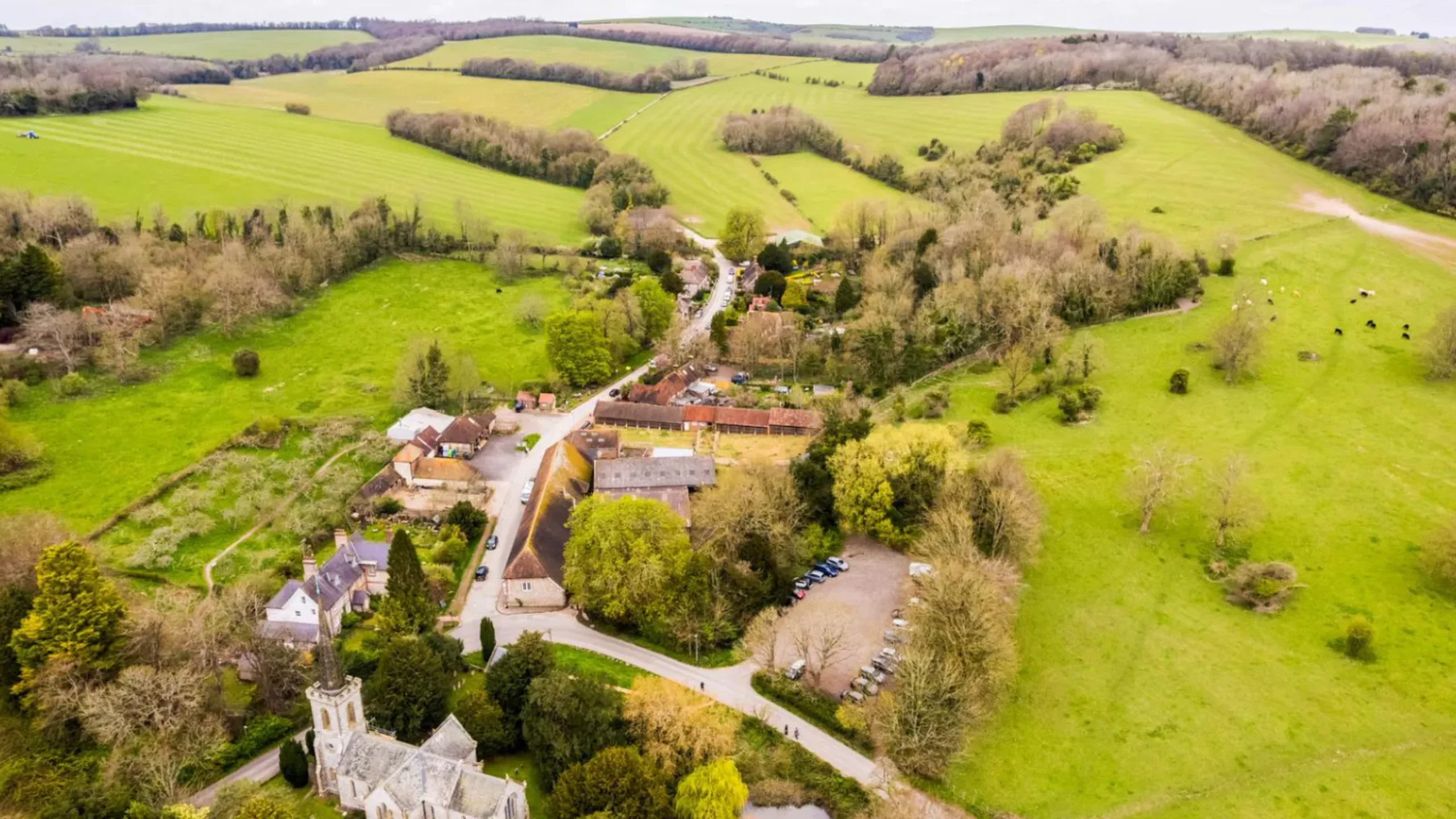
Anybody looking to establish a new rural business in one of southern England’s most important landscapes will want to take a look at Home Farm, in Stanmer Park, within the South Downs National Park. Brighton and Hove City Council is offering a rare long-term tenancy on the property, which includes almost 30,000 sq feet of traditional and portal-framed buildings set within 610 acres of permanent pasture, which is available as a whole or in lots.
Possible tenants that could benefit from the high footfall, environmental value, cultural history and land-based activity found within Stanmer Park include educational facilities, outdoor leisure and wellness businesses, commercial SMEs and charities. For more information, please contact Llyr Thomas. Expressions of interest close on 1 September. Successful applicants will demonstrate how they will add value to both the local community and the wider landscape.
Property markets Q2 2026
Farmland
The farmland market remains in a state of inertia, according to the Q2 2026 edition of the Knight Frank Farmland Index, which tracks the value of bare land in England and Wales. Average values fell by just 1.5% over the quarter to just under £8,500/acre. Download the full report for more farmland insight and data.
Development land
The value of greenfield development sites fell 5.5% in the second quarter of the year, according to the Knight Frank Residential Land Index. Weak sales, elevated build costs driven by the Middle East conflict and uncertainty around scheme viability have all contributed to the drop, notes the report’s author Oliver Knight. There is, however, still demand for ‘shovel-ready’ sites, he points out. Download the full report for more numbers and analysis.
Country houses
The average price of rural properties fell 5% in the year to June, according to the Knight Frank Prime Country House Index, which tracks the value of homes worth over £750,000. The drop was slightly narrower than the decline of 5.5% recorded in March.
