

The Rural Update: Certainty more valuable than handouts
Your weekly dose of news, views and insight from Knight Frank on the world of farming, food and landownership.
27 July 2026

Viewpoint
It would be wrong to draw too many conclusions from one year of data, but the overriding message from the CAAV’s latest Agricultural Land Occupation Survey is clear. Decisions by landowners regarding the management of their tenanted portfolios are increasingly driven by the uncertainty surrounding the agricultural sector. Conversely, the positive reaction of the Welsh farming industry to the Senedd’s three-year funding commitment to Wales’s Sustainable Farming Scheme shows just how highly certainty is valued, even when it is not as generous as hoped for. Defra’s new ministerial team should take note.
Sign up to receive this newsletter and other Knight Frank research directly to your inbox
Commodity markets
Grain gains cemented
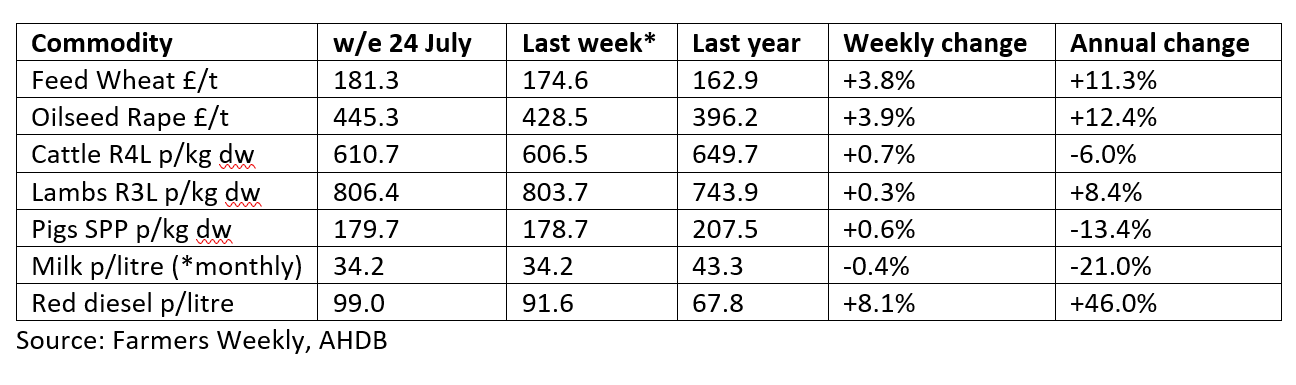
The momentum supporting grain prices continues to build with November London wheat futures breaking the £200/t barrier last week. Russia and Ukraine continue to target each other’s port infrastructure – the Russian port of Novorossiysk, which handles one-third of the country’s grain exports, is now closed at nighttime – while early spring wheat yields in the US are well down on 2025. Rising oil prices are also supporting oilseed rape values.
Oil price rise respite
Brent crude prices touched $100/barrel last week as the US and Iran continued to trade blows, but there was some respite yesterday (27 July) as the market fell back by over 5% in early morning trading. The drop was in response to Washington suggesting on Friday that it was pausing its bombing campaign against Iran to "give diplomacy some space". Iran has indicated that it will also suspend attacks, following “constructive” talks.
The headlines
Tenancy terms drop
The average length of all new agricultural tenancies in England and Wales has dropped to just over three years, according to the CAAV’s latest Agricultural Land Occupation Survey, published last week.
However, when excluding short-term agreements like seasonal grazing licences that last for under a year, the figure rises to around 4.5 years, although this still represents a decline. The CAAV’s Jeremy Moody says uncertainty around issues such as recent changes to Inheritance Tax means landlords are looking to keep their options open.
To restore confidence to the sector, George Dunn, Chief Executive of the Tenant Farmers Association (TFA), is calling for new Prime Minister Andy Burnham to give landlords who offer tenancies of over 10 years 100% relief on Inheritance Tax.
Dunn said it was worrying that the proportion of relet farms that had previously been let under secure agreements has dropped from over 70% to just over 50%.
Alastair Paul of our Rural Consultancy team comments: “I have always been a vocal supporter of long-term collaboration between landlords and tenants and firmly believe that successful, sustainable farming businesses are built on strong, enduring partnerships.”
Welsh farming plans
Speaking at last week’s Royal Welsh Show, Llŷr Gruffydd, the minister responsible for farming in the new Plaid Cymru government, shared his plans for the farming sector.
Arguably, the most timely was confirmation of a £1 billion three-year budget for the controversial Welsh Sustainable Farming Scheme. Although not as much as farming organisations had campaigned for, they welcomed the greater certainty it provided.
Gruffydd also announced the creation of an expert working group to help deliver a new National Food Strategy for Wales. The strategy will be presented to the government at some point in 2027, he said.
A Rural Proofing and Environmental Sustainability White Paper consultation, which includes proposals for a new statutory duty on rural proofing, was published during the show.
Knight Frank’s Llŷr Thomas, who attended the event, said the mood among farmers was more positive, but there was growing frustration regarding the lack of proactive reform around permitted development rights and rural planning legislation.
News in brief
More Defra changes
Following the appointment of Angela Eagle last week to head up Defra in Andy Burnham’s new cabinet, there have been further tweaks to the department’s ministerial line-up. Emma Hardy, who was under-secretary for water, takes over the cabinet-level farming brief from Steve Morgan who remains at Defra, but with a yet-to-be-disclosed role. Jenny Riddell-Carpenter of the Labour Rural Research Group joins the team, while Mary Creagh, under-secretary for nature, has left the government.
Farm visit support
Livestock businesses in England that are keen to help children learn more about farming are being encouraged to apply to the AHDB’s School Farm Visit Support Programme, part of the organisation’s Open Your Gate campaign. Successful applicants will receive fully funded training on all aspects of hosting school visits and access to a support network of new and existing host farmers.
BASC shooting win
The British Association for Shooting and Conservation (BASC) has won its High Court challenge that claimed Natural England had acted unlawfully by restricting the rearing of gamebirds in certain protected areas. The BASC said the judgment confirms that public bodies must exercise their powers within the limits set by Parliament.
Boost local food
The Campaign to Protect Rural England (CPRE) has told Andy Burnham that hitting Labour’s manifesto pledge to source half of the food used by the public sector from local producers could deliver a £1 billion boost to farming. A new report from the CPRE says evidence from the UK and internationally shows that more sustainable and local procurement can be delivered within existing budgets and systems when supported by the right policy framework.
Wildfire strategy
As Parliament’s Environment, Food and Rural Affairs (Efra) mulls the evidence to its wildfires inquiry, the Moorland Association has called for one jointly owned cross-government wildfire strategy, led by Defra and the Housing, Communities and Local Government departments; better funding of regional fire partnerships; reform of fire service funding to reflect rural and climate risk, not population alone, and recognition that land managers should be formal delivery partners within any framework.
Subsidy diet hit
Meanwhile, a new UN report claims that the EU’s agricultural subsidies helped push the cost of a “healthy” diet in Europe up by 36% between 2021 and 2025. The Food and Agriculture Organization’s annual State of Food Security and Nutrition report says subsidies for grains, oilseeds and meat have made it disproportionately expensive to grow vegetables, fruits and legumes.
Property of the week
Historical East Sussex launch
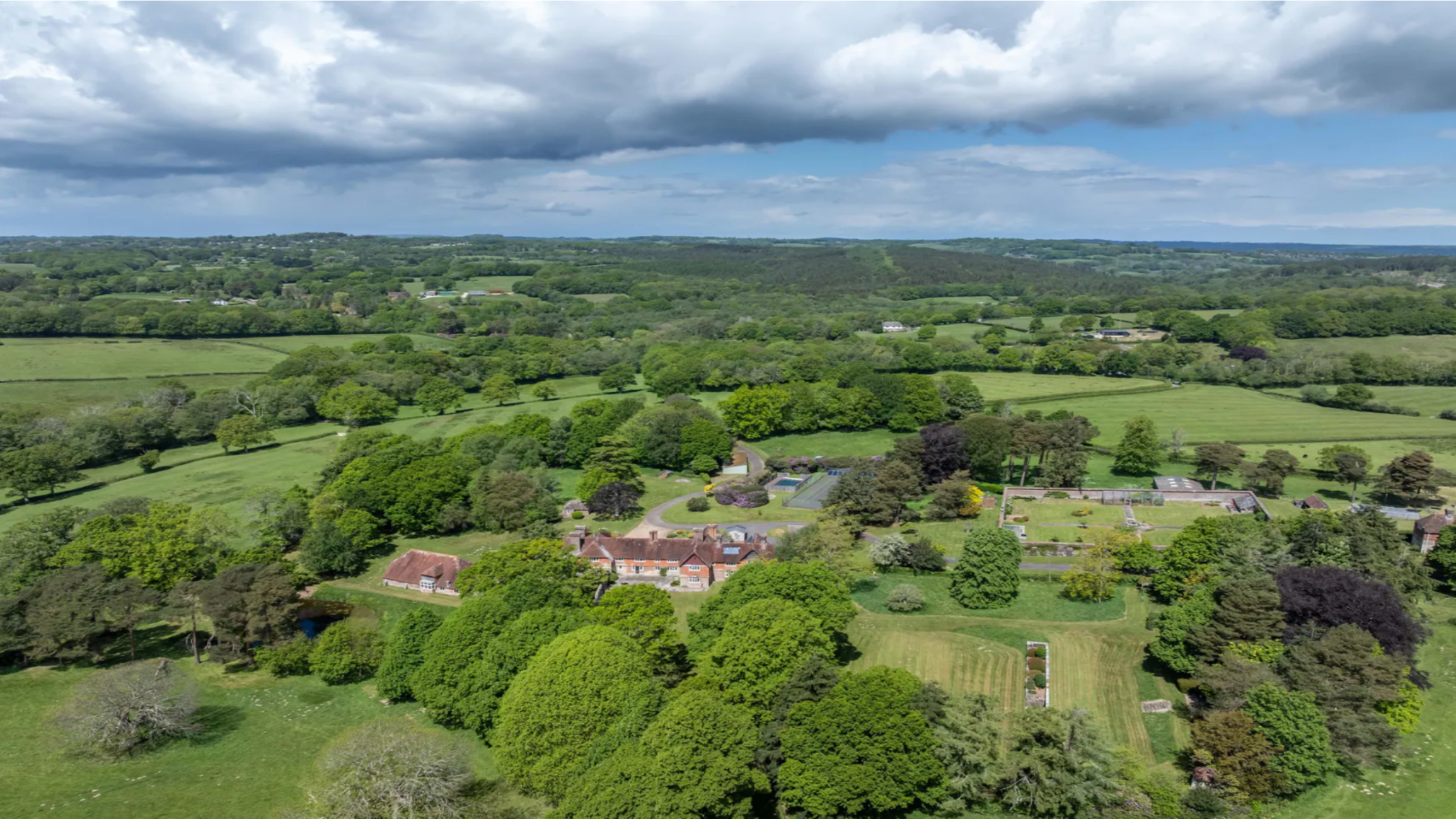
The Oldcastle Estate near Dallington, parts of which date back to the 1100s, has just arrived on the market. At the heart of the 336-acre property is a 10-bed Grade-II listed house set in landscaped gardens. There are four further houses, including a four-bed farmhouse with its own far-reaching views, and the rolling farmland is mainly pasture with areas of woodland. The estate has a guide price of £7.035 million and has been split into three main lots. Please contact Will Matthews for more information.
Property markets Q2 2026
Farmland
The farmland market remains in a state of inertia, according to the Q2 2026 edition of the Knight Frank Farmland Index, which tracks the value of bare land in England and Wales. Average values fell by just 1.5% over the quarter to just under £8,500/acre. But “because sales volumes are so low at the moment, it is impossible to say what an acre of land is worth”, points out Will Matthews, Head of Farm & Estate Sales. “The right block of land in the north Cotswolds could still make £20,000/acre, but in other areas you might be chuffed if you get £10,000/acre.” Download the full report for more farmland insight and data.
Country houses
The average price of rural properties fell 5% in the year to June, according to the Knight Frank Prime Country House Index, which tracks the value of homes worth over £750,000. The drop was slightly narrower than the decline of 5.5% recorded in March. The number of exchanges in the first six months of this year was 10% lower than in 2025, while the number of new prospective buyers registering was down by 14%.
