
The Rural Update: Burnham must listen to his own MPs
Your weekly dose of news, views and insight from Knight Frank on the world of farming, food and landownership.
13 July 2026

Viewpoint
As discussed in this week’s Update Andy Burnham will be faced with an overflowing in-tray and plenty of lobby groups competing for his ear when he takes over as Labour Party leader and Prime Minister on 20 July. A critical first test of his leadership will be what he chooses to prioritise.
While the government’s shiny new gold, silver and bronze 30by30 environmental delivery plan may look alluring, Burnham would be wise to first listen to his own MPs in the Labour Rural Research Group and read their compelling new report compiled in conjunction with the CLA.
The Future of the Rural Economy suggests taking action to close the rural/urban productivity gap and boost food chain resilience would be a vote winner as well as an economic bonus. For a new leader, ignoring both of those benefits would seem foolhardy.
Sign up to receive this newsletter and other Knight Frank research directly to your inbox
Commodity markets
Oil price bounce
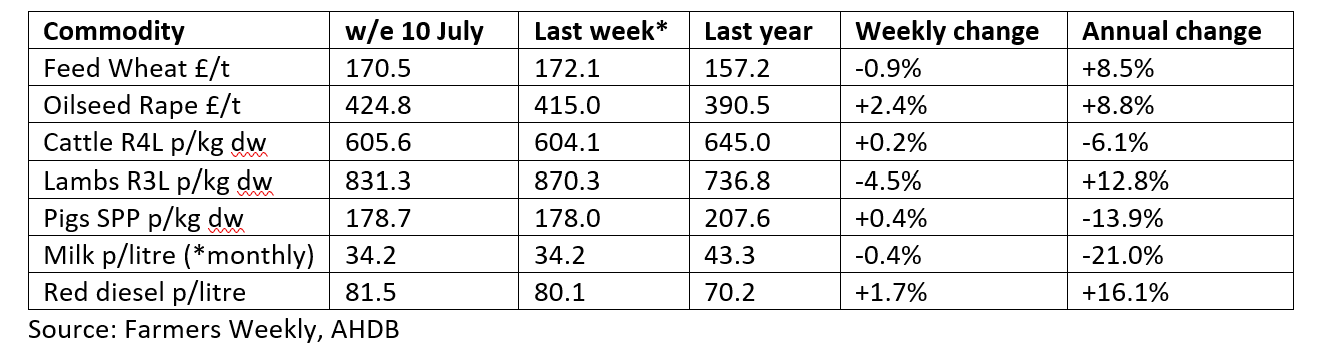
The shaky ceasefire between Iran and the US, which had sent oil prices down towards US$70/barrel, always seemed too good to be true, and in the end it was. Brent crude prices rose 4% in early trading yesterday (13 July) with values close to US$80/barrel again as the two countries continued to trade blows over the weekend. The bounce, however, provided some support for oilseed rape markets.
The headlines
30by30 details released
The government has just published further details of how it plans to deliver its 30by30 pledge made at the COP15 summit in 2022 to effectively conserve and manage 30% of England’s land and seas for nature by 2030.
It says around 32% of England has the potential to contribute to the UN’s Global Biodiversity Framework target, although only 7% of land currently meets the criteria of purpose, protection and management.
To close the gap, a three-tiered, medal-style approach is being introduced. The 7% of land that can already be counted towards the 30by30 target is in the gold tier, with a further 3.5% of land anticipated to meet the criteria once assessed.
Land meeting an initial threshold and progressing toward the 30by30 criteria – an estimated 9% of England – falls into silver. These pipeline areas will receive targeted investment and support to nudge them into the gold category.
The bronze category covers areas delivering wider benefits to nature, although much of this, such as arable field margins, will be unlikely to progress to a higher tier due to a lack of ‘protection’.
A key part of the new delivery plan is helping landowners who might want to voluntarily submit land towards the target. A new guidance note provides advice on how to assess and report potential areas that meet the 30by30 criteria.
Most of the public funding to move land up through the tiers will come from existing environmental schemes, says the government, but it admits this will not be enough and claims it will “unlock private, philanthropic and commercial investment to deliver at the pace and scale required”.
Labour rural reset call
A new report from the Labour Rural Research Group (LRRG), which represents the party’s 40 rural MPs, argues that Andy Burnham’s proposed ‘reset’ must include a new approach to rural Britain if the party is serious about delivering economic growth across the whole country.
Polling for The Future of the Rural Economy, produced in conjunction with the CLA, reveals 63% of voters agree it would be the right decision for Labour to make rural communities and the rural economy a higher priority.
However, only 27% of respondents said they were confident the party would strengthen its offer under the leadership of Andy Burnham. Almost 80% said they would support increasing investment in British farming if it helped improve the UK’s food security.
The report sets out a series of recommendations to unlock rural economic growth, including a whole-of-Government rural economic strategy, stronger rural proofing across economic policy, targeted investment in infrastructure and housing, support for rural business scaling, a rural workforce strategy, and clearer approaches to land use, food security and environmental markets.
CLA President Gavin Lane said: “The public are on the side of rural Britain, and they expect the next government to be too. Taxes on family farms and businesses have left businesses reeling, but Andy Burnham has the chance to reset the relationship and work to unlock the enormous potential of the economy in rural areas.”
News in brief
No livestock target
Defra Secretary Emma Reynolds says the government has no opinion on the size of the country’s beef and sheep herds, despite recommendations from the Climate Change Committee to cut livestock numbers. Reynolds, who was responding to questions at a session of the House of Commons’ Environment, Food and Rural Affairs Committee last week, said improvements in diet and genetics could allow domestic meat production to reduce emissions without a decline in the national herd.
Food five-point plan
Meanwhile, food sector representatives and farming unions have presented Andy Burnham with a five-point plan they say will help deliver a resilient and affordable food system. Reform of the planning system, a meaningful realignment with the EU and reducing the agricultural sector’s skills and labour gap are part of the wish list.
Self-sufficiency drop
Food grown in the UK accounted for 60% of consumption last year, down from 65% in 2025, according to new government data released last week. Consumption of ‘indigenous’ food that can realistically be grown here slipped from 77% to 72%. The figures, however, are based on value not volume so spiking prices for commodities like coffee and chocolate can affect them. The low point for ‘indigenous’ production was 61% in 1956. The peak was 95% in 1984.
Chelsea peat palaver
A number of Chelsea Flower Show exhibitors have withdrawn from next year’s event after the Royal Horticultural Society introduced stricter rules on the use of peat compost. Only plants sown in peat before 1 January 2026 will be allowed. Growers say they would like to use less peat, but decent alternatives are still not available. A delayed ban on peat sales was due to be introduced this year, but no legislation has been introduced by the government.
Country house prices
The average price of rural properties fell 5% in the year to June, according to the Knight Frank Prime Country House Index, which tracks the value of homes worth over £750,000. The drop was slightly narrower than the decline of 5.5% recorded in March. The number of exchanges in the first six months of this year was 10% lower than in 2025, while the number of new prospective buyers registering was down by 14%.
Property of the week
Pioneering vineyard
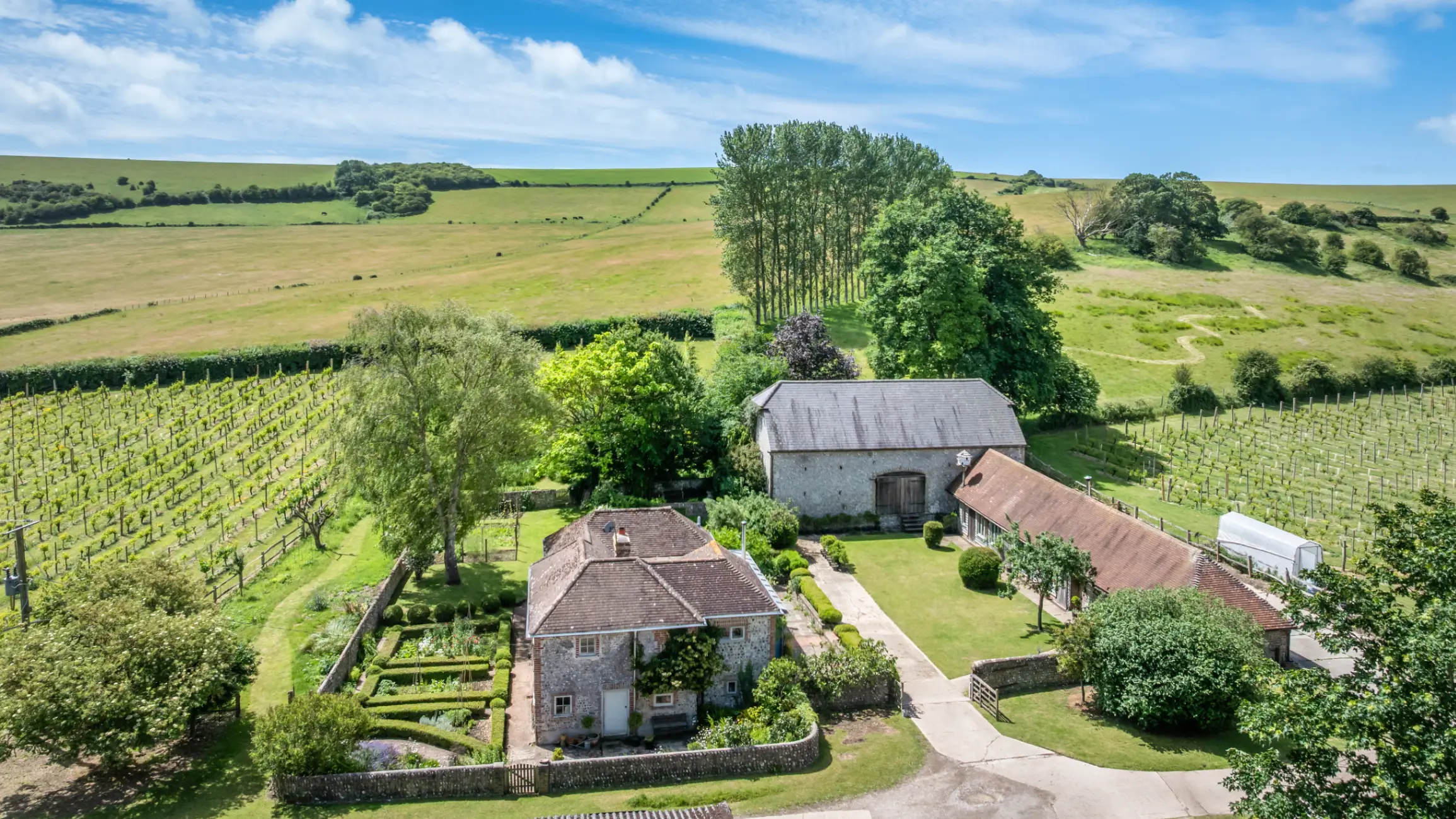
Breaky Bottom, a stunningly beautiful and award-winning vineyard and winery near Lewes in East Sussex, created by English wine pioneer Peter Hall in 1974, could be the perfect choice for anybody searching for a small wine estate. Wines from the 15-acre property, which purposefully limits production to only around 10,000 bottles a year and consistently turns a profit, were served at the King’s coronation in 2023. The guide price is £4 million. Please contact Will Banham for more information.
