

The Rural Update: Look beyond government support for resilience
Your weekly dose of news, views and insight from Knight Frank on the world of farming, food and landownership.
15 June 2026

Viewpoint
For those English farms and estates still hoping that the Sustainable Farming Incentive (SFI) will be a convenient replacement for their Basic Payment Scheme cheques, the newly announced cap on SFI funding in 2026 (discussed below) is a stark reminder that not everybody will benefit. Making the most of whatever support is available remains sensible, but the most resilient businesses will be looking at such payments to help support their post-Brexit transition away from direct payments rather than as a reliable source of income.
The latest farm income figures from Defra also highlight the need for long-term resilience to mitigate the impact of fluctuating commodity cycles. While surging milk and beef prices added 20% to agriculture’s bottom line in 2025, both sectors are now struggling to remain profitable in the face of sliding markets.
Sign up to receive this newsletter and other Knight Frank research directly to your inbox
Commodity markets
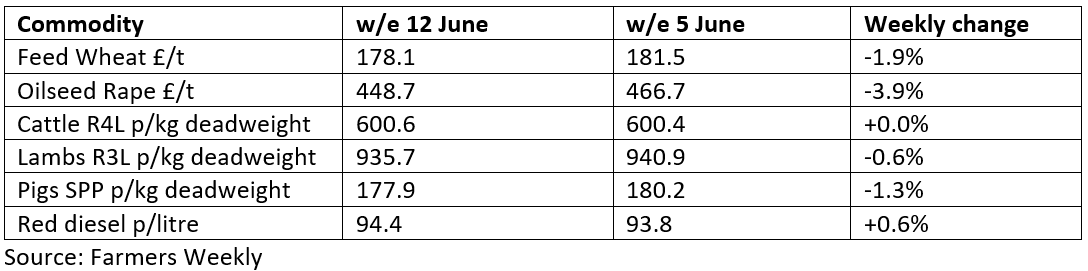
Oil price slide
Crude oil prices tumbled when trading opened yesterday morning (Monday, 15 June). The Brent Crude Last Day Futures index slipped below US$80/barrel for the first time since 4 March after an announcement from Donald Trump that he had brokered a peace deal with Iran. Although light on detail, the US President said the agreement, which is due to be signed on Friday, would see the crucial Strait of Hormuz reopened to shipping.
NFU fertiliser plan
Aside from energy costs, the US-Iran conflict has sent fertiliser prices spiralling. In response, the NFU has published a four-point plan to help mitigate some of the damage to the farming sector. A key element of the plan would mirror EU schemes with farmers able to reclaim 70% of their additional costs, up to a maximum of £50,000, from the government if imported ammonium nitrate hits £500/tonne. Carbon taxes on fertiliser imports should also be scrapped.
Dairy exodus continues
The number of dairy farms in Great Britain has dropped by almost 3% since April 2025, according to new figures from the AHDB. An estimated 190 producers exited the sector, with the bulk of those departing over the winter when milk prices slumped. There are now just 6,850 milk producers across the country. However, over the same period, average annual milk output per farm increased by almost 8% to an estimated 1.90 million litres.
The headline
SFI funding cap announced
Defra has announced that £240 million will be available to farmers as part of this year’s Sustainable Farming Incentive (SFI26) scheme.
A maximum of £60 million will be allocated to the first round of SFI opening on 30 June, which is targeted at smaller businesses (below 50 hectares) and those who aren’t already part of an agreement. Any remaining funding will roll over to the next round of applications for all other claimants, which is set to open in September.
However, data from the environmental scheme management platform JustFarm suggests that the money may not go far. It calculates that around 50,000 small farms in England are eligible to apply for the first round. With a predicted average payment of £3,800 each, the funding will cover fewer than 16,000 applications.
Mark Topliff, a grants and natural capital specialist in our Rural Consultancy team, says: “The analysis by JustFarm shows just how small the pot of money is and how vital it is to be ready to submit your applications as soon as the windows open.
“And most importantly, making sure that the application is absolutely correct so there are no delays from the RPA coming back to you with enquiries.”
To help “avoid sudden, unexpected closures and provide greater transparency and certainty”, Defra says it intends to publish updates when 25%, 50% and 75% of the window 1 and 2 budgets are allocated. Farmers with soon-to-expire environmental agreements will be able to access the full SFI26 offer, Defra adds.
News in brief
Eagle flies from Defra
Food Security and Rural Affairs Minister Dame Angela Eagle has been moved to the MOD, where she will serve as Security Minister, following the resignation of Defence Secretary John Healey and Armed Forces Minister Al Carns over what they claimed were insufficient plans to raise defence spending. She will be replaced at Defra by Portsmouth MP Stephen Morgan, who says on his website: “Undeniably, climate change is the greatest threat we face. It must always be at the forefront of our agenda.”
TB strategy launched
Vaccination of both cattle and badgers will play a much greater role in the proposed Bovine TB Control Strategy for England, which was published last week. By 2030, a new BCG vaccine will be paired with a test that can differentiate between infected and vaccinated cattle. More sensitive on-farm testing is called for, while targeted badger vaccination and monitoring rather than culling will be prioritised. The aim is to achieve disease-free status by 2038.
Farm incomes up
Total income from farming (TIFF) across the UK rose by over 20% in 2025, according to Defra’s first estimates. Tiff hit £8.4 billion last year, mainly driven by higher beef (+£945 million) and milk (+£755 million) output. Arable farmers, however, had less to cheer about with total crop output falling by £400 million. Total subsidy and environmental support payments accounted for £3.8 billion of the total TIFF figure, with diversified income adding another £2.2 billion.
Soil carbon also up
Current carbon accounting methodologies could be significantly underestimating the amount of carbon stored in soils, according to initial findings from an AHDB baselining survey of 178 farms across Britain. Results indicate that around 95% of estimated carbon stocks on participating farms are held in soils with 30% or more of soil organic carbon sitting below the commonly measured 30cm depth.
Welsh red tape review
Llyr Gruffydd, the new Minister for Rural Resilience and Sustainability in Wales, has announced a review into the bureaucratic burden on Welsh family farms. The review, which was one of Plaid Cymru’s manifesto pledges at the recent Senedd elections, will be chaired by former NFU Cymru President and beef and sheep farmer John Davies.
Swine fever in Hungary
Hungary has recorded the first cases of African swine fever in its domestic pig herd. Wild boars have previously been affected, but the nation’s pork producers had escaped until now. Around 3,000 animals on a farm in the east of the country will now be culled. Last month, Defra announced a strategy to ensure the UK remains free of the disease.
Property of the week
Suffolk stunner
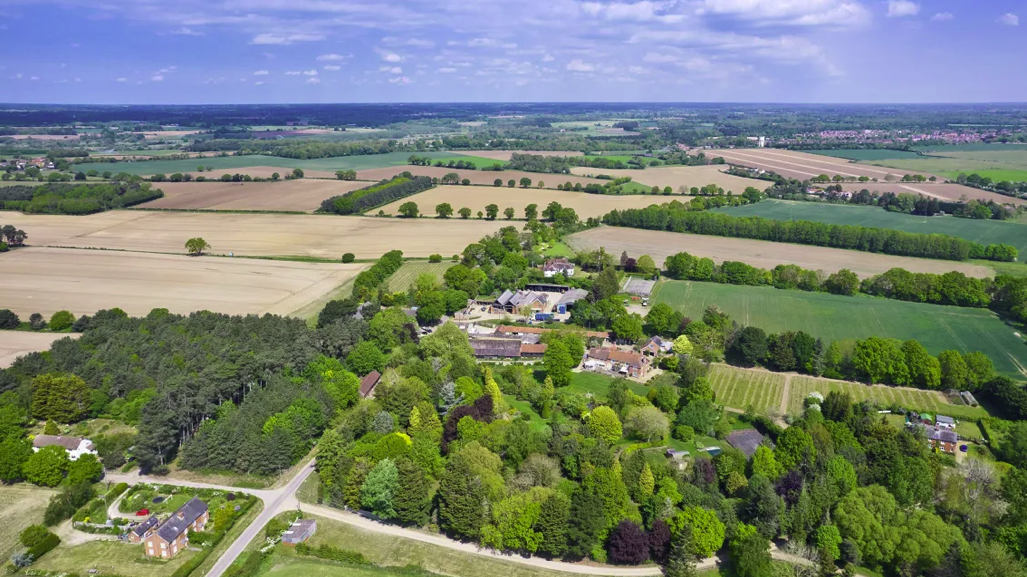
Georgie Veale, our East Anglian farms and estates specialist, has just launched another cracking property. Set within the Essex and Suffolk Coast and Heath National Landscape, the 359-acre Rookery Estate, near Woodbridge, includes an eight-bed Grade II listed house surrounded by almost 20 acres of landscaped gardens and grounds, a wide range of buildings, some of which are let, a vineyard established in 1973, three pairs of semi-detached farm cottages and a 3.25-acre reservoir. Much of the land, which grows arable and root crops, including carrots, is irrigated. The estate is available in 10 lots with a total guide price of £6.7 million. Please get in touch with Georgie for more information.
Discover more of the farms and estates on the market with Knight Frank
Property markets Q1 2026
Development land – Green fields flat
The average value of urban brownfield and prime central London development land fell by 2.5% in the first quarter of the year, according to the Knight Frank Residential Development Land Index. Download the full report for more data and insight.
Farmland – market treads water
The average value of farmland remained relatively unchanged in the first three months of the year, according to the Knight Frank Farmland Index. Despite a perception by vendors that now is not a good time to sell, demand remains firm from a range of buyers. If you are thinking of selling, please contact Will Matthews.
Country houses – values stabilising
The average price of houses in the countryside fell 5.5% in the 12 months to the end of the first quarter of 2026, which was a modest improvement on the 5.7% decline recorded in December, despite the uncertainty caused by the Middle East crisis, according to the Knight Frank Country House Index.
