
The Rural Update: Responsible rural policymaking required
Your weekly dose of news, views and insight from Knight Frank on the world of farming, food and landownership.
11 May 2026

Viewpoint
The electoral landscape across Britain changed significantly on Thursday after the local elections in England and parliamentary elections in Wales and Scotland. The Green and Reform parties, which have strong views on the environment and farming - particularly net zero - now wield far more political power and influence, while, as discussed below, farmer-friendly Plaid Cymru has seized control of Wales from Labour. After such success, there will undoubtedly be a period of post-election posturing, policy launches and talk of further wins in the next general election, expected by 2029 at the latest. However, politicians from all parties should remember that farming and land ownership are long-term businesses that need stability and the confidence to invest in the future. Any policy proposals should reflect that, rather than tapping into short-term, populist “culture-war” issues.
Sign up to receive this newsletter and other Knight Frank research directly to your inbox
Commodity markets
Wool prices surge
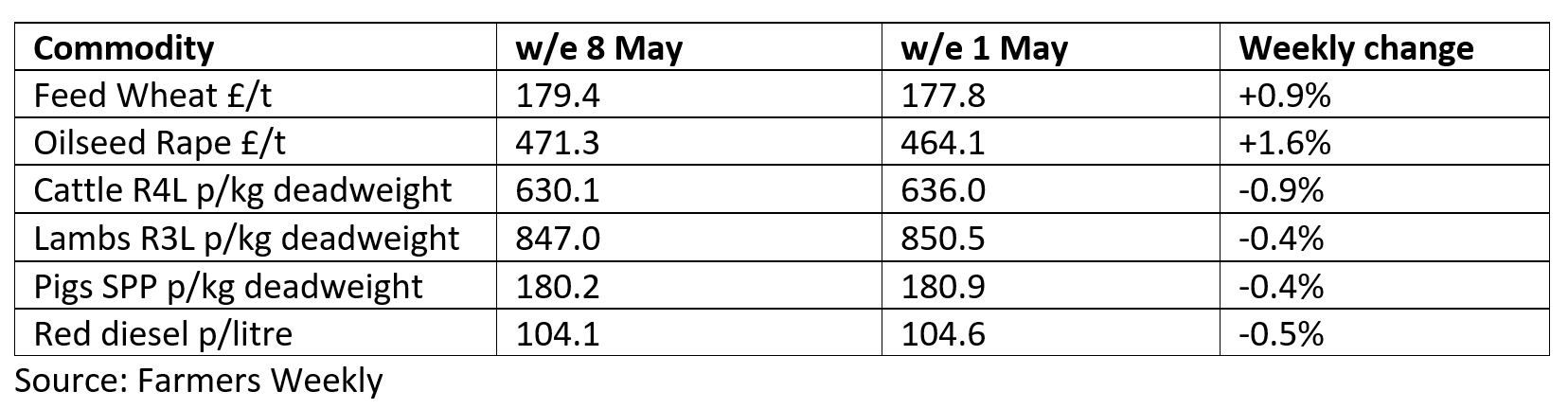
The price paid to sheep farmers for their flocks’ wool has hit its highest level in 10 years, according to trade body British Wool. Strong domestic and overseas demand meant the average payment for the 2025 clip reached 68p/kg, compared with 40p/kg in 2024. Further price gains at recent auctions suggest the 2026 clip value could be higher still, with some wool types breaking the 100p/kg barrier, predicts British Wool.
The headlines
All change in Wales
Welsh agricultural policy is set to become more focused on food and farmers after the ruling Labour Party was routed at last week’s Senedd elections.
The country’s electoral landscape was transformed after Labour lost 35 seats, leaving it with just nine of the Senedd’s 96 members. The Conservatives were also hammered, losing 22 seats and retaining only seven.
Plaid Cymru picked up 26 seats, taking its tally to 43 and making it the assembly’s largest party. Starting from scratch, Reform won 34 seats, with the Greens (2) and Lib Dems (1) also gaining a foothold in the Senedd for the first time.
Although Plaid Cymru has no overall majority, its leader, Rhun ap Iorwerth, has vowed to form a minority government with all ministers coming from his party.
The party put farming at the heart of its election campaign and has pledged to reform the Sustainable Farming Scheme (SFS), which farmers have complained is too focused on the environment. More support is likely for smaller farms, with 55% of Wales’s 24,000 farming businesses being under 50 acres.
Other promises include a multi-year funding package for farming, a review of red tape, a science-led approach to nitrate pollution and the control of bovine TB, and a more nuanced tree-planting policy.
High-quality agricultural land will also be protected from large-scale corporate carbon-offset schemes and “excessive” solar developments, but farmers and rural communities will be encouraged to invest in their own renewable energy projects.
Please contact Llŷr Thomas of our Rural Consultancy team for advice on how the changes might affect your business.
Glyphosate ban worries
A proposed ban on the use of glyphosate (the active ingredient in the weedkiller Roundup) as a pre-harvest desiccant on cereal and bean crops is being opposed by the UK’s arable farmers.
They say the country’s rainy maritime climate, which often means producers have a short window to harvest their crops, makes it an important tool that offers flexibility and reduces grain-drying costs.
However, a campaign launched last week by the Soil Association, and backed by numerous environmental and health organisations, argues that glyphosate residues, which they claim could cause cancer, are commonly being detected in bread, breakfast cereals and beer.
Chemical companies and farming organisations say there is no evidence that glyphosate is carcinogenic when used correctly.
Its use as a pre-harvest drying agent has already been banned in the EU, and the UK may be forced to follow suit anyway as part of the sanitary and phytosanitary agreement currently being thrashed out with Brussels.
News in brief
Land-use election debate
The debate around land use in England could become more heated after the Reform and Green parties took control of a significant number of extra councils as Labour and the Conservatives haemorrhaged seats in the recent local elections. Although local authorities have limited say over infrastructure projects considered to be of national importance, Reform-led councils are likely to be less amenable to farmland-based renewable energy or other net-zero-related schemes. However, a poll conducted by More in Common found that only 12% of Reform voters said reversing emissions reduction policies was a key reason for supporting the party.
SFI 2026 guidance available
Defra has just published its first guidance note for those eligible to apply for the initial round of the 2026 Sustainable Farming Incentive (SFI), which opens in June. Only farms smaller than 50 hectares (124 acres) or those that do not have an existing SFI agreement can take part; other businesses will have to wait until September before applying. Defra says the initial application window will remain open for around two months but may close sooner if demand is high and the Window 1 budget is fully allocated. Please contact Mark Topliff for advice on SFI and other grant applications.
Farm innovation grant opens
Farms and estates developing innovative projects that could boost productivity, reduce costs or deliver greater sustainability can now apply for a share of £5 million in government grant funding. Part of the wider Farming Innovation Programme, the grants will cover up to 45% of the cost of projects ranging in size from £750,000 to £3 million.
Livestock consultation deadline
Any rural businesses wanting to contribute to the government’s consultation on measures to improve the health and welfare of livestock in England have until 18 May to respond. The proposals include a mandatory annual Animal Health and Welfare Review by a vet for cattle, sheep and pigs and a mandatory annual flock health plan for sheep.
Sign up for vineyard insights
If you manage your own vines or are interested in the English wine sector, the regular subscriber-only newsletter written by Ed Mansel Lewis, Head of our specialist Viticulture team, could be of interest. Commenting on his latest article, Ed says: “As the industry matures, we are seeing an increasing range of business models in English wine. Some are navigating the challenges of our times better than others, although each has its benefits and drawbacks.” Sign up to find out more.
Next Gen Dales discussion
Our Northern Rural team is helping to host a CLA Next Generation event at the stunning Ingleborough Estate in the Yorkshire Dales on 5 June. The day will help equip those managing a diversified rural business or planning for the next generation. Attendees will also hear how the Farrer family has strengthened Ingleborough’s financial resilience, from a café renovation to land-use planning, offering an honest insight into the estate’s development so far. Sign up for the event.
Property of the week
Cotswolds classic
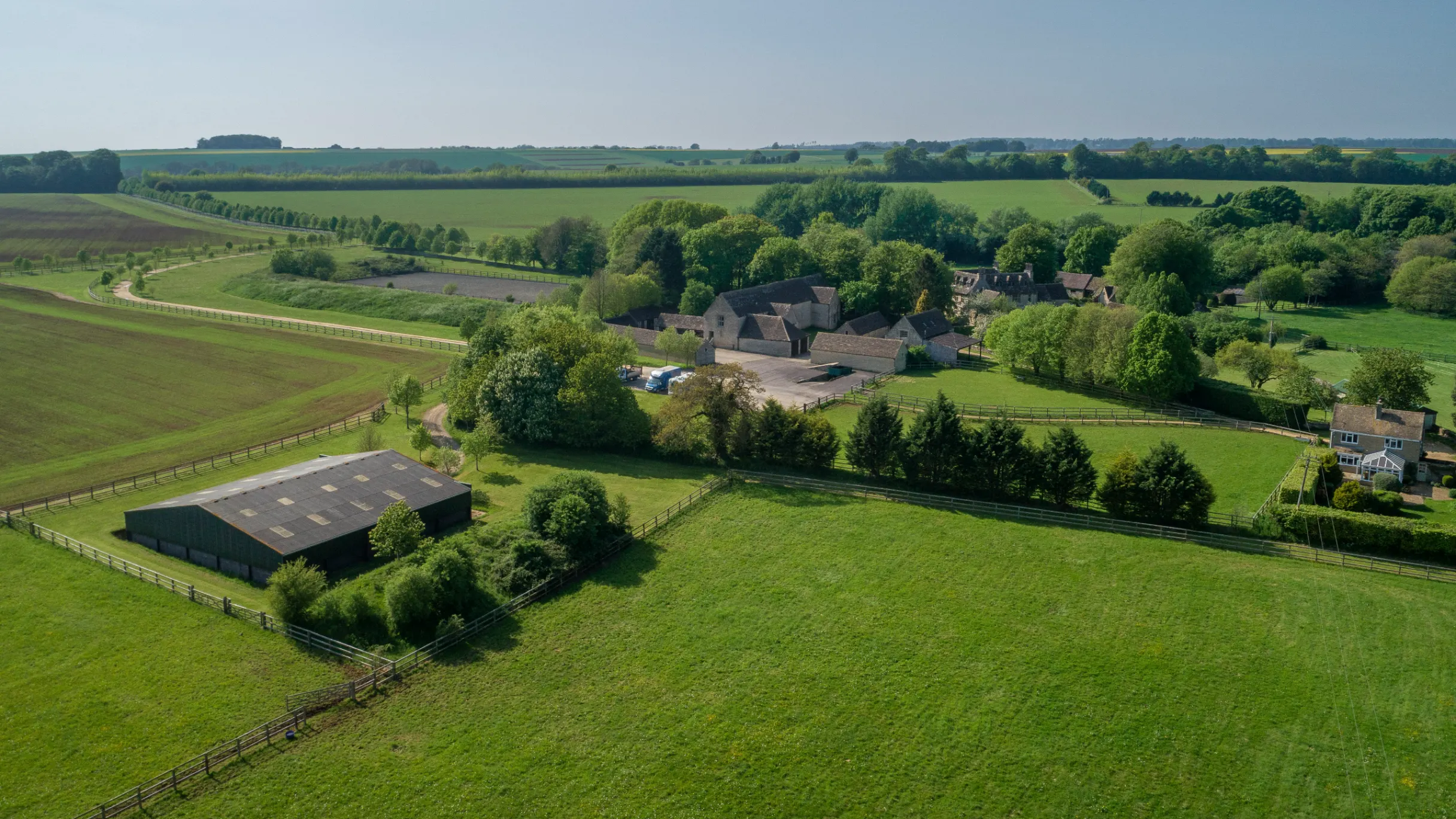
Anyone looking for a compact farming and lifestyle estate in the heart of the Cotswolds will want to check out Saddlewood Manor, near Tetbury, which has just been launched by Zara Elliot. The 172-acre ringfenced property comes with a 17th-century, six-bedroom Grade II listed manor house, which enjoys “fabulous, big-sky sunsets”, an indoor swimming pool complex, a range of equestrian facilities and two secondary homes. Most of the land has previously been farmed as part of an arable rotation but is currently down to grass. The guide price is £6.95 million. Please contact Zara for more information.
Discover more of the farms and estates on the market with Knight Frank
Property markets Q1 2026
Development land – Green fields flat
The average value of urban brownfield and prime central London development land fell by 2.5% in the first quarter of the year, according to the Knight Frank Residential Development Land Index. Geopolitical instability, higher borrowing costs and an easing yet still onerous planning and regulatory environment weighed on demand, says our head of Res Dev research, Oliver Knight. Greenfield values, however, remained flat, reflecting more resilient conditions for volume housebuilders in suburban markets, where lower-density schemes, simpler build requirements and steadier underlying demand have supported viability, adds Oliver. Download the full report for more data and insight.
Farmland - market treads water
The average value of farmland remained relatively unchanged in the first three months of the year, according to the Knight Frank Farmland Index. Continued political and economic uncertainty, exacerbated by the current conflict in the Middle East, which has seen input costs like fuel and fertiliser spiral, and poor weather, mean few new farms, blocks of land or estates were put up for sale during the traditional spring selling season. But despite a perception by vendors that now is not a good time to sell, demand remains firm from a range of buyers. If you are thinking of selling, please contact Will Matthews.
Country houses - values stabilising
The average price of houses in the countryside fell 5.5% in the 12 months to the end of the first quarter of 2026, which was a modest improvement on the 5.7% decline recorded in December, despite the uncertainty caused by the Middle East crisis, according to the Knight Frank Country House Index. The annual price decline for flats (-3.8%) and townhouses (-5.1%) was lower than for farmhouses (-7.1%), underlining how demand has been stronger in needs-driven markets. Prices are now 13% lower than their pandemic-era peak in Q2 2022, when demand increased for more space and greenery. Contact Tom Bill for more insight and data.
