

Prime London Rents Rise as Tenants Feel the Pre-Budget Squeeze
September 2026 PCL lettings index: 228.1 September 2026 POL lettings index: 235.0
02 October 2026

Less than a month before the Budget, the London rental market is already demonstrating the effects of increased taxation and red tape.
Landlords have faced a wave of extra financial pressures this year, including the introduction of the Renters Rights Act (RRA) in May. The new legislation sets stricter rules around collecting and increasing rent, reforms the possession process and introduces safeguards to prevent properties being re-let after they have been recovered for sale, as we explore here.
They have also had to contend with rising borrowing costs. An average five-year fixed-rate buy-to-let mortgage at a 75% loan-to-value was 4.7% in August, up from 3.88% in January, Bank of England data shows.
As pre-Budget speculation builds around capital gains tax increases and making rental income subject to National Insurance, some landlords are understandably reaching for their calculators.
Listen to the latest episode of Housing Unpacked with James Nation, a former special advisor to Rishi Sunak at the Treasury, to hear the full rundown of what tax changes could be announced.
Pushed Higher
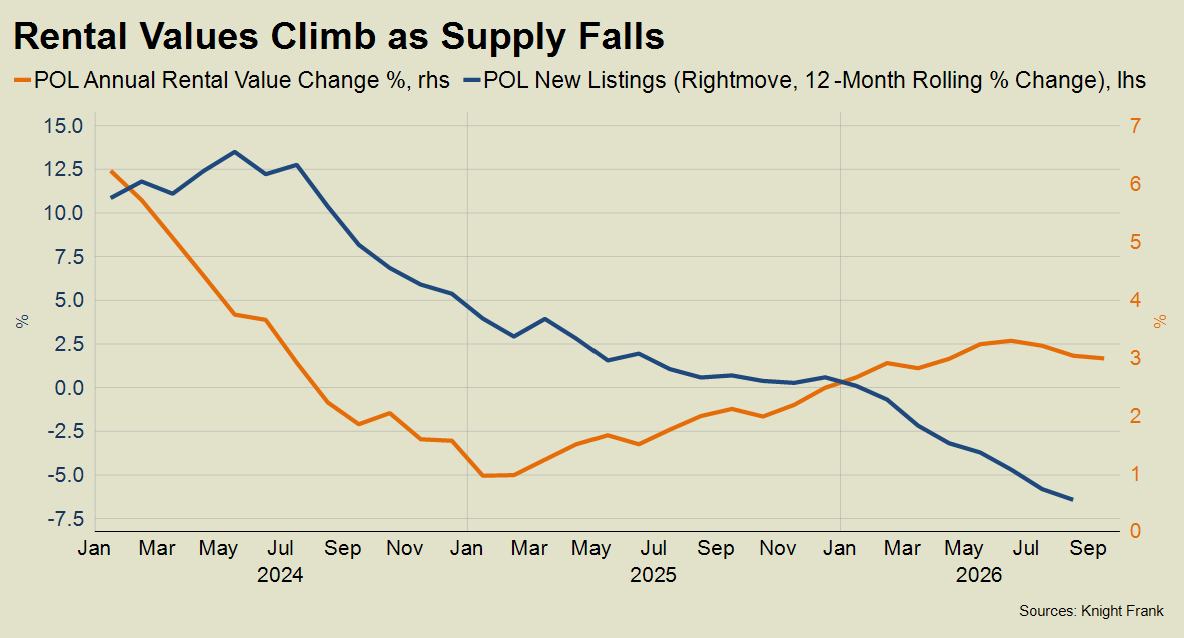
As the supply of lettings properties falls, rents are being pushed higher, as the chart below shows.
Average rents in prime outer London (POL) increased 3% in the year to September. That included a 2.3% rise over the last six months, which is the fastest pace of growth over a half-year period since January 2024, a time when the lettings market was recovering from the supply/demand imbalance caused by the pandemic.
Landlords have been setting asking rents higher to reflect the increased risks they face under the new RRA rules since May, which is an unintended but predictable consequence, as we explored here.
Meanwhile, the number of new listings in POL fell 6.4% in the year to August compared with the previous 12 months.
It was a similar story in prime central London, even though supply has been less of a constraint. Due to the current weakness in the PCL sales market, more discretionary owners have let out their property.
Average rental values in PCL increased 1.3% in the year to September. However, after falling at the start of the 12-month period, they have risen by 1.8% over the last six months, which is also the fastest pace over a half-year period since January 2024.
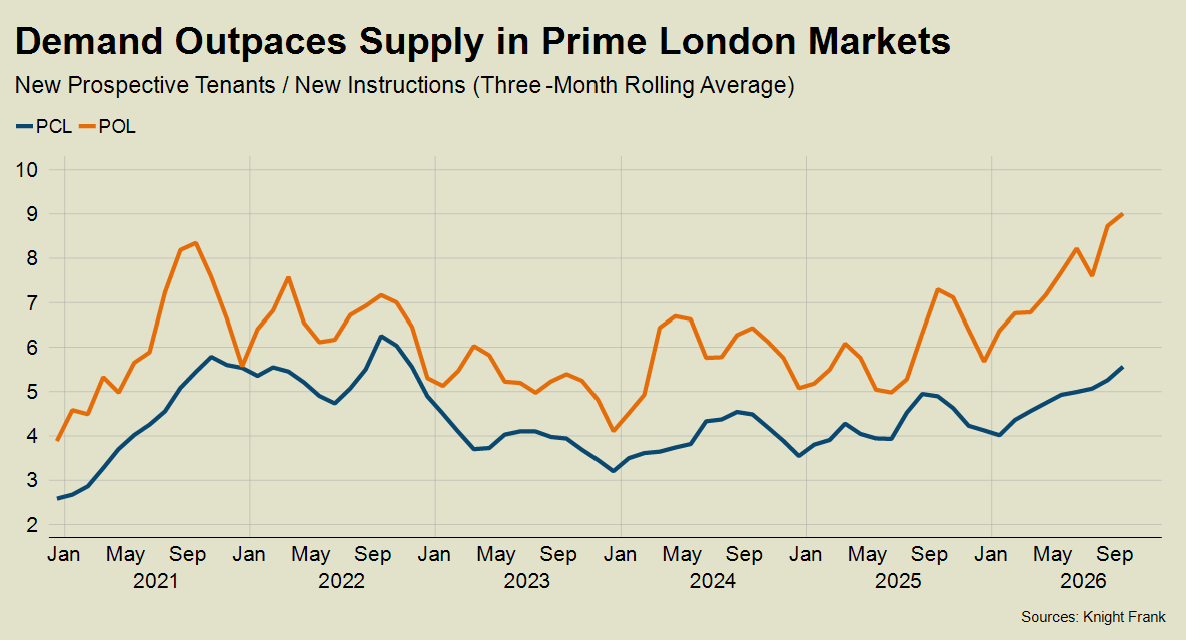
Underlining the imbalance between supply and demand, the ratio of new prospective tenants to new properties in POL was 8.9 in the three months to September. That was higher than during the pandemic when demand snapped back quickly after successive lockdowns. In PCL, the figure was 5.6, which was the highest in four years.
It shows why both landlords and tenants will be hoping for an uneventful Budget.
Sign up to Knight Frank Research.
