New Homes Update: taking stock of a year of reform
Assessing progress and pitfalls in Labour’s planning overhaul


Assessing progress and pitfalls in Labour’s planning overhaul
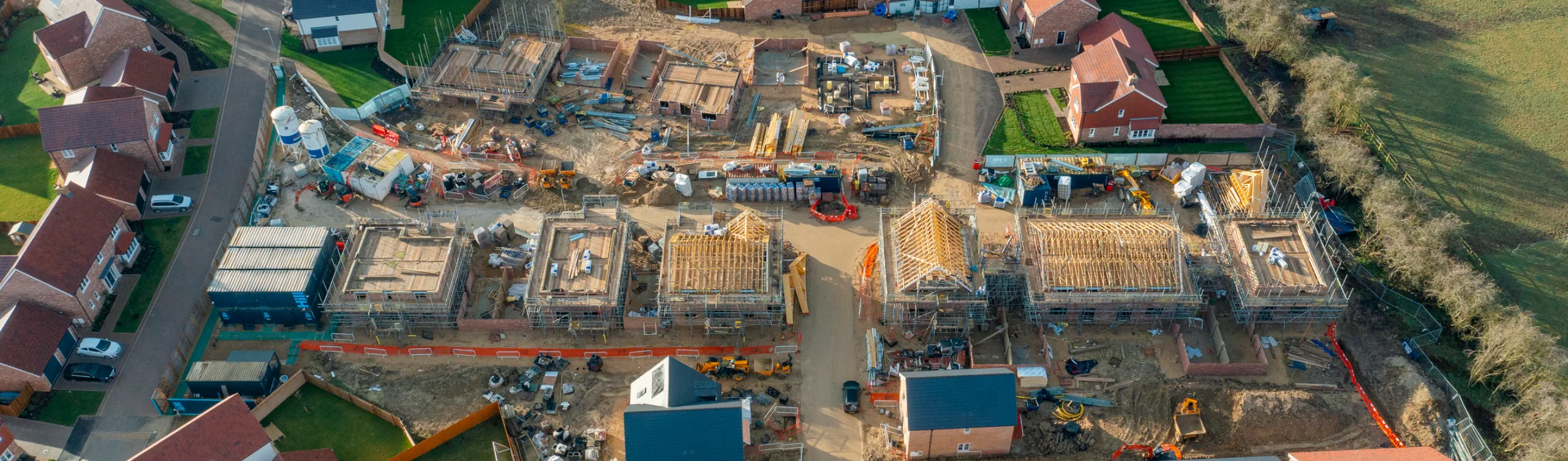
It is more than a year since the public elected Kier Starmer's Labour Party following a promise to build 1.5 million homes over this parliament – equivalent to about 300,000 additional dwellings a year. It is also more than six months since the administration announced sweeping reforms to the planning system.
Aspects of these reforms are stimulating delivery in certain areas, yet national output continues to fall. The independent Office for Budget Responsibility (OBR) expects developers to add 192,000 net additional dwellings to the housing stock during 2025-26, a twelve-year low.
The OBR expects a gradual recovery from that point, but progress will remain limited without further change, leaving the government on track to fall well short of its 1.5 million target. Challenges are most serious in urban locations, particularly London, about which we've written extensively here and here, but the same applies to all regional cities. In this note, we take a broader look, focusing on housebuilding in high-demand suburban locations.
The measures announced so far have created a degree of optimism across the development sector, with the grey belt policy emerging as the clearest driver of activity. By clarifying how lower-quality land within the Green Belt can be redeveloped, the policy has opened a pathway for schemes in sustainable, well-connected areas that were previously out of reach. This has injected momentum into the planning pipeline and given both promoters and housebuilders confidence to bring forward applications.
There are also early signs of increased competition for well-located, consented sites, particularly those on the edge of major conurbations with strong transport links and healthy local demand. These sites are proving more resilient on pricing and continue to attract bids from national housebuilders seeking to replenish the future supply pipelines.
Finally, despite the wider slowdown in output, planning activity remains high. Many developers are pressing ahead with applications to ensure readiness once financial conditions ease. This willingness to plan through the cycle reflects underlying confidence that well-located, policy-aligned schemes will be among the first to move when demand improves.
That said, the system is beset by bottlenecks that increase risk and threaten viability. Local authority planning teams remain under-resourced, leading to protracted determination periods and uncertainty around delivery timelines. Many councils are still without an up to date local plan, encouraging speculative applications and eroding confidence. The government’s forthcoming plan making framework, due by the end of 2026, also lacks clarity, leaving developers unsure how emerging policies will apply.
Infrastructure is another constraint. Limited grid capacity and slow progress on upgrades continue to delay strategic schemes, particularly those proposing new settlements. Addressing these challenges will require a more coordinated approach – one that sequences infrastructure investment ahead of housing delivery. Evidence from a recent Centre for Policy Studies paper suggests that front loading transport and energy infrastructure acts as a magnet for private investment, helping unlock stalled sites and accelerating progress.
Finally, policy ambition on affordable housing, while welcome, may create unintended consequences. The requirement for up to 50% affordable housing on grey belt sites risks undermining viability, particularly for SMEs. Meanwhile, many housing associations remain cautious about taking Section 106 units, preferring to bid for additionality elsewhere, which can complicate negotiations and slow delivery.
The shifting policy landscape is shaping activity across the land and development markets in uneven ways. Demand for sites is increasingly site specific rather than driven by broad market sentiment. Housebuilders are targeting locations that align with their regional land strategies – particularly where they anticipate near term sales and planning certainty – while exercising greater caution elsewhere.
Pricing dynamics reflect this selectivity. Well located, consented sites continue to attract healthy competition, whereas secondary locations are experiencing softer interest and downward pressure on values. This divergence is most evident between the North and South: stronger affordability in northern markets is supporting both sales rates and appetite for land, while southern regions – constrained by higher prices and weaker affordability – remain subdued.
Developers are also relying more heavily on bulk sales and forward funding to maintain cash flow and manage risk, albeit reluctantly. While these arrangements provide short term liquidity, they typically come at a discount and highlight the ongoing challenge of slower private sales.
Indeed, while conditions have definitely improved since last year they remain challenging. Across the listed housebuilders, sales rates have ticked up from their post-covid lows but look to be settling lower than long-term averages. In some cases, pricing has also struggled to match inflation, while the ongoing use of financial incentives hints at stretched finances and weaker demand. For many, this underscores the need for more stable demand side support to sustain delivery.
The prolonged downturn has intensified pressure on SME builders. Higher financing costs, complex planning requirements and ambitious affordable housing targets are squeezing margins, leading some smaller operators to scale back or exit the market entirely. Re establishing a healthy SME pipeline – through simpler routes to planning and targeted support for smaller sites – will be key to achieving meaningful growth in housing supply.
For developers, the reforms still present areas of opportunity. Edge of conurbation grey belt sites with strong transport connections and clear local demand remain the most attractive.
Developers can also better position themselves by engaging early with local authorities and registered providers. Factoring in the 50% affordable housing requirement at an early stage, and exploring partnership approaches or grant funding options, will help schemes move more smoothly through the system. For SMEs, focusing on smaller, high quality sites where planning complexity is lower can help build resilience, though this part of the sector will require more policy support if we are to have a diverse housebuilding ecosystem.
So while the reforms have not yet delivered a step change in output, they have shifted sentiment and laid foundations for a more responsive planning environment. Success will depend on maintaining momentum: resourcing local planning teams, clarifying the new plan making framework and properly investing in infrastructure to unlock housing. Developers who align with these priorities – targeting well located, policy compliant sites and planning early for delivery – will be best placed to benefit as conditions improve.
Sign up to Knight Frank Research.
Sorry!
An unexpected error has occurred.
Please try again later.
