
UK Industrial & Logistics – August 2026 Update: The Next Logistics Cycle Is Already Taking Shape
01 September 2026

The UK industrial and logistics sector is entering a new phase. For much of the last decade, demand was driven by broad structural trends such as ecommerce growth and supply chain resilience. Today, the drivers are becoming more complex.
Demand remains underpinned by familiar drivers such as ecommerce and supply chain resilience, though the most important story now is arguably the increasing alignment between government policy, international trade flows and logistics infrastructure. Policy decisions, shifting trade flows and changing occupier strategies are all influencing where demand emerges and which locations benefit.
What makes the current cycle particularly interesting is that many of the most significant developments are not simply generating additional demand for logistics space. They are redirecting demand towards specific locations, asset types and operating models, creating clear winners and losers across the market. Whether through planning reform, Chinese ecommerce expansion, changes to customs regulations or the emergence of new regional economic policies, the common theme is the growing strategic importance of logistics real estate within the UK's economic infrastructure.
The implications for industrial and logistics real estate are significant. Demand is becoming increasingly concentrated around key import gateways, urban fulfilment markets and locations capable of supporting modern, technology-enabled supply chains.
The Inventory Shift
Chinese ecommerce operators continue to emerge as one of the most important new sources of occupier demand. Recent occupier transactions have included bonded warehouse facilities around London, distribution centres in Nottinghamshire and last-mile delivery depots in Leeds, reflecting a move towards building out domestic logistics networks rather than relying solely on cross-border fulfilment.
In effect, this broadens the range of markets benefiting from this ecommerce expansion. Rather than concentrating demand solely within traditional "Golden Triangle" distribution hubs, Chinese occupiers are creating requirements for a layered logistics network that includes import infrastructure, bonded warehousing, national fulfilment centres and urban delivery facilities. Locations around Heathrow, London Gateway and East Midlands Airport appear particularly well-positioned, while Leeds, Manchester and Birmingham continue to benefit from growing demand for urban delivery infrastructure. The result is a deeper and more geographically diverse source of occupier demand.
The trend may accelerate further following changes to de minimis rules. In July, following a three-month consultation, the government announced that the removal of low value import (LVI) relief would be brought forward by six months, from March 2029 to October 2028. This follows the US and EU who have already abolished their equivalent thresholds.
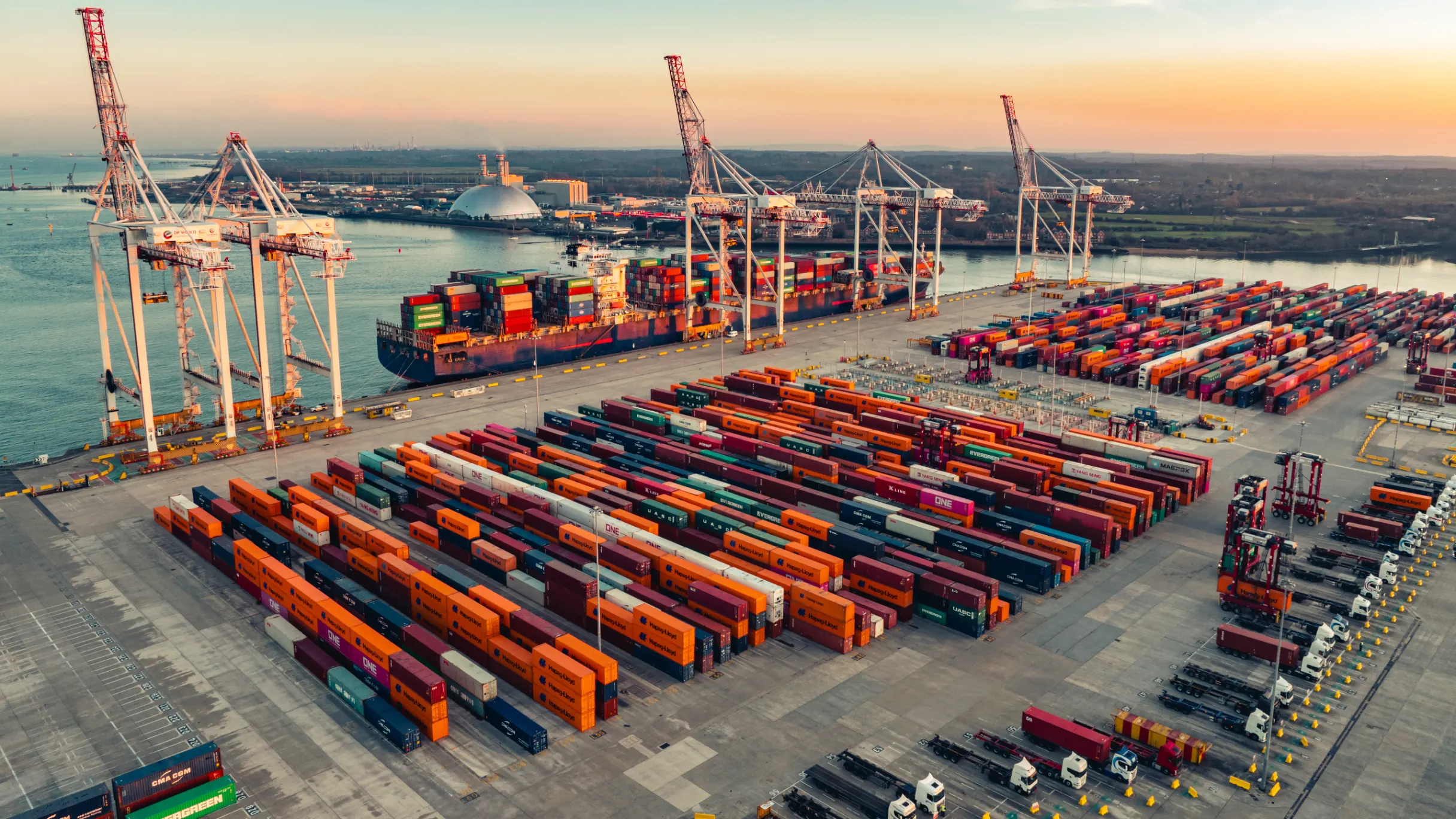
The market is already seeing evidence of occupiers shift their behaviours in anticipation of these changes. Under the current system, overseas retailers can ship low-value goods directly to UK consumers without a need to hold domestic inventory. The removal of that advantage would encourage a shift towards bulk importing, domestic warehousing and local fulfilment networks. In effect, inventory that currently sits overseas could increasingly need to be stored within the UK. This would create additional demand for port logistics facilities, bonded warehouses and national distribution centres. The implications are particularly positive for markets linked to major import gateways such as London Gateway, Felixstowe and Southampton, where occupiers can integrate importation, storage and fulfilment within a single supply chain.
Amazon’s Expanded Offering
Despite the attention paid to emerging Chinese operators, Amazon continues to influence the direction of the logistics market more than any other company. What is notable today is that Amazon's ambitions are expanding beyond warehouse occupation towards a broader logistics services platform.
Amazon Warehousing and Distribution, or AWD, went live in five European markets on 20th August, including the UK, demonstrating how the company is moving beyond retail into broader supply chain services. Sellers can now store inventory within Amazon-operated upstream distribution centres, allowing stock to be transferred into the fulfilment network as demand changes.
Amazon’s diversification and recent leasing activity highlight the need for physical expansion, with Amazon recently securing multiple facilities directly, while some large 3PL transactions have also been linked to Amazon fulfilment contracts. Furthermore, according to planning documents submitted, Amazon has been identified as the intended occupier of a planned 1.41 million sq ft Robotics Sortable fulfilment facility at Symmetry Park, Biggleswade in Bedfordshire. If delivered, it will be one of the largest and most technologically advanced logistics facilities in the UK.
The significance for real estate lies in what this says about future occupier requirements. Demand is no longer driven solely by location and scale. Demand is becoming increasingly specification-driven, with occupiers are prioritising automation, robotics, power provision and high-throughput operational capability. This increases the value of modern Grade A assets while raising the risk of obsolescence for older stock.
Cars, Cargo and Port Logistics
China's influence on UK logistics extends beyond ecommerce. Chinese-owned brands accounted for approximately 15% of all UK new car registrations during the first half of 2026, equivalent to almost 175,000 vehicles, a 121% increase year-on-year. While Chinese-branded vehicles reached a record 16.5% share of UK new car registrations in June 2026.
The growth of Chinese vehicle imports, particularly electric vehicles, is creating pressure across vehicle storage and processing networks. Industry participants increasingly report shortages of suitable land to support vehicle logistics operations as import volumes rise. These requirements are concentrated around ports and major transport infrastructure. Southampton is the primary UK port for high-volume vehicle imports from China, handling tens of thousands of Chinese electric and passenger vehicles annually. Portbury (Bristol), Liverpool, Teesport and Immingham also stand to benefit as increasing vehicle flows generate demand for outdoor storage compounds, processing centres and associated logistics infrastructure.
Planning Policy Recognition
The policy environment is becoming increasingly supportive of logistics.
The revised National Planning Policy Framework now includes specific recognition of freight and logistics infrastructure, acknowledging the importance of strategic distribution facilities, transport connectivity and supporting infrastructure.
The broader implication is that logistics is increasingly being viewed as strategic infrastructure rather than simply another commercial property sector. This should, in turn, improve the planning prospects for strategically located warehouse developments.
Could Devolution Deliver Dividends?
Following Andy Burnham's appointment as Prime Minister, attention has turned towards a model of greater devolution, regional investment and public-private partnerships. While the impact on industrial and logistics property may take time to materialise, the principles underpinning "Manchesterism" align closely with many factors that could support logistics growth.
The Prime Minister has spoken extensively about reindustrialisation, energy security and restoring sovereign manufacturing capacity in energy, defence and farming. Real estate will play a key role in delivering this increased capacity, including warehousing/logistics, industrial development, military sites and associated infrastructure.
Regions such as Greater Manchester, Liverpool City Region, South Yorkshire and Tees Valley possess many of the characteristics required to support growth in logistics and advanced manufacturing, including available land, transport connectivity and established industrial ecosystems. If devolution leads to faster infrastructure delivery and stronger public-private partnerships, industrial real estate could become one of the major beneficiaries.
Following the Flows
The UK industrial and logistics sector has spent much of the past decade benefiting from broad-based structural demand growth. The next phase looks likely to be more selective.
Value creation will be concentrated in places where multiple structural themes intersect. Port-centric locations benefit from import growth, automotive demand and de minimis reform. Urban logistics markets continue to benefit from land scarcity and planning constraints. Regional distribution hubs are capturing expansion from both Amazon and international ecommerce operators. Meanwhile, policies targeting reindustrialisation and regional growth could support a broader range of industrial locations, with particular attention given to former industrial locations.
Ultimately, success in the next logistics cycle may depend less on forecasting overall demand growth and more on understanding where demand is being redirected. As planning reform, international trade policy, supply chain localisation and regional economic strategies begin to reshape occupier behaviour.
The flow of goods is changing, and the geography of logistics is changing with it.
Sign up to Knight Frank Research.
