

Italy’s prime markets gain momentum
€1 million buys up to 130 sq m in prime markets such as Lucca and Venice - significantly more than in London, Paris or Zurich.
12 August 2026

Italy’s prime residential markets are strengthening, underpinned by growing international demand, favourable tax positioning and a relative pricing advantage over other European hubs. Compared with Paris, London and Zurich, cities such as Rome and Florence continue to offer greater value, alongside Italy’s lifestyle appeal and favourable tax regime.
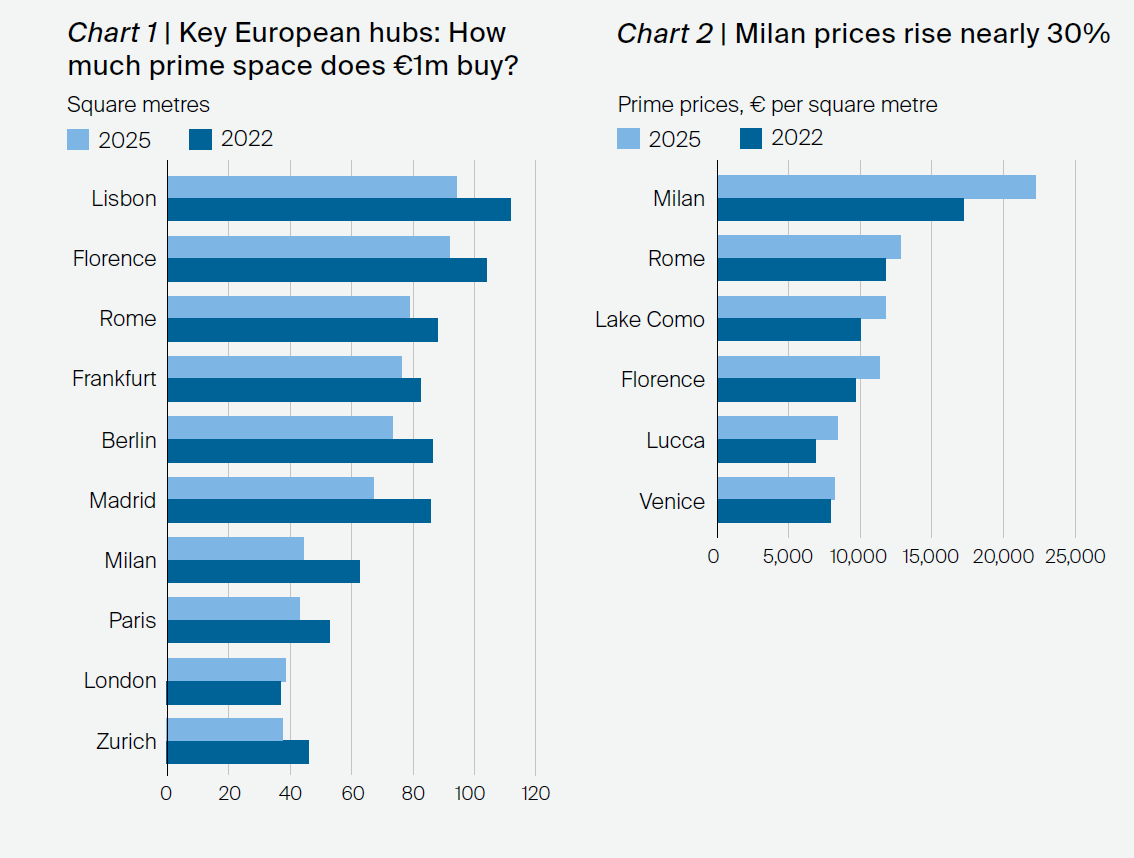
A key illustration of this relative value is the amount of space €1 million can buy across the country’s prime markets. In cities such as Rome and Florence, buyers can enjoy around 79–89 square metres, significantly more than in key European locations such as Frankfurt, Paris, Madrid and London (see Chart 1). Value becomes even more pronounced in lifestyle-led areas including Venice and Lucca, where the same budget stretches to roughly 126–130 square metres.
This stronger buying power underlines Italy’s appeal relative to other European locations. In most areas, buyers receive more space for the same capital outlay, supporting demand from those targeting both lifestyle benefits and long-term value.
Milan driving growth
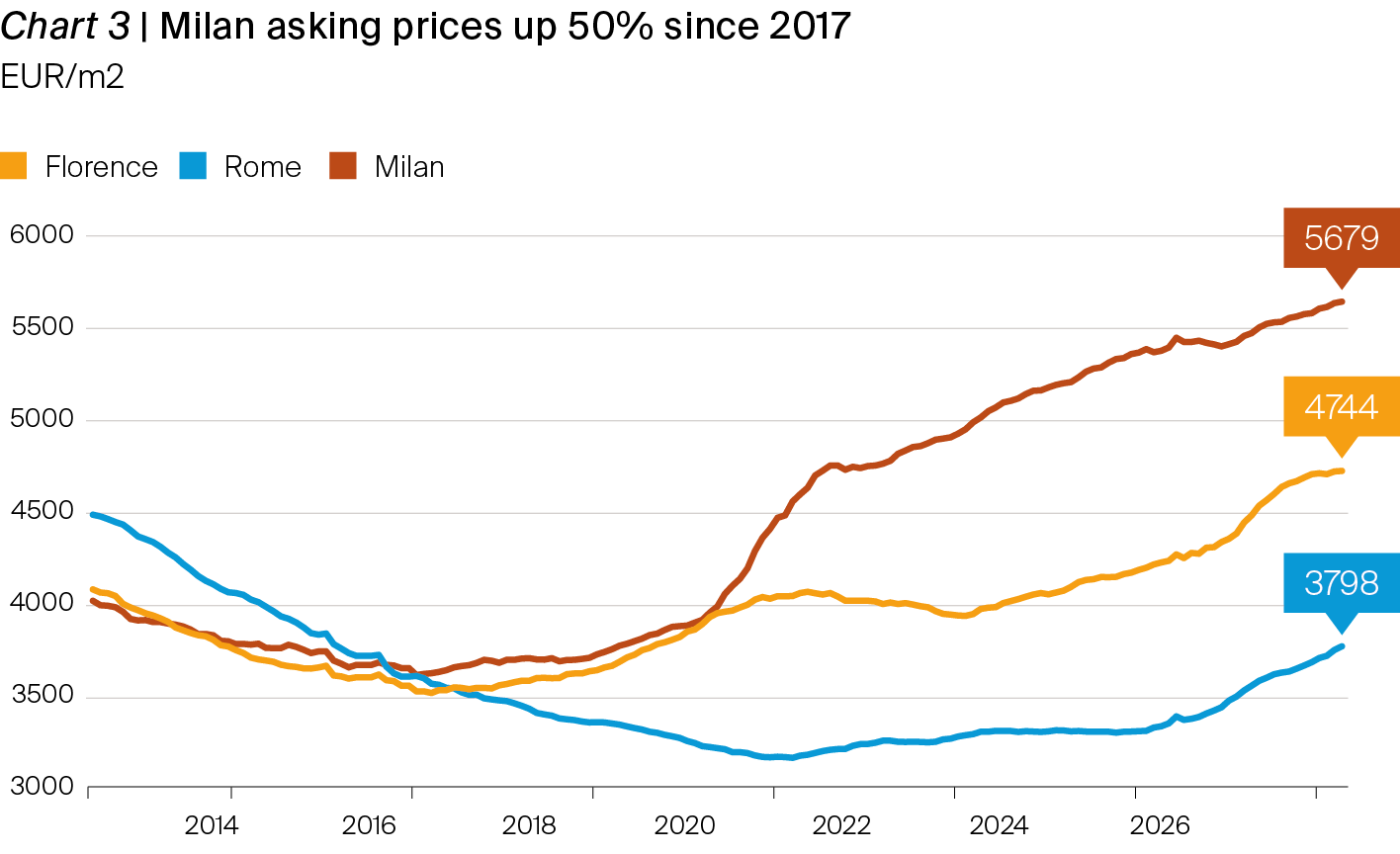
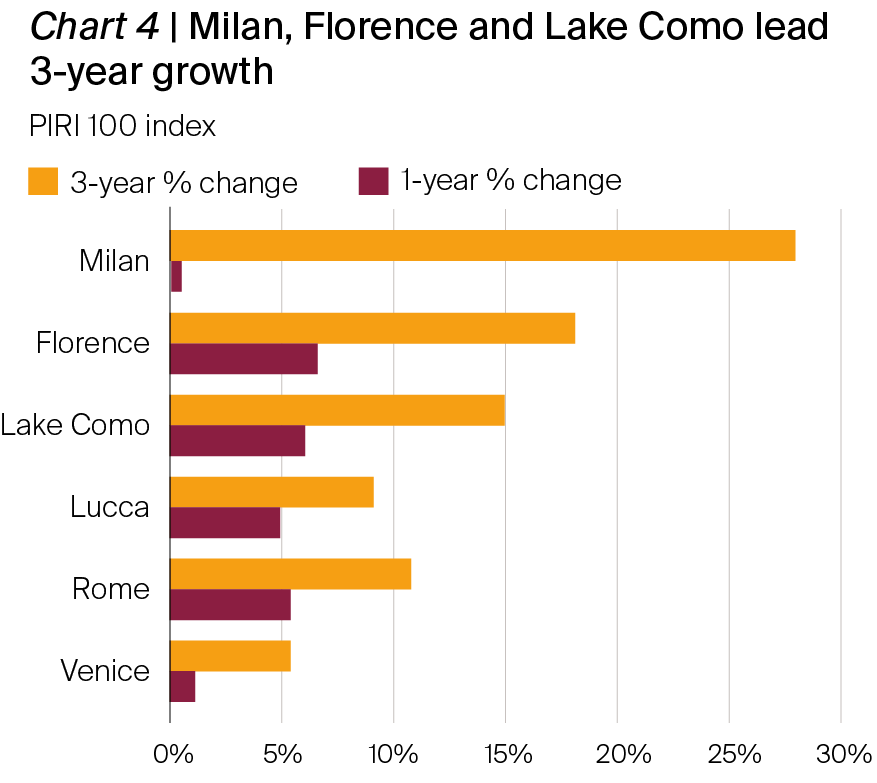
That said, price dynamics across Italy are far from uniform. Milan has emerged as the country’s standout performer, driven by its role as a financial and business hub. Unlike other Italian markets, budgets here are increasingly stretched, with prime values rising nearly 30% from €17,270 per square metre in 2022 to just over €22,000 in 2025 (see Chart 2), reducing the amount of space buyers can secure for €1 million by 27% over five years. Average asking prices for homes in Milan have jumped 50% since 2017 (see Chart 3), when Italy first introduced its flat tax regime which originally allowed new residents to pay a fixed €100,000 annual tax on all foreign income, regardless of how much they earned.
This divergence is also evident relative to other European markets. Milan is now outperforming prime central London, with prices forecast to rise by 2% this year, while London remains in decline. Milan recorded modest annual growth of 0.4% last year, compared with a 4% fall in London, reinforcing the relative resilience of one of Italy’s key urban markets. Stronger growth in Italy’s wealthy population is helping to underpin this demand, although rising values are beginning to place pressure on buying power.
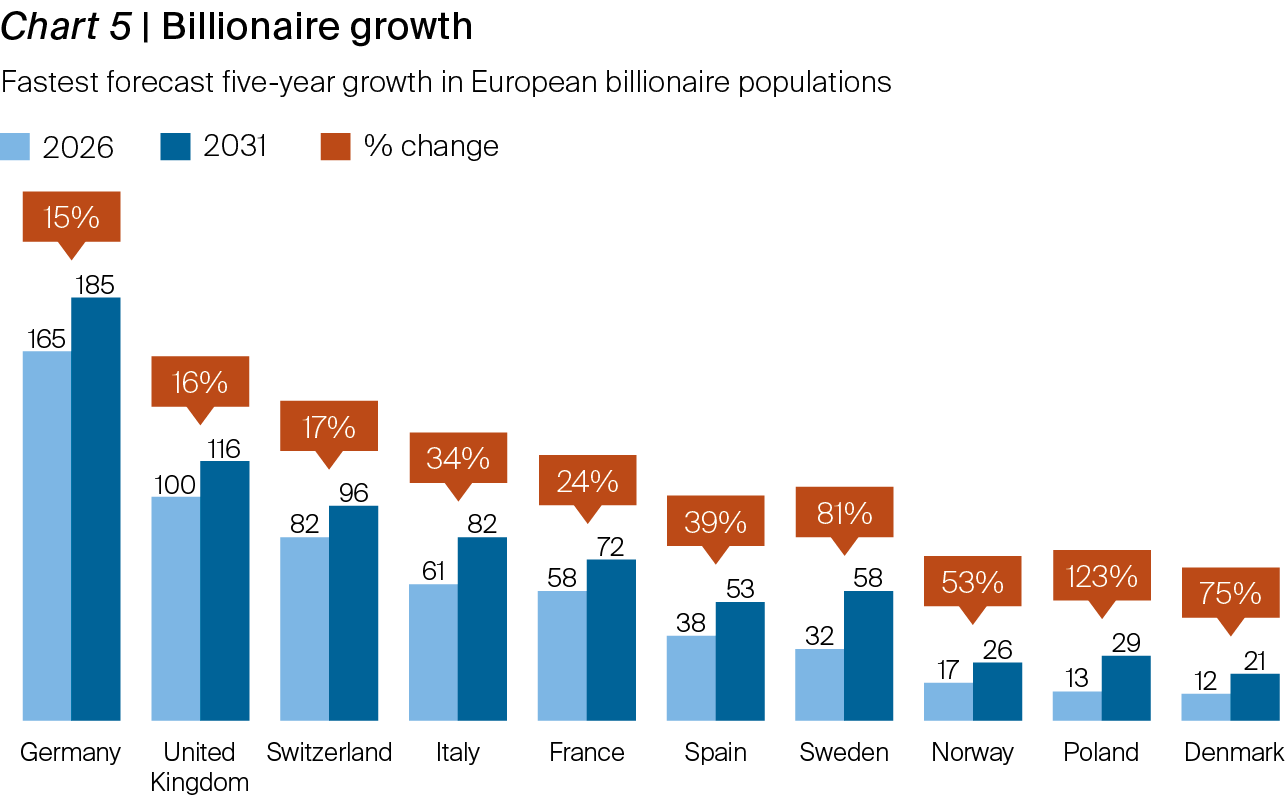
At a national level, Italian prime markets have delivered steady price growth. Over the three years to 2025, Milan has led with cumulative growth of around 28%, followed by Florence (18%) and Lake Como (15%) (see Chart 4). Annual growth remains positive across most markets, with Florence and Lake Como both recording increases of around 6–7%. This highlights the breadth of demand across both city and lifestyle markets, reinforcing Italy’s all round appeal.
Demand drivers and shifting buyer base
Buyers are increasingly targeting properties that combine lifestyle use with income potential. In lifestyle markets such as Tuscany and Lake Como, tourism supports a well-established short-term rental market, while cities such as Milan and Rome offer more stable, year-round demand. Turnkey properties are particularly sought after, with buyers willing to pay a premium to avoid renovation delays.
Demand is also being shaped by structural shifts. Changes to the UK’s non-dom regime have acted as a major catalyst, prompting many high-net-worth individuals to reassess their tax residency. Italy’s flat tax regime was recently increased to €300,000, a move which has not dented demand. Instead, it continues to attract globally mobile wealth, with over 60% of superprime international enquiries through Knight Frank now driven primarily by tax considerations. This reflects a broader evolution in demand, from the introduction of the flat tax, through post-Covid lifestyle shifts, to the removal of favourable tax regimes elsewhere, such as in the UK.
Wealth trends further reinforce this outlook. Italy’s ultra-high-net-worth population has grown by 23% between 2021 and 2026, outpacing the UK’s 12% increase. Looking ahead, the country is also forecast to see strong growth in its billionaire population, providing a deepening pool of potential buyers.
Geopolitical uncertainty is also playing a role. Ongoing global tensions are reinforcing Italy’s position as a stable, lifestyle-driven European destination, particularly for internationally mobile buyers seeking diversification.
Regionally, demand is broad-based but varies in character. Milan continues to lead in terms of international business appeal, although limited stock is constraining transaction volumes and pushing prices higher. Rome remains more lifestyle-driven, with steady demand from international buyers, while Florence offers a blend of both. Elsewhere, Lake Como is benefitting from Milan’s supply constraints, and Tuscany remains highly active, with some buyers shifting from second-home ownership towards full relocation.
Broader demographic trends support this dynamic. Europe is set to maintain its position as a key hub for global wealth, increasing its share of the world’s billionaires from 25.1% to 25.4% over the next five years (see Chart 5). Within Europe, Italy stands out as having one of the fastest growing populations of billionaires, projected to increase by 34% over the next five years, reaching 82 by 2031.
In this context, Italy’s key strength lies in its combination of relative value, lifestyle appeal, and structural demand drivers.
Source: Knight Frank Research, ISTAT
While price growth has accelerated in certain markets, most notably Milan, the broader market continues to offer a compelling entry point compared with other European prime locations. As international demand deepens, supported by rising wealth and inward migration, Italy is well placed to consolidate its position as one of Europe’s most attractive, and still relatively undervalued, prime residential markets.
Source: Knight Frank Research, Forbes
Sign up to Knight Frank Research.
