
The New Frontier - Your weekly science and innovation update – 25th November 2026
Your weekly pulse check on science and innovation. Those on the supply side of real estate can track the trends set to drive demand, while occupiers gain fresh perspective on competitor activity and sector dynamics.
25 November 2026

It has been quite a week for UK science and technology, with more investment.
The headline number came from Isomorphic Labs. The London-based AI drug discovery company spun out of DeepMind has raised $5bn in a Series C, just six months after raising $2.1bn. City Hall says London's life sciences firms raised $3.2bn in venture capital in 2026 before this week, 35% more than in all of 2025. One round has now eclipsed the year. The funding underscores capital concentration and investors' interest in AI-powered drug discovery. AI minister Kanishka Narayan welcomed the announcement, calling it “one of the biggest Series C rounds in UK tech history”.
The money isn't only flowing into existing companies. Flagship Pioneering, the US venture capital group behind Moderna, will invest an initial £100m, establishing an "Origination Lab" in London, its first outside Massachusetts. It expects to create eight companies from 2027, with a further £500m potentially following through partnerships. That distinction matters for property. A fund invests in companies that already exist. A company factory creates new occupiers who will need a base.
Then there is the patient money. The British Business Bank said its backing for the sector has passed £1.1bn: £832m across 20 funds and £302m directly into scale-ups, including £25m for Alchemab and £15m for T-Therapeutics. Its real target is pension capital. Of the £11.1bn of UK private-markets money committed under the Mansion House accord, it notes, 70% has gone to property. In contrast, just £500m was invested into private equity.
Building the ecosystem
The investment is finding its way into bricks and mortar too.
The National Wealth Fund is providing £147m of debt financing towards One North Quay, the 23-storey laboratory building being developed by Canary Wharf Group and Kadans Science Partner. Barclays and Emirates NBD take the overall financing package to £368.5m, funding construction and fit-out through to early 2028. At around 570,000 sq ft, it will be one of Europe's largest purpose-built life sciences buildings. More importantly, it is the National Wealth Fund's first investment in the sector.
The Mayor of London has meanwhile committed another £22m to three innovation projects, unlocking more than £98m of match funding across cardiometabolic science at King's, health technology around Harley Street and a new London Quantum Cluster.
Dons and dollars
If London Life Sciences Week showed where the money is going, a report launched the same week shows where the companies come from.
A new Dealroom report values Europe's deep tech and life sciences university spinouts at $492bn, up from $398bn a year ago. More than 9,300 businesses now employ over 220,000 people, and they are on course to raise a record $16.1bn this year, 44% more than in 2025. The UK sits at the top of the European table. Oxford ranks first among European universities for spinout value and Cambridge second, with UCL, Imperial and Bristol also in the top ten.
There are signs that the machinery for creating those companies is improving. The average equity stake taken by UK universities fell from 25% in 2023 to 16% in 2025. Lower stakes and faster spinout processes should make it easier for more businesses to emerge from UK research.
But the nature of those businesses is also changing. Defence spinouts raised more in 2026 than in the previous six years combined, while quantum, space and AI chips are growing rapidly.
For landlords, spinouts are the base of the demand pyramid: they fill the incubators first and the grow-on buildings later. Lower university stakes and faster spin-out processes should mean more formations, and the shift towards defence, space and quantum will alter the real estate requirements.
Science gets physical
Amid all the software, another thread is easy to miss....making things in the UK, with a particular focus on science and technology. Jonathan Reynolds, the business secretary, told the week's opening session at London Life Sciences Week that life sciences are a driver of "reindustrialisation". The news flow provided evidence of this trend playing out.
Pulpex has unveiled a Glasgow factory producing fibre-based bottles. The Army has ordered £25m of drones and electronic-warfare equipment on a delivery timetable measured in months. Innovate UK has backed eight projects to automate medicines manufacturing with £9.3m of funding.
Brains over Broadway
Between 25 October and 15 November, LinkedIn vacancies for machine learning engineers in London rose from 415 to 557, up 34%. New York's rose from 352 to 486. San Francisco remains in a league of its own, rising from 834 to 1,234 openings, an increase of 48%. Three things explain London's lead. The first is demand. LinkedIn's Jobs on the Rise 2026 ranks AI engineer as the fastest-growing role in the UK. The second is money. London has taken 54% of the $27.6bn invested in European AI this year, according to Tracxn and venture capital tends to turn quickly into hiring. The third is FDI – a growing number of international firms choosing to plant a flag in London. Three weeks of job adverts don't make a trend, and San Francisco's lead shows how far ahead the frontier still is. But the direction is clear. London has become the place where Europe's AI capital is spent, and more and more of it is being spent on people.
In other news...
Model ML, the London AI company whose technology automates work traditionally carried out by junior bankers, raised $250m at a $1.5bn valuation. Its customers include HSBC, Deloitte and PwC.Model ML will use the funding to expand its research and engineering teams in London and New York. Offices opened this year in Paris, Madrid, Tokyo, Singapore and Dubai.
London-based Payhawk raised $280m at a $2bn valuation as it develops AI agents for corporate finance, while AI-native conveyancing business Alecto (also London-based) raised $20m after reaching $8m of annualised revenue in eight months and handling more than $1.3bn of property transactions.
UKRI has announced 20 new Turing AI Fellows backed by more than £39m, including researchers being recruited to Edinburgh, Oxford and Cambridge.
The UK and Australian governments published a communiqué from their innovation dialogue, with a joint statement on life sciences covering clinical trials and advanced manufacturing.
Oxford-based Genomics and Vertex Pharmaceutical have announced a four-year extension of their drug discovery partnership. The agreement has a potential value of more than $220m and builds on eight years of collaboration between the two firms.
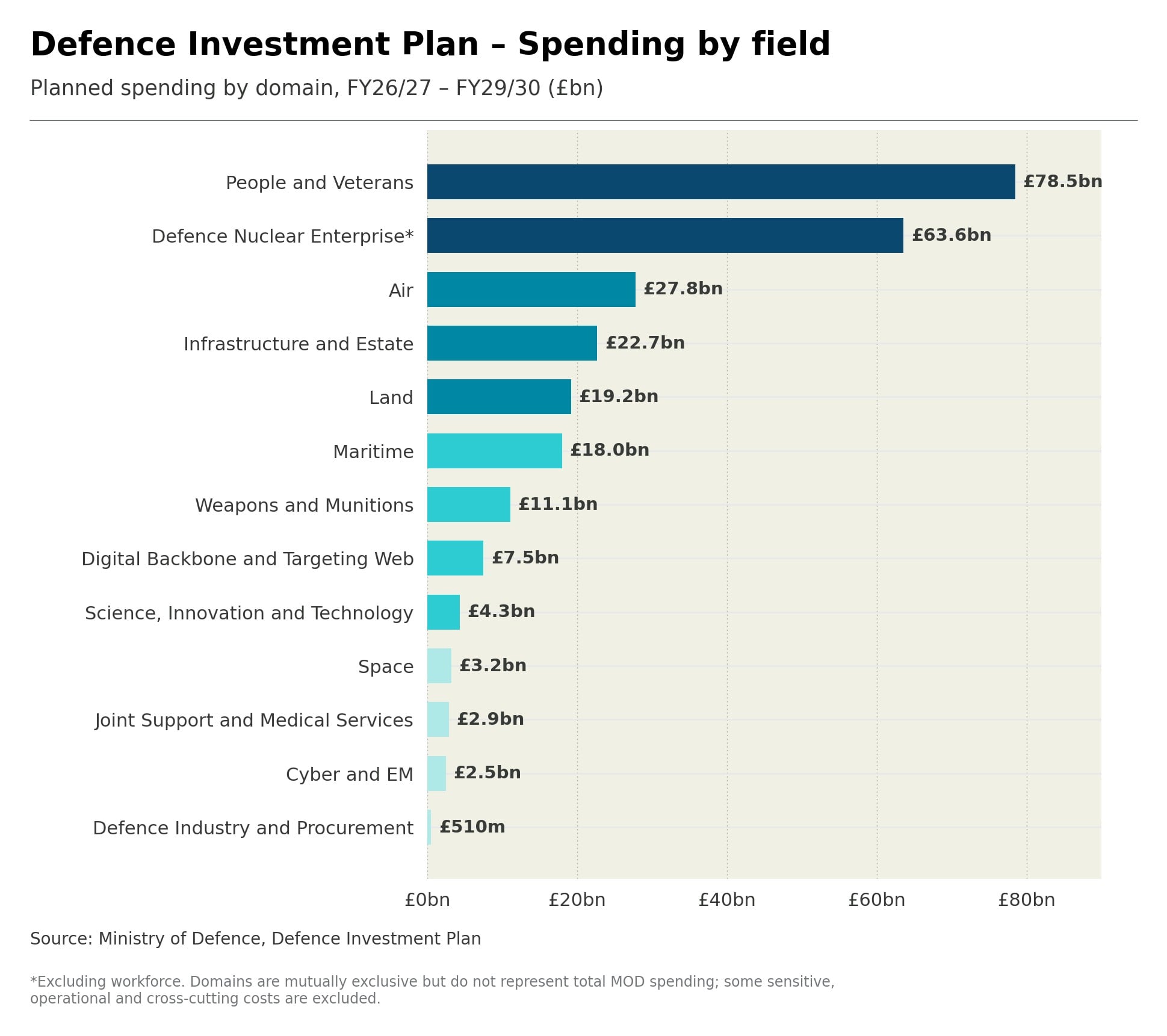
Germany’s Helsing is scaling back its presence in Plymouth after failing to secure a contract to build underwater drones for the Royal Navy. At the same time, BAE Systems has announced a redundancy programme affecting up to 1,070 roles across its UK air division and head office. While the broader tailwinds continue to support defence sector growth, these developments are a reminder that momentum cannot be taken for granted. Faster contract awards will be critical if the UK government is to convert rising defence spending into sustained investment, jobs and growth.
Venture capital firm Sofinnova Partners booked its biggest-ever fund worth $815 million, with the cash to be spent on around 15 clinical-stage companies mostly based in Europe.
Grand Theft Auto VI launched this week. The UK, and specifically Scotland, is the birthplace and creative heart of the Grand Theft Auto (GTA) franchise, which has evolved from a small project in Dundee into the most profitable entertainment product in history. It took 13 years to develop at a cost of $1bn.
The UK medicine regulator, the Medicines and Healthcare products Regulatory Agency (MHRA), has launched a new service called AdvanceGxP. The new service is directed at companies developing new technologies to make medicines, including personalised treatments made at or near hospitals and clinics, manufacturing in space, and the use of AI, robotics and automation.
