
New forecasts for house prices and rents
Making sense of the latest trends in property and economics from around the globe
27 November 2026

The US war with Iran and the subsequent spike in oil prices sent an inflationary shock wave through the global economy. Brent crude oil hit a peak of US$126 a barrel on the final day of April, fuelling fears of a prolonged energy shock that pushed leading fixed-rate mortgages from about 3.5% before the conflict to 4.78% today.
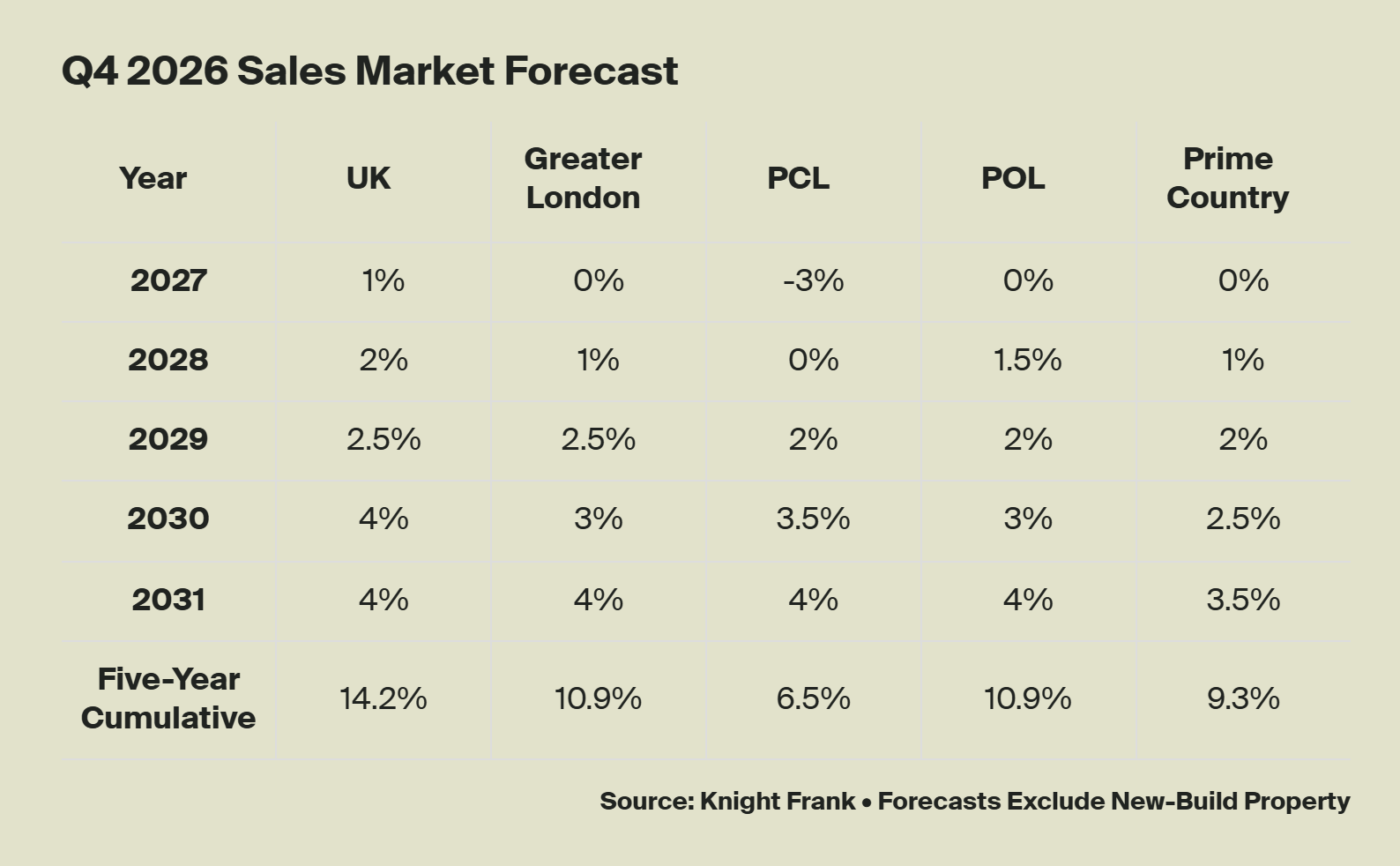
We issued a new set of forecasts for house prices and rents this week to account for these conditions. We now expect UK house prices to grow by 1% next year, as opposed to the 3% we forecast in April. We estimate cumulative growth in the five years to 2031 will be 14.2%, which is down from 20.4%.
We expect prices in Greater London to remain subject to the familiar affordability squeeze, which is why we expect them to underperform the wider UK market (see chart).
Tax reform
Prime central London is particularly sensitive to domestic politics. The government remains constrained by its manifesto commitment not to raise VAT, income tax or National Insurance, its reluctance to make meaningful spending cuts and its limited scope to borrow more. That leaves assets such as property vulnerable to further tax increases as the Treasury seeks to rebuild its fiscal headroom, as the latest Budget showed.
We think prices will fall by 3% next year, before being flat in 2028 and then rising from 2029. That produces cumulative five-year growth of 6.5% compared to a forecast of 16.8% in April.
The Prime Minister is set to publish his 10-year plan next month. Lord Jim O’Neill, one of his advisers, said in an interview with the FT this week that it should include long-term reform of property taxation: “The owners of higher-value homes can pay far less council tax as a proportion of their property’s value than people at the other end of the scale, while stamp duty discourages people from moving and holds back economic activity," he added.
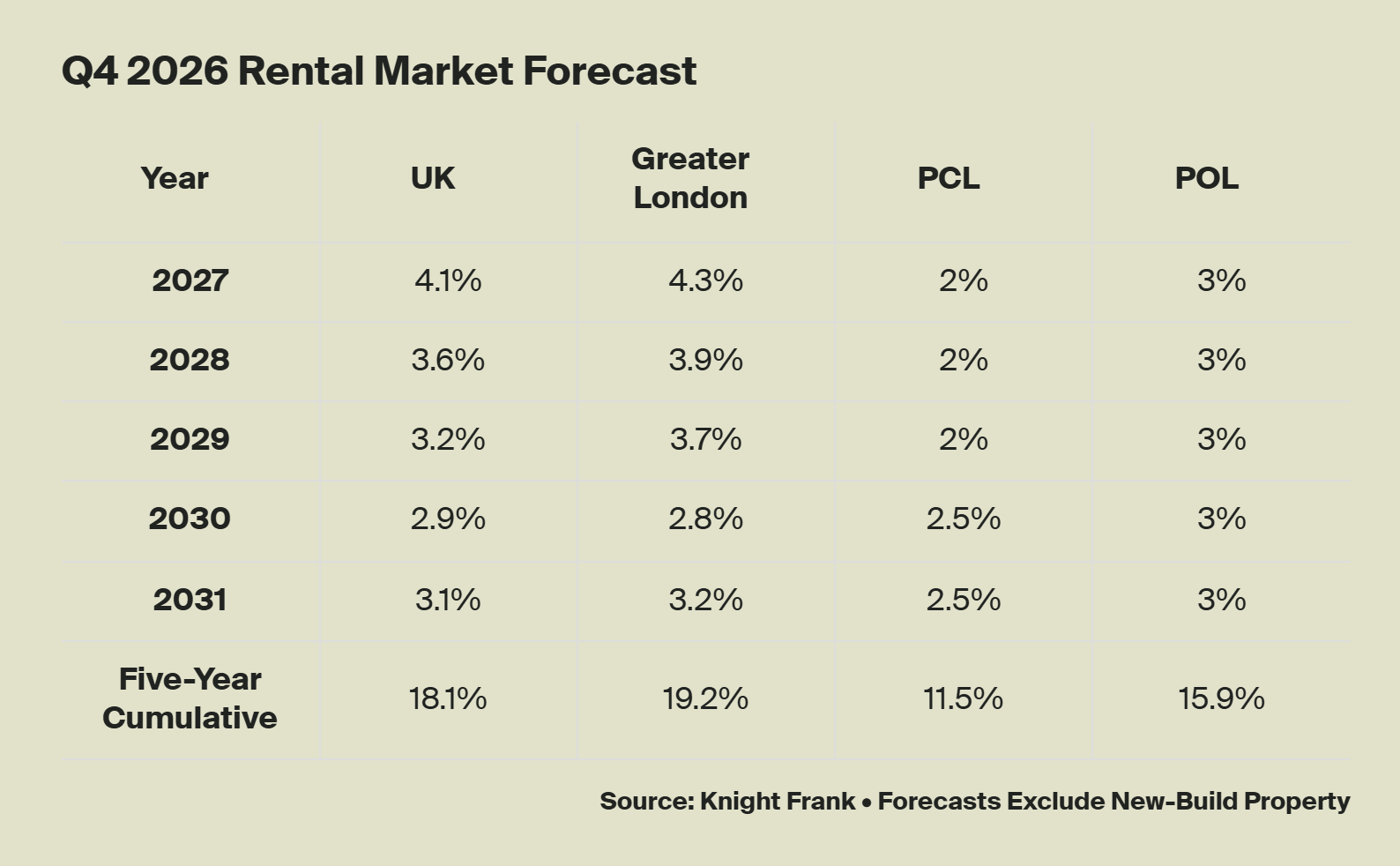
Various tax and regulatory pressures will continue to squeeze landlords, putting pressure on supply. We think rents will rise by 18.1% over the five-year period in the UK and by 19.2% in London, where supply is tighter.
You can find much more detail in Tom Bill's analysis over on the Intelligence Lab.
Mortgage rates
Recent drops in energy prices underline just how uncertain the outlook is. Brent crude is down 13.4% from a month ago, yet it is still about 55% above a year ago. That monthly drop has shifted the outlook since the Bank of England published forecasts earlier this month showing inflation peaking at 4.9% in the second quarter of 2027.
Speaking to the Commons Treasury select committee on Wednesday, Governor Andrew Bailey said that "if the current prices were to stay where they are, the peak of inflation mechanically would be lower." He refused to be drawn on what that would mean for interest rates.
Still, the Bank of England's Financial Stability Report, published this week, illustrated why we expect continued pressure on house prices. Of the approximately 9 million owner-occupier mortgages outstanding, around 7 million are projected to refinance between June 2026 and December 2029. Of these, around 6.5 million are projected to see payments rise. Just over 1 million households currently on mortgage rates below 3% are due to refinance by the end of nexr year.
Owner occupiers
London faces a chronic shortage of high-quality new buildings. New-space vacancy tightened to 1.3% in the third quarter, according to Knight Frank data. Half of London’s submarkets now have a new-space vacancy rate below 1%, which is fuelling rental growth.
Choice remains particularly limited for occupiers seeking large floorplates. At the end of Q3, only two floorplates exceeding 40,000 sq ft were available in the City. Across London, there are just 8 available buildings with 20,000-30,000 sq ft floor plates within a 5-minute walk of an Elizabeth Line station. At the same time, higher borrowing costs have weighed on capital values. Prime yields moved outward by 25bps to 4.00% in the West End and 5.50% in the City & Southbank during Q3.
This combination of rising costs and relatively weak capital values is prompting increasing numbers of occupiers to buy their own buildings. Google became the latest this week after buying 6 Pancras Square from its landlords, BNP Paribas Asset Management Alts and PSP Investments, the Canadian pension fund.
The deal follows Barclays' decision to purchase a 999-year lease for its global headquarters in Canary Wharf for £750 million over the summer.
In other news...
London Landlords See Growing Gap Between Office Winners, Losers (Bloomberg).
Sign up to Knight Frank Research.
