
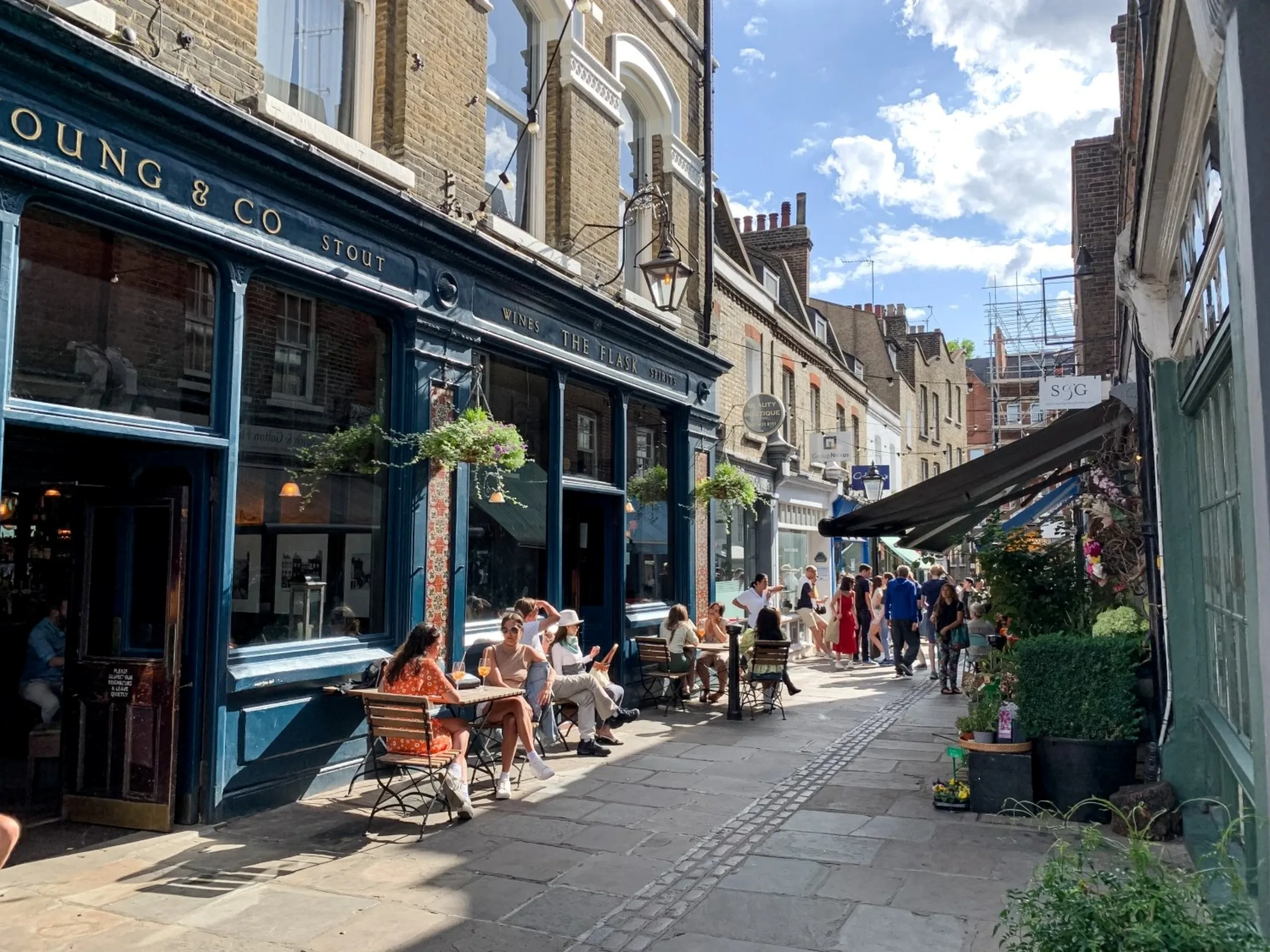
Business rates revaluation 2026: What the new guidance means for public houses
The Valuation Office’s new guidance clarifies how public houses will be assessed for the 2026 revaluation. We look at how the methodology works, what’s changed and what operators should consider.
20 May 2026

The publication of the Valuation Office Agency’s (VOA) 2026 guidance for licensed premises provides long-awaited clarity on how public houses are valued for business rates purposes.
Developed with input from industry bodies, the guidance sets out the structured approach underpinning rateable values, following changes that significantly increased rates in some parts of the sector. In response, a 15% relief for public houses and music venues has been introduced to help mitigate the impact.
The guidance also reflects a sector that has undergone significant change since the pandemic, offering greater transparency on how valuations are intended to capture evolving trading conditions.
How public house valuations are calculated
The rateable value assigned to a public house is the estimated annual rent that could reasonably be achieved on the open market, based on the valuation date of 1 April 2024.
Unlike many commercial property types, valuations for licensed premises are derived from trading performance rather than direct rental comparison. This follows a structured approach:
1. Assess Fair Maintainable Trade (FMT)
Valuers first determine the Fair Maintainable Trade (FMT). This is the level of turnover a reasonably efficient operator could expect to achieve.
This is based on actual trading, adjusted to reflect a competent operator, and considered over an appropriate period – typically around three years – rather than a single trading year.
2. Apply valuation percentages
Turnover is analysed across different income streams, including:
- Drink
- Food
- Accommodation
Each stream is assigned a valuation percentage, reflecting differences in profitability and cost base.
3. Determine the rateable value (RV)
The income generated by each stream is multiplied by the relevant percentage, with the totals combined to produce the final RV.
For example, for a wet-only pub in Central London in a prime location on the circuit turning over £500,000, the value applied to the wet sales will be no less than 8.75% and no greater than 9.75%. For Outer London this is 7.5% and 9%, and for regional England and Wales this is 7.5% and 8.5%.

Key factors shaping valuations
How the new ratings methodology applies depends on a range of factors.
Location
- Central London
- Outer London
- Rest of England and Wales
Type of pub
- Town or city centre
- Destination venues
- Local or rural pubs
Trading characteristics
- Layout and configuration
- Level of demand
- Local competition
- Operating costs
A changing trading backdrop
The 2026 list reflects a sector operating under sustained pressure. Across the licensed trade, operators are facing:
- Rising energy costs
- Increased wage bills
- Higher food and supply costs
- Falling margins
Valuation percentages have generally been adjusted downwards to reflect these pressures. However, a key question for many operators and advisers is whether these adjustments fully capture the continued impact on profitability beyond the valuation date.
Principles underpinning assessments
The VOA guidance reinforces that valuations should reflect sustainable performance, rather than peaks or short-term volatility. In practice, this means:
- A strong trading year should not define the assessment in isolation
- A weaker year does not necessarily indicate long-term decline
- Valuers apply a ‘stand back and look’ approach to assess performance over time
The objective is to arrive at a realistic and supportable level of Fair Maintainable Trade.
Special considerations for the sector
- High-performing pubs (over-trading). Turnover may be adjusted where performance is not considered sustainable
- Food-led pubs. These typically attract lower valuation percentages, reflecting higher operating costs
- Accommodation. Considered separately depending on scale and contribution
- Rural pubs. Often reflect diversified income streams and more challenging trading environments
The role of judgement and comparable evidence
While the framework is structured, assessments are not formulaic. Valuers will apply professional judgement based on:
- Similar properties
- Local market conditions
- The sustainability of the business
Comparable evidence is crucial, with valuations benchmarked against similar pubs in similar locations.
What this means for operators
The increased transparency provided by the guidance gives operators a clearer basis for understanding how their RV has been determined.
In particular:
- Assessments reflect the trade a typical operator could achieve, not necessarily actual performance
- Strong trading alone may not justify a higher valuation if it's not sustainable
- Lower performance doesn't automatically reduce liability without supporting evidence
- Business mix and diversification directly influence how income is assessed
For many public house operators, this is an opportunity to review whether their valuation accurately reflects current trading conditions, cost pressures and long-term sustainability.
Reviewing your position
Given the greater clarity in methodology, it’s worth considering whether:
- FMT assumptions are realistic
- Valuation percentages are appropriate
- Sustainability adjustments have been correctly applied
- How the property compares to similar pubs
Where there's a mismatch, there may be grounds to explore a formal challenge.
How Knight Frank can help
Understanding how the VOA’s approach applies in practice requires detailed analysis of both trading performance and market evidence.
Our Business Rates team advises public house operators across England and Wales, helping clients:
- interpret valuation methodology
- assess Fair Maintainable Trade assumptions
- benchmark against comparable properties
- identify potential grounds for appeal
For more insights into the 2026 business rates change, or to use our interactive heat map, visit our Business Rates Revaluation page.
