

Seven things to consider when choosing an occupier experience app
When do occupier experience apps genuinely add value - and when don’t they? Ross Powell, Knight Frank’s Head of PAM Systems, breaks down what to consider when choosing a system
15 April 2026

There’s been no shortage of hype around occupier experience (OX) apps in recent years. Some people talk about them as if they’re the magic ingredient that will fix footfall, satisfaction and even asset value. Others see them as another dashboard nobody logs into. The truth sits somewhere in the middle, and it depends entirely on the building, the operator and the people using the space.
What we do know is that people are returning to offices for two main reasons: experience and technology. Physical space trails far behind. That’s not my opinion - recent industry insights show experience ranks first, followed closely by technology. And if those two things matter most, then it’s worth asking when an OX app genuinely adds value rather than simply adding cost.
1. Start with the hardest thing to get: real insight into how the building is used
If a building has multiple occupiers, varied work patterns, or underused amenities, an OX platform can give you the insights you simply can’t get from gut feel alone. Many Commercial Real Estate (CRE) portfolios are still stuck with legacy systems - 61% admit this - and data lives in too many separate places to form a clear picture.
For landlords, this kind of information is gold. For operators, it cuts out guesswork. For occupiers, it leads to services that feel designed around their actual habits rather than outdated assumptions.
Before committing to a provider, though, there’s a simple vetting question: “How many active users did you have last month, and what percentage came back?” Engagement tells you whether a platform is genuinely useful or just a shiny login screen.
2. Retention: the quiet metric OX apps influence more than most tools
Retention is still the priority in today’s hybrid landscape. In fact, a significant number of landlords say they’re planning dedicated occupier experience teams because of how strongly experience correlates with renewals.
OX apps support retention in some very practical ways: · quicker maintenance responses
- less friction in daily interactions
- smoother communications (the top occupier pain point)
- a general sense of connection to the building community
Some apps even help operators track early indicators of dissatisfaction. But the technology only works when paired with an operator who actually uses the insights, which is why another good question is: “How will you support our engagement strategy beyond launch?” If the provider avoids that question, that’s a red flag.
3. If your building runs on disconnected systems, an OX app can pull it all together
Lots of older or multi-occupier buildings rely on a messy mix of systems: one for access, one for HVAC, one for tickets, one for security - and none of them talk to each other. OX platforms that integrate these systems can:
- cut operational costs
- improve uptime
- provide real-time insight into building performance
- predict maintenance
- reduce reliance on multiple vendors
Given that 40% of CRE firms are now deploying more advanced tech to automate operations, this centralisation isn’t a “nice to have” anymore, it’s becoming expected.
The key question here is: “Show me what integrations you’ve completed before - what worked and what didn’t?” You’re not buying an app; you’re buying the experience of the team behind it.
4. An OX app makes the most sense when you’re offering a campus‑style experience
One trend that keeps coming up in conversations with occupiers is flexibility - people want to work in different types of spaces across the day. Some landlords are already leasing smaller private suites but giving occupiers access to huge shared amenity networks across their portfolio.
Think: “5,000 sq ft leased, 5 million sq ft utilised.” This model depends heavily on technology to make it feel seamless.
If your asset strategy leans in this direction, an OX app isn’t optional; it’s the connective tissue.
5. Community and communication matter more than most landlords realise
Poor communication sits at the top of occupier complaints, and OX apps go a long way in solving this by giving operators a direct line to occupiers. Everything from emergency alerts to event invites can live in one place, reducing friction and keeping people better informed.
For large buildings or portfolios with rotating hybrid teams, this can be a real difference-maker.
6. Marketing and leasing benefit too, but it’s not the main course
Online building searches are up more than 210% since 2019. Once an occupier signs, the data and preferences captured from marketing tools can flow into the OX app, creating a more personalised approach.
Is this essential? Not always. Is it useful? Definitely - but only after core operational value is established.
7. And then there are the extras (nice to have, not need to have)
I tend to think of these as the icing rather than the cake:
- perks
- local offers
- optional F&B integrations
- social feeds
- lifestyle services
These features are great in premium buildings where experience is part of the brand. They’re less important in buildings where basic operations still need work.
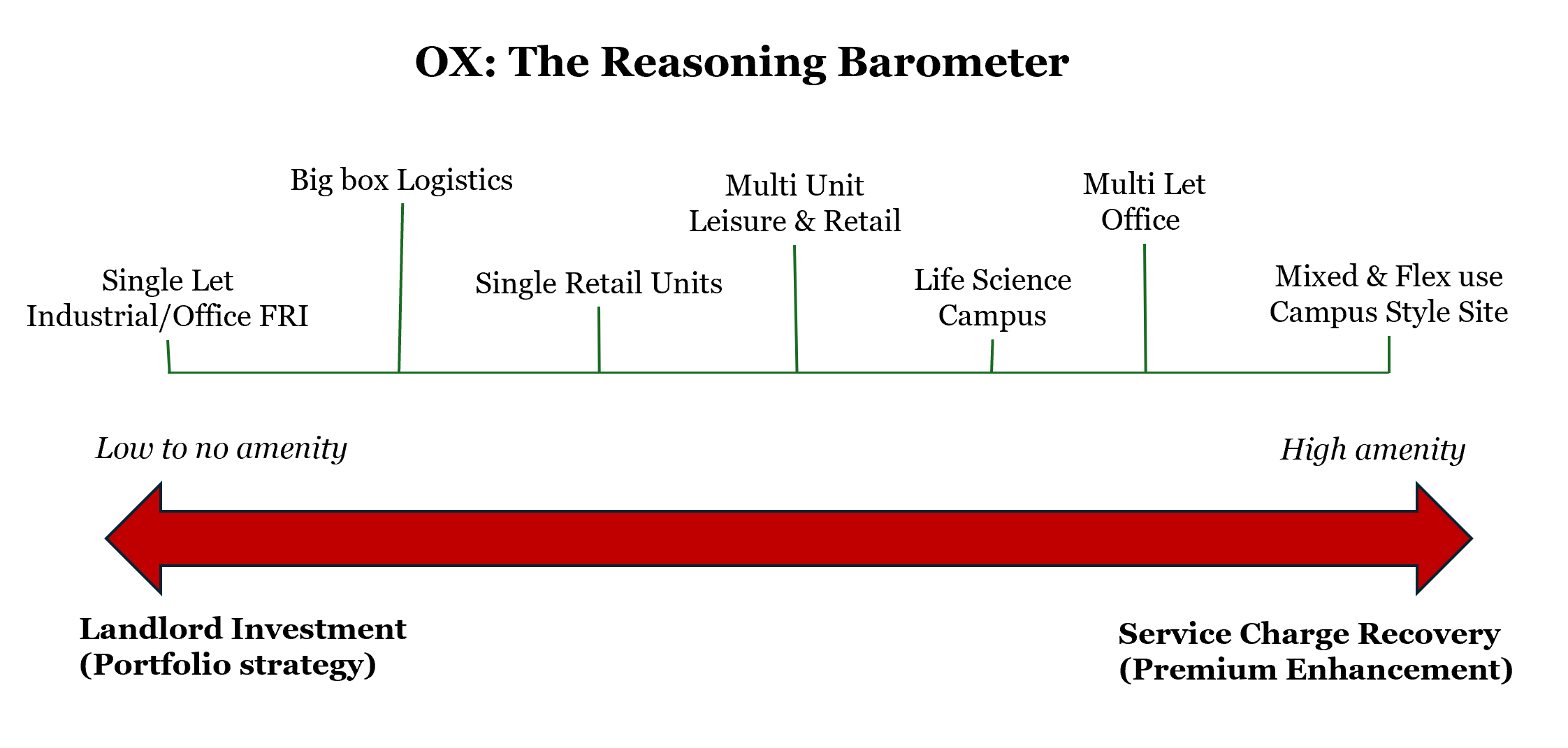
What you need to check before you pick a platform
Drawing on both industry research and personal experience, the landlord checklist should include:
Technical
- Are they genuinely strong at integrations?
- Can the platform integrate with access control, BMS, sensors, flex-booking, and more?
Data and privacy
- What certifications do they have?
- How do they handle customer data and regulatory compliance? Smaller start-ups often skip this step.
Operational fit
- How much support will your building teams get after launch?
- Can you customise without heavy development work?
Engagement
- What’s their strategy to drive adoption for the first 6–12 months? If a provider can’t speak confidently here, think twice.
How landlords usually recover the cost
There’s no single “right” model, but these show up the most:
Through the service charge
Works best when the app clearly improves operations and service delivery.
Paid by the landlord (CapEx or OpEx)
Often used during repositioning or upgrades, where digital experience is part of the value story.
Hybrid model
Core features via service charge; engagement or community modules via landlord investment.
Revenue offset
Bookings, events, and premium services can cover part of the cost. This needs careful, clear vision and research on how it will work but is game changing when it does.
Many landlords have rushed into fragmented tools in the past and ended up disappointed, usually because they didn’t ask the right questions upfront.
So when should you actually deploy an occupier experience app?
In my view, an OX app makes real, tangible sense when:
- You’re managing a multi-occupier or hybrid work environment
- You need better data to make the building work harder
- Your operations team is juggling too many disconnected systems
- You want to create a more seamless, campus-like experience
- You’re competing in a high-choice market and need retention to improve
But for small, single-let buildings with simple needs? The ROI is much harder to justify unless you’re aiming for portfolio-wide standardisation.
For further information contact Ross Powell, Knight Frank’s Head of PAM Systems, at Ross.Powell@knightfrank.com
