

South East and Greater London Offices Capital Markets round up 2025/6
Occupier demand surged across the South East and Greater London in 2025, even as investment volumes reached post-crisis lows. Strengthening take-up, stabilising yields and tightening Grade A supply now point to a more confident, opportunity-led market in 2026.
11 December 2025


Market overview
As 2025 draws to a close and we review the last 12 months, the lack of symmetry between leasing and capital markets has rarely been more pronounced outside central London. Whilst take-up across the South East continues to build momentum, with many centres achieving record rents and sustained rental growth, investment volume remains stubbornly low: full-year transaction volumes in the South East are expected to settle at around £1.1bn, the lowest level since the financial crisis and less than half the 10-year average.
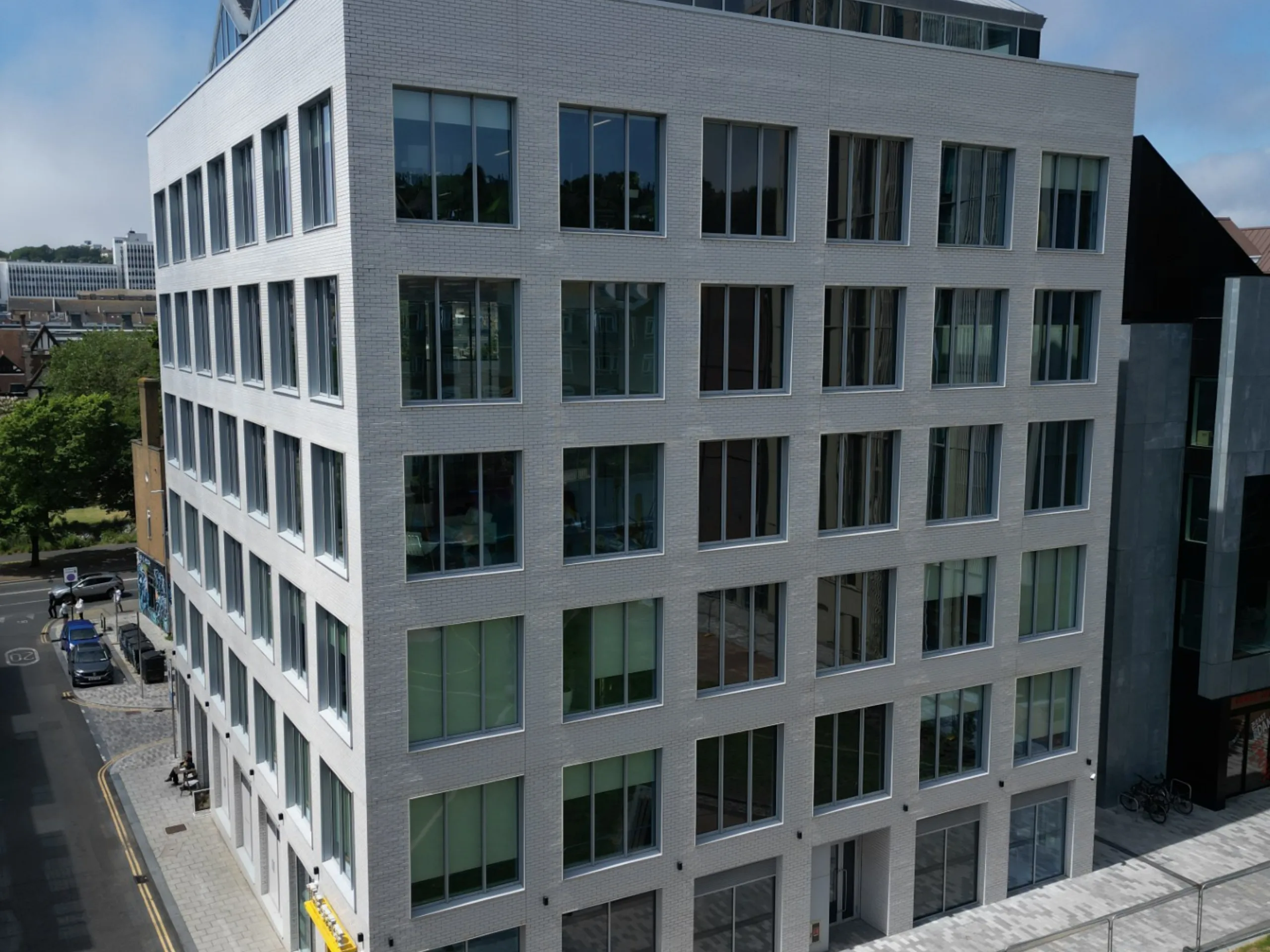
Leasing sentiment continues to improve: We expect Q4 2025 take-up to be in the region of the five-year average with the quarter closing close to 883,430 sq ft. This would close 2025 out as the best year since 2019 pre-covid.
With year-on-year momentum accelerating, annual take-up for 2025 is forecast to reach 3.24m sq ft - the strongest level since 2019 and a 17.36% increase from the COVID years, despite the market still sitting below pre-pandemic levels. Should the current growth rate of 4.08% continue, 2026 could push take-up to 3.37m sq ft.
Sector activity has shifted meaningfully through the cycle. TMT, after peaking at over 30% of take-up in 2021 and dipping sharply in 2024, rebounded to 23.65% in 2025. Financial & Business Services reached a cycle high of 34.95% last year before easing back to 23.26%. Construction & Engineering and Energy & Utilities continue steady multi-year growth, while Public Sector demand has steadily eroded to just 2.02%. Using CAGR forecasts, 2026 is expected to be led by:
- Financial & Business Services (31.86%)
- TMT (17.89%)
- Construction & Engineering (13.68%)
- Retail, Distribution & Transport (11.61%)
Momentum Markets continue to dominate. In 2025 they accounted for 56% of take-up - rising to 62% on deals above 20,000 sq ft - and have grown at roughly 9% per year since 2020. Demand is highly concentrated: Reading (446,500 sq ft), West London (760,500 sq ft) and Cambridge (319,500 sq ft) together represent 48% of named demand.
Fitted space continues its upward trajectory, representing 7.53% of take-up so far in 2025, up from 6.3% in 2023. For sub-10,000 sq ft deals, the proportion of fitted transactions has climbed from 7.3% (2023) to 20.7% (2024) and currently sits at 11.57% for 2025. Lease events remain the primary driver of demand (63%), followed by expansion (20%) and upgrade moves (7%).
Investment dynamics
The capital markets picture is more complex. While sentiment continues to improve, liquidity remains constrained. A core group of repeat buyers - Praxis, DS Properties, Orion and Iroko Zen - continue to selectively deploy into stronger occupational markets. Indeed, Iroko Zen alone has acquired over £100m of South-East stock in the last 12 months.
Despite limited volumes, pricing has stabilised. Prime South East yields now sit in the 7.00 -7.25% range, with good secondary opportunities trading between 10-12%. A growing number of buyers are underwriting assets with greater confidence, supported by strong rental performance, more predictable cap-ex requirements, and occupiers increasingly looking for more, not less, space. The exit yield remains the most variable pricing component, though even this is slowly finding its level.
Supply dynamics tell their own story. Grade A availability has been declining quarter-on-quarter since Q2 2024, while Grade B/C supply has risen over the same period. When viewed through the “years of supply” lens (Grade A availability + UC divided by the 5-year average), divergences between markets become even clearer:
- Guildford & Woking: 2 years
- Oxford: 2 years
- Watford: 3 years
- Reading, Maidenhead, Cambridge: 4 years
On the development side, the pipeline is thin - and highly concentrated. Of the 1.6m sq ft currently under construction, 63% sits in just two markets: Hammersmith (595,305 sq ft) and Cambridge (421,288 sq ft). Many established South East centres have little or no meaningful pipeline at all.
This imbalance between low future supply and strengthening occupier activity is already shaping where the next wave of development is likely to emerge. Guildford, for example, has seen prime rents at Bottleworks push to £50 per sq ft, with just two years of Grade A supply remaining. Richmond set a new rental benchmark at £62 per sq ft, while Oxford’s lack of high-quality office stock suggests “lab-enabled offices” may form the next stage of product evolution. These appear the most probable candidates for 2026 development starts.
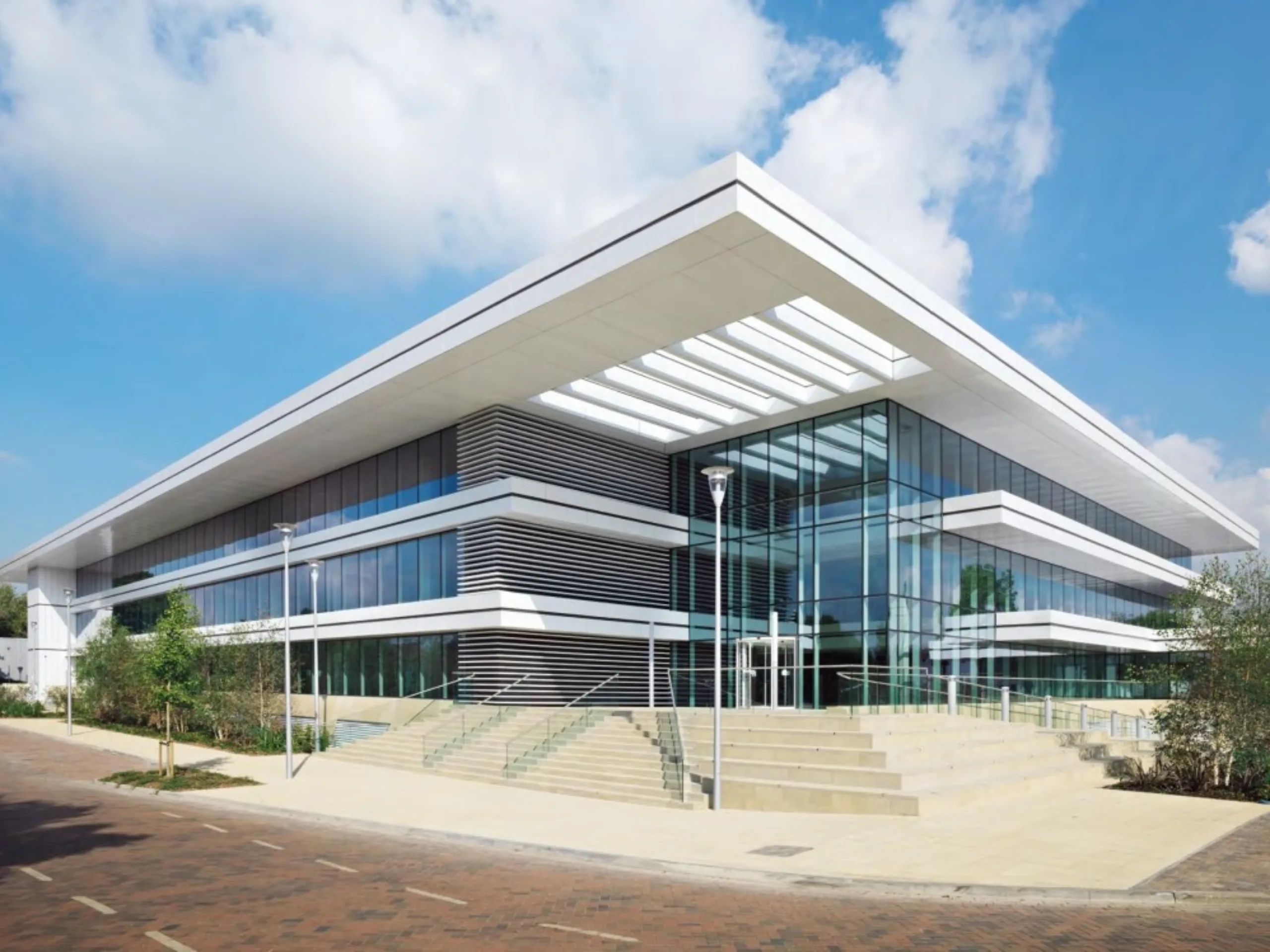
The top 10 leasing transactions of the year reinforce the dominance of a small number of centres. Highlights include:
- BAE Systems, Leonardo and JAIEC at 450 South Oak Way in Reading (110,669 sq ft)
- ARM at The Optic in Cambridge (95,709 sq ft at £48)
- Premier League at One Olympia in Hammersmith (73,152 sq ft at £56)
- Connells at Witan Gate House, Milton Keynes (58,128 sq ft at £28.50)
- Centrica at One Station Hill, Reading (41,971 sq ft at £49.50)

Outlook
Looking ahead, (and putting macro-uncertainties aside), we expect 2026 to build on the improvements of the last 24 months, particularly in the stronger centres. The ongoing disconnect between prime and secondary will continue, with some centres becoming increasingly challenging, but the “momentum” markets should perform increasingly well as occupier demand steadily builds and supply remains constrained, with entry prices proving attractive by historic standards.
Anticipated rate cuts through the year and increasing appetite from lenders will further support the sector, as will the trickle-down demand from the increasingly sought after prime regional markets and Central London. The dark days of COVID seem a long time ago and as a new cycle unfolds, those who buy well in 2026 should look clever over the medium term.
To find out more about how we work with clients, or to speak to one of our team, get in touch.
