

Rural Sentiment Survey highlights rural land use conflict
Latest survey indicates land usage policy in UK countryside constraining rural farmers and land owners.
12 July 2023
The 2023 findings from the Knight Frank Rural Sentiment Survey highlight the growing importance of nature-based solutions to farmers and landowners, but also emphasise the increasing tension between the different land uses that the UK countryside is increasingly expected to supply.
The survey findings feature in The Rural Report 2023/24, offering rural property owners and businesses the latest news, guidance, advice and key insights in rural markets.
Download The Rural Report 2023/24
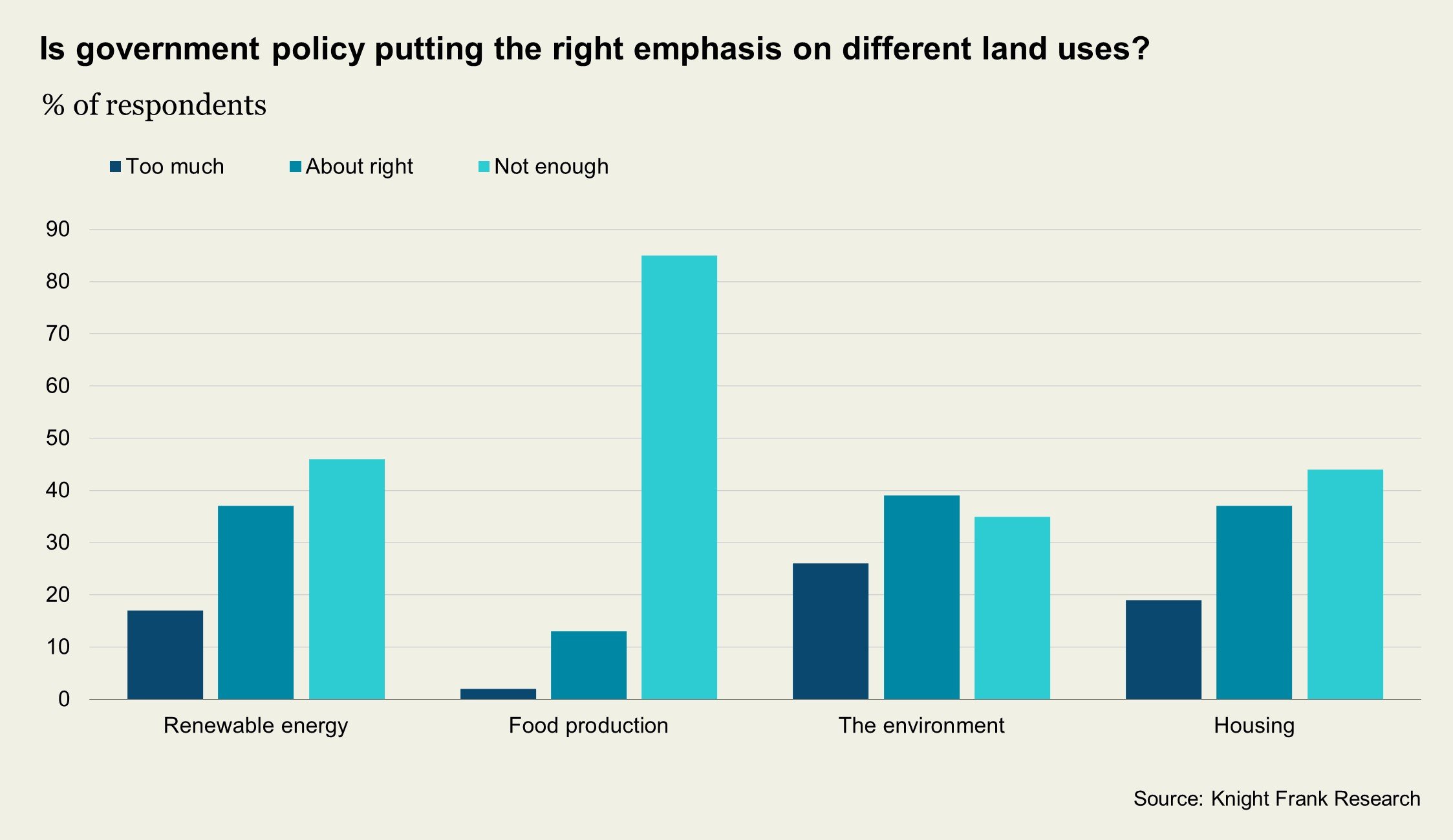
According to our respondents, the government is struggling to strike the right balance. While 35% said policymakers were not putting enough emphasis on the environment, 85% expressed the same view on food production.
One person taking the survey said bluntly: “The government is clueless and needs to have a coherent policy that enables rural property owners and managers to take decisions that allow appropriate development and encourage sustainable food production.
Another commented: “They just seem far behind in actually sorting out the balance of how much food we grow here and our dependency on imports and also the issue regarding Brexit and the sudden lack of food pickers.”
Nature-based solutions
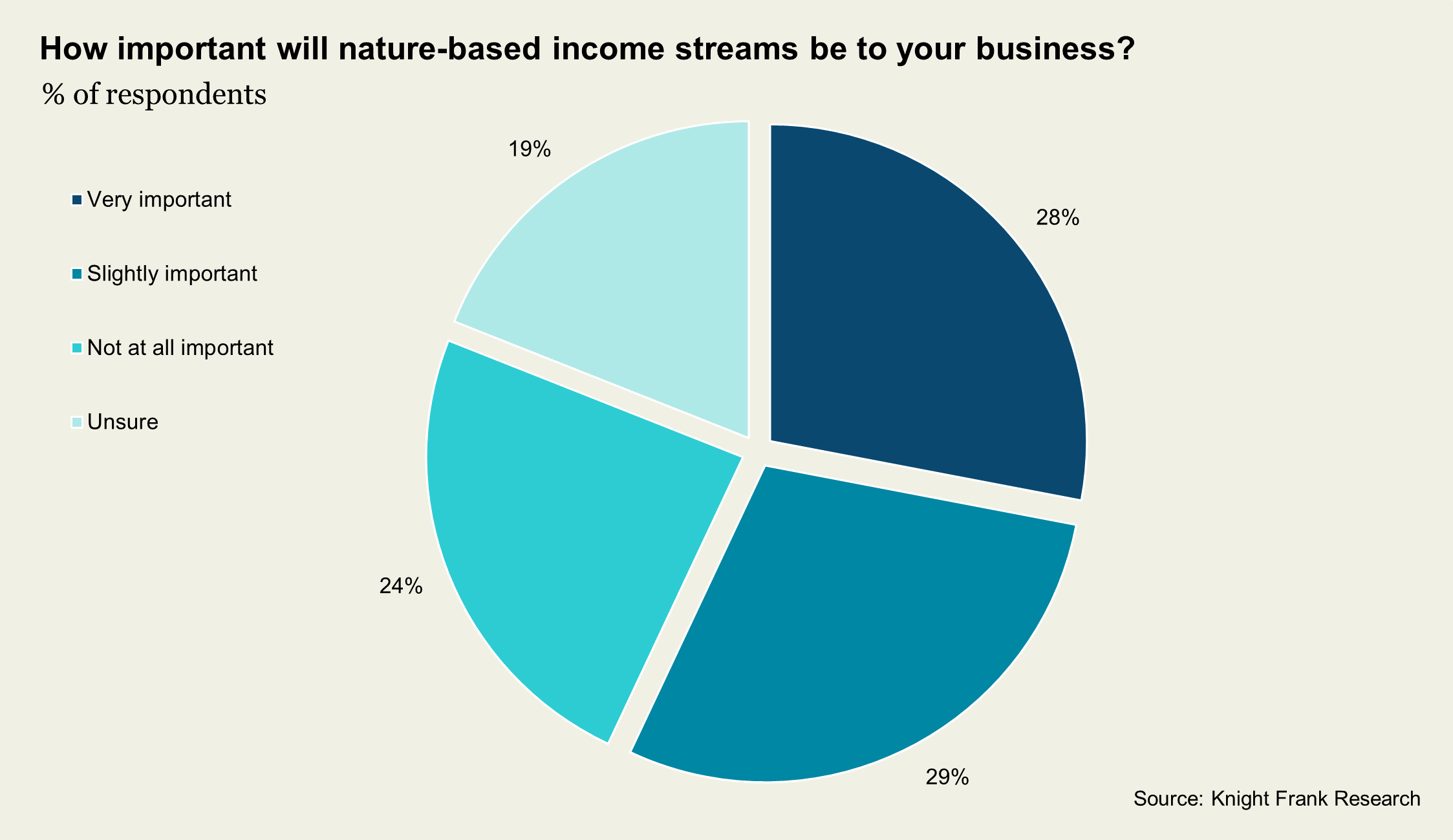
Despite the feeling the government is placing too much emphasis on the environment, well over 50% of our respondents said income streams from nature-based solutions such as carbon offsets, and biodiversity net gain would become an important part of their business.
Climate change
“To me, the most important factor is the planet and tackling climate change – if we can get income from it, so much the better,” said a respondent.
Others, however, were more cautious: “Until they sort out the impact on IHT and agricultural relief many landlords will stay well clear.”
In terms of the specific environmentally focused schemes respondents said they were already involved with, or planned to become involved with, Countryside Stewardship was the most popular. Almost 54% of survey respondents said they were or would be participating.
Around 35% said woodland carbon credits was on the agenda, with 36% saying they would consider getting involved with the delivery of biodiversity net gain.
However, the complexity of schemes was putting off some of those who took the survey. “Already woodland carbon credits are becoming complicated by viability tests at the application stage. Keep it simple, especially for small and medium-sized schemes,” said one.
Regenerative farming
Over a third of respondents also said they were already farming regeneratively or considering adopting the practice.
A number, however, said it didn’t seem a good idea when the world needed more food. But just over a quarter of respondents said they didn’t know enough to comment.
“For non-productive land it is an excellent idea, but not at the expense of more productive areas,” was the view of one respondent. This perspective, however, is contradicted by Kent farmer James Loder-Symonds, one of the contributors to this year’s edition of The Rural Report who farms regeneratively on a large scale and has not experienced a significant drop in yields.
What is impacting rural business?
When it comes to the big issues that rural landowners think will affect their ability to run their businesses profitably and efficiently, the environmental legislation is not at the top of the list, but the government is once again in the firing line with 52% saying planning policy was their biggest bugbear, followed by government policy in general (46%) and labour and staffing issues (40%).
“The local planning authorities do not support agricultural business. They just don't get what is needed,” lamented a respondent. Another said: “The government and a future labour government neither understands nor cares about the agricultural sector.”
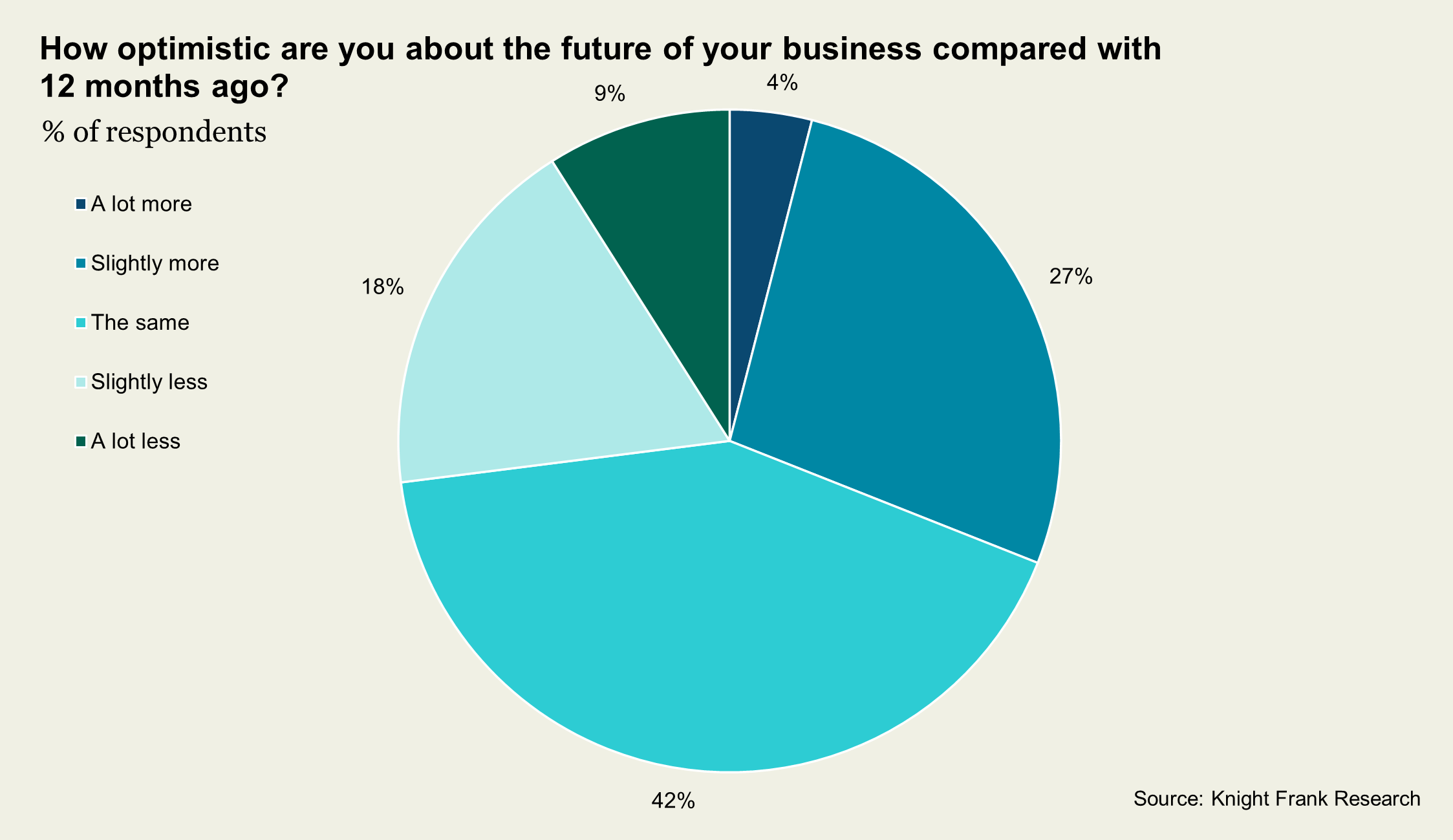
However, only 9% of respondents said they were a lot less optimistic about the future of their businesses than they were 12 months ago. “I’m a lot less optimistic because government policy appears to be so against private landownership and food producers. But just over 40% said their view hadn’t changed, while almost 27% were slightly more optimistic.
