
Europe’s Exit Taxes, Population Politics and Capital Flows
Plus, Cortina’s standout gains before the Milano–Cortina Games
19 February 2026
Exit taxes
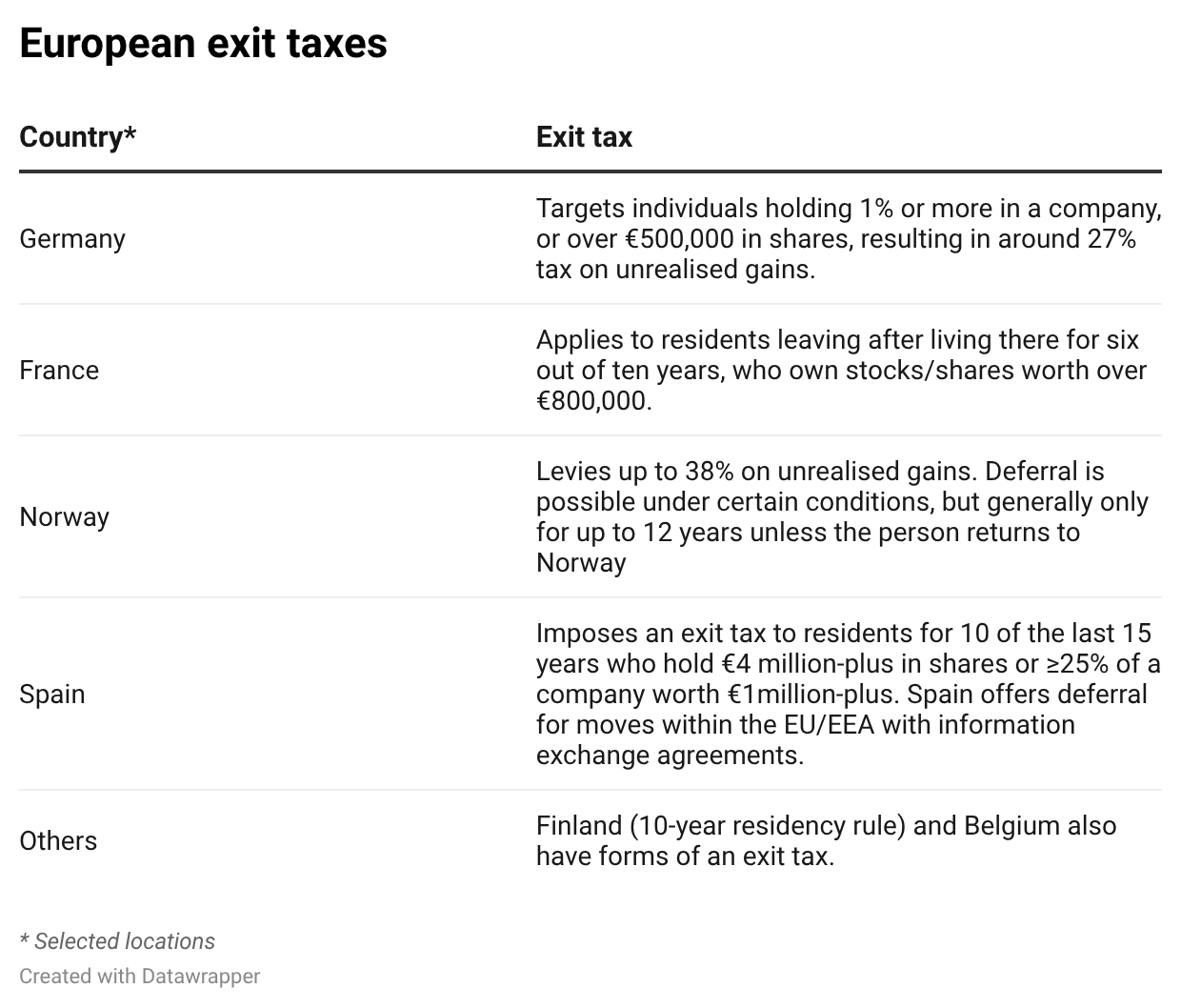
Europe’s patchwork of exit taxes is drawing the ire of the European Central Bank President Christine Lagarde, who warned that punitive regimes risk discouraging investment just as the bloc tries to counter US and Chinese incentives.
At the Munich Security Conference last weekend, Lagarde, who is reportedly considering leaving her post earlier than planned, said creating incentives for investments in Europe is a better approach to prevent capital outflows to other regions than imposing taxes.
“I’m more in favour of incentives than taxes,” Lagarde said. The overall sentiment is currently positive for Europe as “the money is coming in.”
Lagarde spoke a day after the ECB announced that it’s prepared to offer euro liquidity to monetary authorities from around the world. With the US dollar, the world’s reserve currency, expected to weaken this year, the bloc sees this as a good opportunity to promote the euro.
What this means: With public deficits widening across Europe, governments are hunting for revenue. The risk for investors and business owners if we see fewer exit taxes is that policymakers opt instead for front loaded purchase taxes or wealth levies. For those planning restructures or cross border relocations, swift tax planning is more critical than ever.
Population caps
With immigration a hot topic in Europe at present, Switzerland is set to vote on a new proposal which will ramp up the debate – imposing a cap on its population.
If passed, the vote which is slated for 14th June 2026, could lead to a blanket ban on new arrivals if the number of residents rises from its current 9 million to above 10 million.
The right-wing Swiss People’s Party (SVP) won the last election in 2023 with 28% of the vote, and campaigned on the benefits of Swiss citizenship but highlighted it as a privilege, not a right.
Switzerland’s population has grown rapidly from 7 million in the mid-1990s, to now over 9 million, outpacing most neighbouring countries.
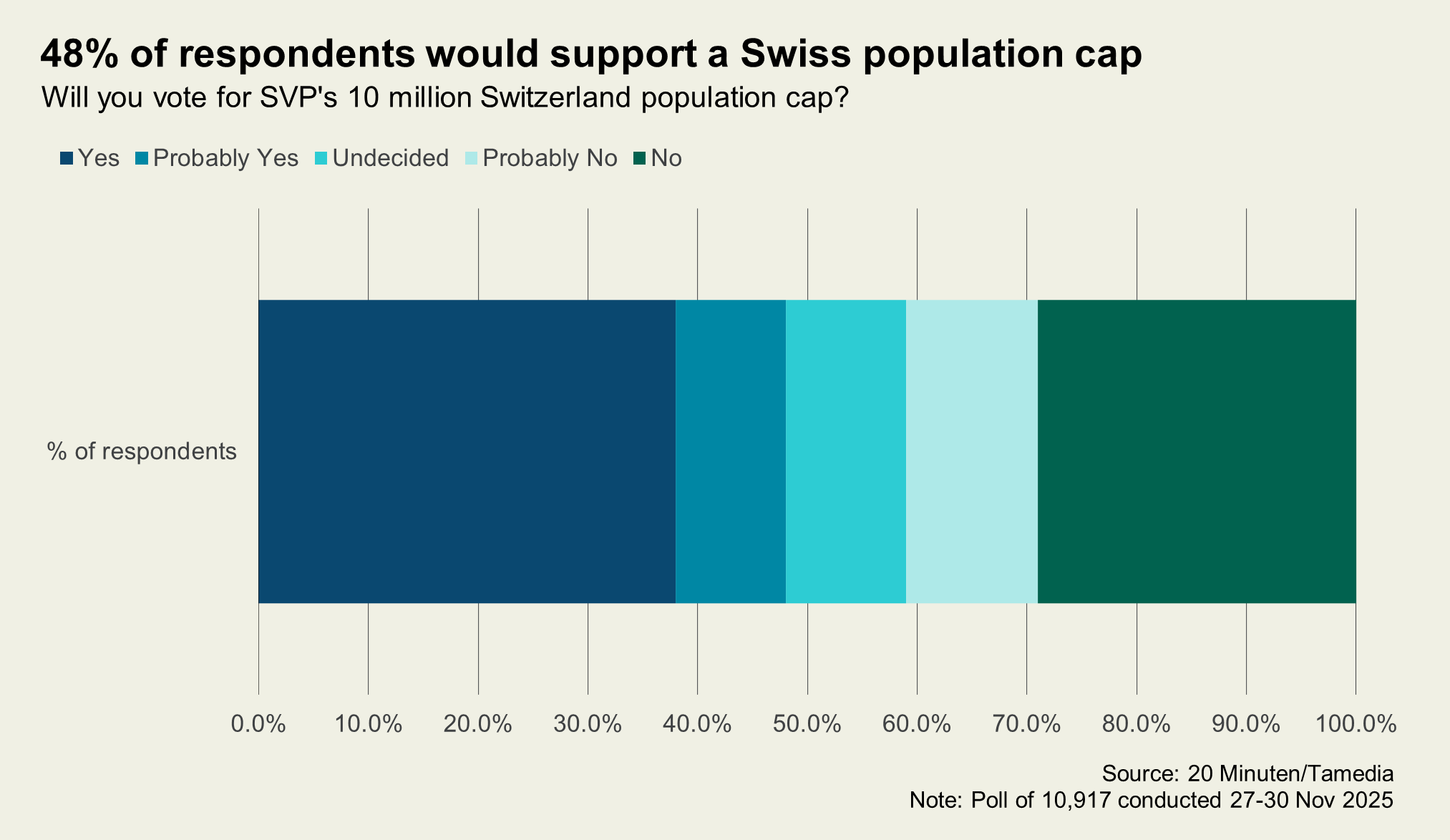
A poll conducted in November 2025 suggests the referendum may pass with 48% of respondents likely to accept the proposed cap.
The proposal includes a multi-step agreement that would be triggered if Switzerland’s population reached 9.5 million, forecasts suggest this might happen by 2035.
Asylum seekers and family of foreign residents would be the first affected. Plus, temporary residency rules would be tightened. Should the country’s population breach the 10 million threshold Switzerland would then start to withdraw from EU treaties.
What this means: A cap could harden labour shortages across Switzerland’s key industries; finance, construction and hospitality, pushing wages higher and also affecting developers’ build timelines.
For the housing market, while the cap suggests softer demand, supply is already constrained. Regulations such as Lex Koller, which restricts purchases by non residents, and Lex Weber, which caps second homes in high tourist areas, limit the amount of new or freely tradable stock. Any material or labour shortages would tighten supply further.
Cortina
Cortina d’Ampezzo attracted heightened investor interest ahead of the 2026 Milano–Cortina Winter Olympics, with the resort benefiting from Olympic driven infrastructure upgrades and rising international visibility. The Knight Frank Alpine Property Report 2026 includes a deep dive into the resort’s pricing and development.
Prime residential values in the UNESCO protected destination now command €19,500 to €21,500 per sq m, still 30–40% below pricing in St Moritz and Courchevel despite stronger recent growth.
Cortina posted 10% annual price appreciation in the year to June 2025, outpacing St Moritz’s 7%, helped by constrained supply and increasing demand from Italian, northern European and US buyers.
A €1.7 billion infrastructure programme is reshaping accessibility with enhanced rail and shuttle services, while a separate Milan–Cortina rail link is due in 2030.
Strict development limits within the Dolomites continue to cap new supply - only 47 luxury homes have come to market in 18 months - creating conditions analysts say support further price gains.
Cortina’s appeal is further bolstered by high end hotel investment from brands including Mandarin Oriental, Egnazia and Accor, strengthening year round tourism alongside rising summer activity and major alpine events.
What this means: Strong infrastructure investment, growing global visibility—boosted by major hotel brands—and tight supply restrictions are pushing values higher. For buyers, developers and lenders, this translates into a constrained pipeline and mounting competition for land.
In other news…
Sweden considers adopting the euro due to geopolitical concerns (Bloomberg), The UK quietly shelves frictionless post-Brexit trade border arrangement (FT) and Macron urges the EU to move fast or be swept aside (The Economist).
Sign up to Knight Frank Research.
