
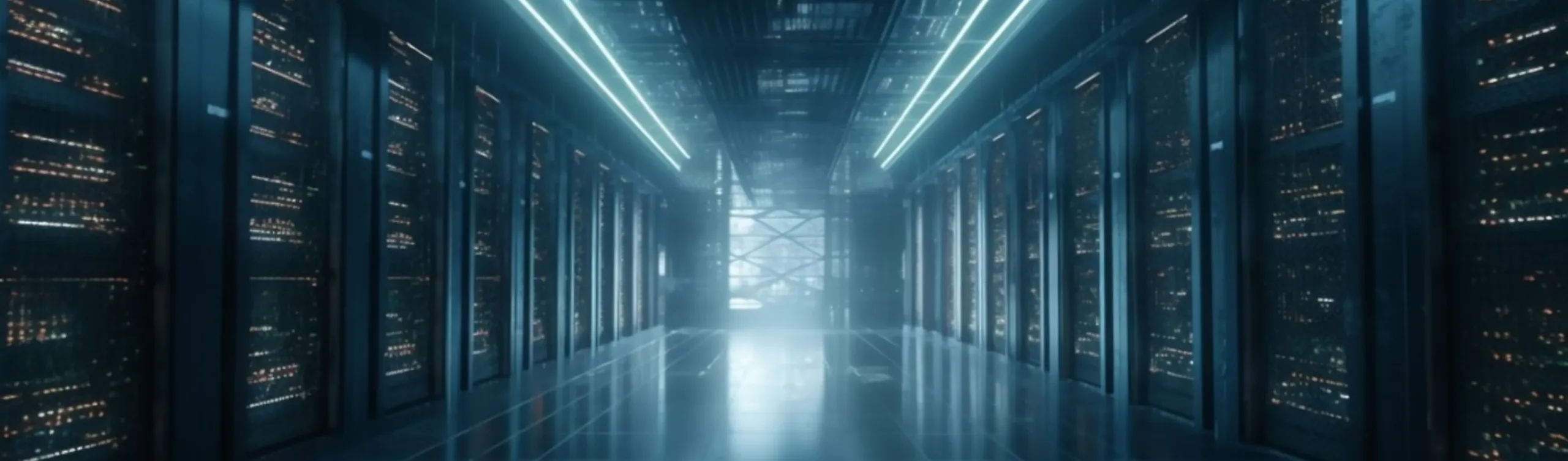
Data centres in transition
Driving the future of digital infrastructure
14 August 2025

Key takeaways
- The rise of AI has increased the demand for high-performance computing, leading to data centres optimised for AI, requiring advanced cooling and power solutions to manage energy consumption efficiently.
- Cloud computing has shifted demand to hyperscale data centres, while edge computing addresses latency by processing data closer to the source. This is crucial for applications like autonomous vehicles and smart cities.
- Data centres are undergoing a fundamental transformation to support emerging technologies and manage environmental footprints, including adopting advanced cooling solutions and energy-efficient designs.
- Advanced cooling technologies, such as chip-level liquid cooling and immersive cooling, are being adopted in some data centres to handle the heat from high-performance workloads, improving efficiency.
- Data centres are exploring advanced energy solutions like Small Modular Reactors (SMRs), AI-powered energy management, hydrogen fuel cells, and microgrids to meet rising demands sustainably and resiliently.
In today's digital age, data is often dubbed the "new oil." As technological advancements accelerate, data centres are transforming rapidly to meet growing demands for efficiency, scalability and sustainability. With increasingly complex workloads, modern data centres are evolving to support emerging technologies while managing environmental footprint.
AI: Reshaping the data centre landscape
The proliferation of deep learning models and large-scale AI workloads has significantly increased demand for high-performance computing, resulting in a growing number of data centres optimised explicitly for AI. As applications in automation, predictive analytics, and generative technologies continue to scale, data centres are needing to adapt to escalating computational requirements.
Foremost, the accelerated growth of AI has heightened energy consumption, driving the need for sophisticated cooling and power solutions. Interestingly, data centres are increasingly adopting AI-driven energy management systems to address this, enabling more efficient power usage and reducing environmental impact.
Cloud expansion: Hyperscale and edge computing
Cloud computing has been the principal disruptor of the data centre landscape in recent years. Cloud platforms offer scalable, on-demand computing, reducing reliance on traditional infrastructure and shifting demand from conventional colocation to hyperscale data centres.
Edge computing is emerging as a pivotal extension of cloud infrastructure, addressing latency challenges by processing data closer to source and end users. Applications such as autonomous vehicles, smart cities, and industrial IoT rely on edge computing for real-time responsiveness. This trend is driving investment in micro data centres and decentralised infrastructure, enabling faster data processing.
Quantum computing: Future disruption
Quantum computing potentially marks a significant leap in computational power, with profound implications for data centres. Unlike traditional binary systems, quantum computers use qubits to perform complex calculations at unmatched speeds, with transformative potential across cryptography, AI, and optimisation. This technology could reduce reliance on conventional infrastructure, prompting a shift toward quantum-ready environments and advanced cooling solutions. It also challenges current encryption standards, requiring new cybersecurity measures. While still emerging, quantum computing is expected to become a key part of high-performance computing, driving the need for quantum-compatible infrastructure in data centres. Against this backdrop, data centres are undergoing a fundamental transformation in infrastructure design to meet the evolving demands of today and the future.
Cooling the future: Next-gen innovations in data centre efficiency
Data centres are adopting cutting-edge cooling technologies as high-performance workloads generate increasing heat loads. Chip-level liquid cooling is gaining prominence alongside immersive cooling, which involves submerging entire servers in dielectric fluid. Immersion cooling can increase the return water temperature compared to traditional air cooling, potentially up to 50 degrees C. This significantly increases the 'free cooling' envelope, allowing compressor-free cooling all year and improving instantaneous and annualised PUEs. It is particularly well-suited for AI, blockchain, and other compute-intensive applications where traditional air- or water-based cooling methods often prove insufficient.
Powering the future: Innovations reshaping energy infrastructure
To meet the rising demands of AI, cloud computing, and digital services, data centres are increasingly turning to advanced energy solutions that deliver sustainability, scalability and resilience:
- Small Modular Reactors (SMRs) are gaining momentum as a viable power source well-suited to supporting high-density workloads. With the ability to deliver continuous, high-capacity output, SMRs could significantly reduce dependence on fossil fuels.
- AI is also revolutionising energy management in data centres. AI-powered systems enable predictive demand forecasting, dynamic workload distribution, and optimised energy usage across operations. These advancements help ease pressure on the grid while enhancing overall energy efficiency.
- Hydrogen fuel cells are emerging as a clean substitute for diesel generators. They can provide both backup and primary power and produce minimal to zero emissions. Yet, wider adoption is currently limited by high capital costs, space demands and evolving regulatory standards.
- Microgrids present an additional route to energy autonomy and resilience. These self-contained systems integrate renewable sources, battery storage, and AI-powered controls. Microgrids strengthen operational stability in a rapidly evolving energy landscape by ensuring consistent power supply.
- Looking ahead, fusion energy represents a game-changing long-term solution. Though still in development, it promises virtually limitless, clean energy without radioactive waste. Commercial deployment could materialise within 10 to 15 years, reshaping the future of power for data centres.
In summary
The convergence of emerging technologies, intelligent automation, and advanced energy solutions is poised to drive transformative growth across global digital ecosystems. At the core of this evolution lie data centres, which must continuously adapt to support escalating demands for speed, scalability and sustainability.
The next generation of data centres will rely heavily on cutting-edge networking technologies, AI-driven operations and highly energy-efficient infrastructure to meet these challenges. These innovations will enable ultra-reliable, high-performance computing environments and reinforce the critical role of data centres as the foundational pillars of the digital economy.
Sign up to Knight Frank Research.
