Is wellness the new workplace must-have?
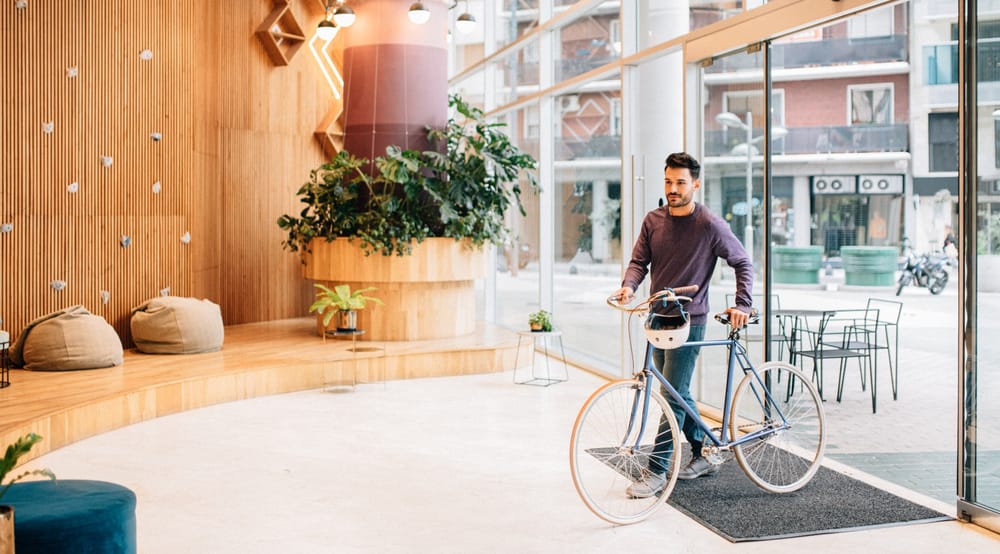
Once, a premium office meant a flashy lobby and free coffee. Today, the benchmark is much higher. Across the world, developers and occupiers are investing in wellness-focused workplaces, from biophilic design and circadian lighting to recovery spaces and dedicated wellbeing facilities. The goal is simple: support healthier, happier and more productive employees.
Drivers behind the office makeover
There are several forces behind this shift. Employee expectations are changing, and the wellness boom that has swept consumer culture, fuelling a global wellness industry now worth over $6 trillion, has also raised employees’ demands for healthier workplaces.
Younger generations in particular are prioritising wellbeing, looking to their workplaces to support their health and mental wellness. A survey by OneGroup found that over 70% of employees in these generations say they would leave their current employer for an organisation that emphasises their wellbeing.
In addition, the pandemic increased awareness of how indoor environments affect health. Air quality, lighting and workplace design are now recognised as factors that influence wellbeing and performance, with analysis showing that enhanced indoor environmental quality improves cognitive function by up to 101%, depending on the extent of improvement.
The business case is compelling. Research links healthier workplace environments to lower absenteeism, better cognitive performance and improved productivity. For many organisations, investment in wellness delivers measurable returns through greater engagement, reduced sick leave and stronger business performance. Unsurprisingly, wellness emerged as a key theme in our survey of global real estate executives.
Biophilic workplaces
One expression of this trend is the integration of nature into office environments. Amazon’s Spheres in Seattle, home to more than 40,000 plants, combines workspace with a natural retreat designed to inspire creativity and reduce stress.
Similar approaches can be seen across the world. Melbourne’s Medibank Place features rooftop gardens and vegetable plots, while New York’s Spiral incorporates planted terraces throughout the building. In London, projects such as Roots in the Sky and Google’s King’s Cross headquarters are expanding access to green space, while developments in Singapore and Mexico City centre offices around large-scale urban gardens.
Beyond the traditional workplace
A growing number of organisations are embracing more advanced wellness features. Circadian lighting systems, which mimic natural daylight patterns, are becoming increasingly common. GSK’s London headquarters uses circadian lighting and biophilic soundscapes, while J.P. Morgan’s new headquarters in New York has introduced lighting designed to support employees’ natural rhythms.
Another popular feature is the wellness room: a flexible space that can support meditation, prayer, relaxation or quiet reflection during the working day. Salesforce Tower in San Francisco, for example, includes mindfulness rooms on almost every occupied floor.
Some workplaces are going further still, introducing amenities such as infrared saunas, cryotherapy facilities and recovery suites. Meanwhile, more subtle interventions, including softer colour palettes, natural materials and homelike design elements, are being used to create calmer, less stressful environments.
Purpose, connection and reducing stress
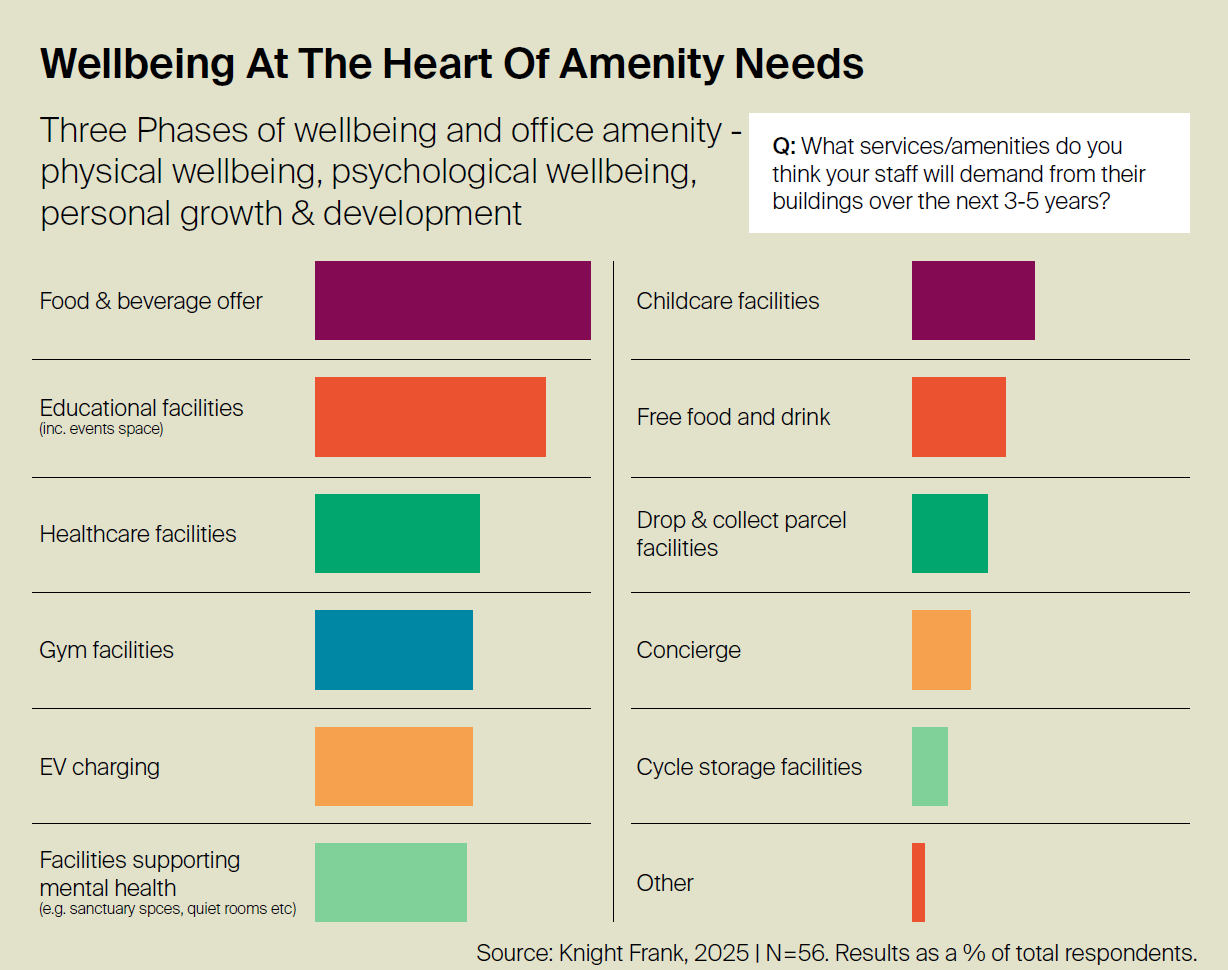
Wellbeing extends beyond physical health. A sense of purpose, opportunities for learning and strong social connections are increasingly recognised as vital factors in employee wellbeing.
As AI reshapes work and concerns about job obsolescence grow, organisations are investing in learning and development spaces that help employees build future skills. HSBC’s Birmingham headquarters, for example, incorporates dedicated training facilities within the workplace itself.
Employers are also addressing everyday stressors by improving technology, providing more task-appropriate work settings and introducing conveniences such as childcare facilities, parcel services and access to local amenities.
A new equilibrium
The office is evolving from a place that simply accommodates work into one that actively supports wellbeing. While some wellness features may be viewed as luxurious or even gimmicky, the broader direction of travel is clear. Employers are increasingly expected to provide environments that enhance employees’ quality of life.
The next phase may be even more personalised. Smart buildings could use sensors, wearables and workplace data to adjust lighting, temperature and other environmental conditions in real time. Furniture may respond to posture and movement, while workplaces will be able to better understand how people interact with space and what helps them perform at their best.
Ultimately, the workplace of the future is not just somewhere people go to work. It is increasingly becoming a place designed to help them thrive.
Our Occupier Strategy & Solutions teams can help you identify solutions that support your business goals. Get in touch to discuss your requirements.
Originally published by Jennifer Townsend, Partner, Occupier Research, as part of the (Y)OUR SPACE Anthology Office.